
Last updated September 23, 2026
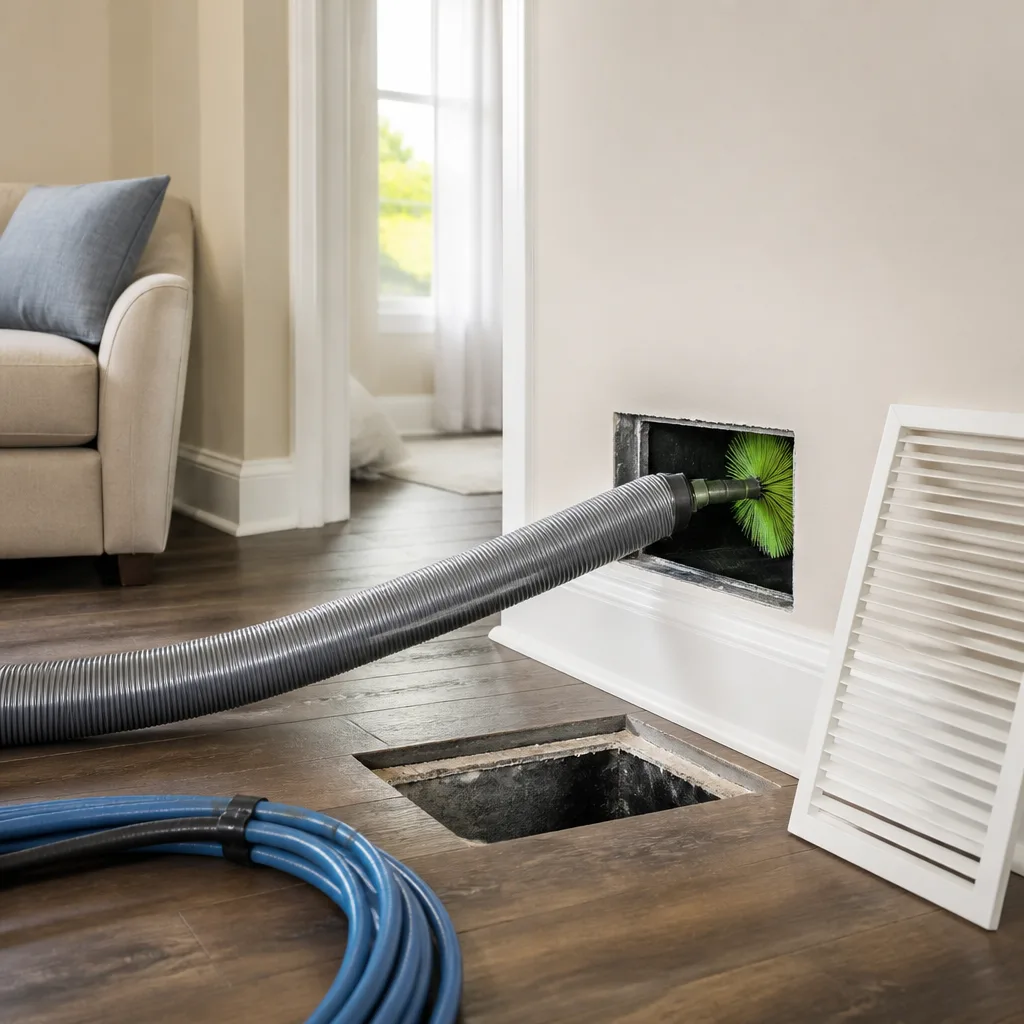
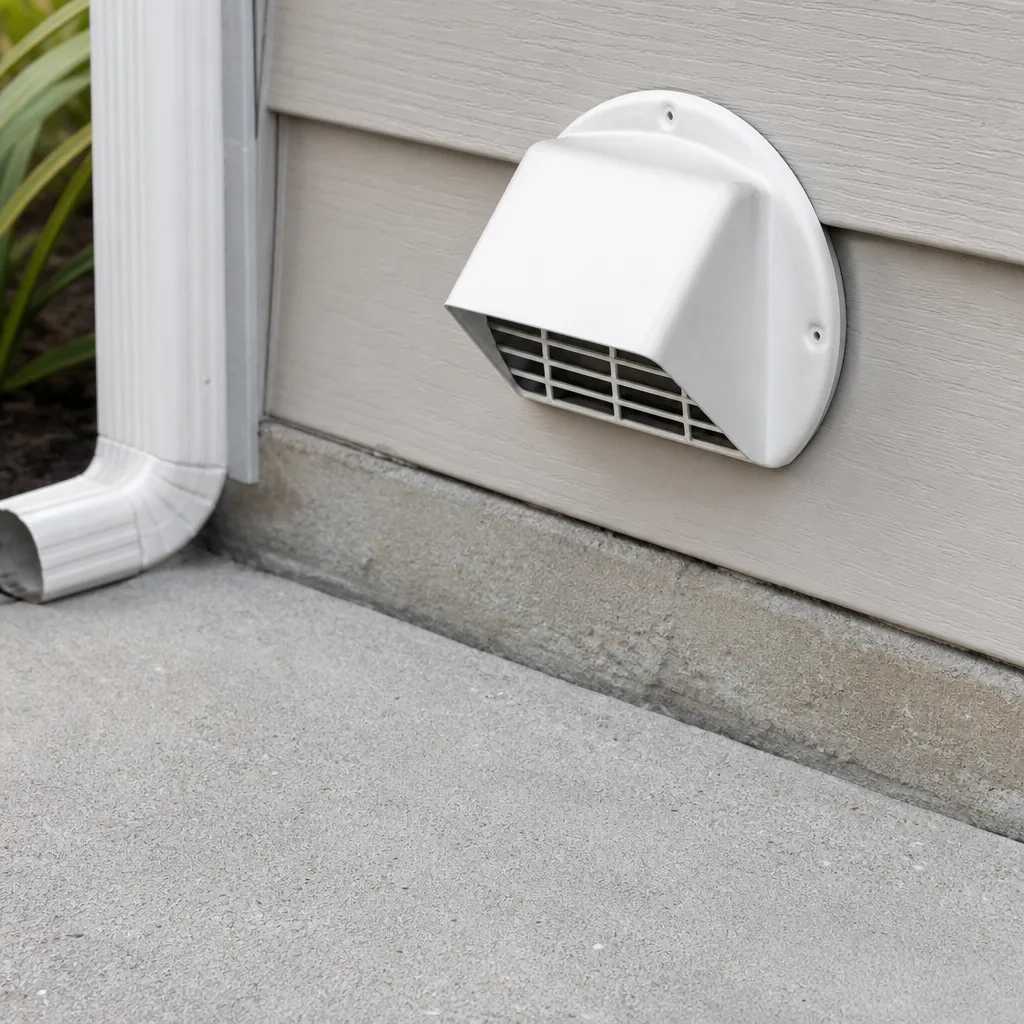
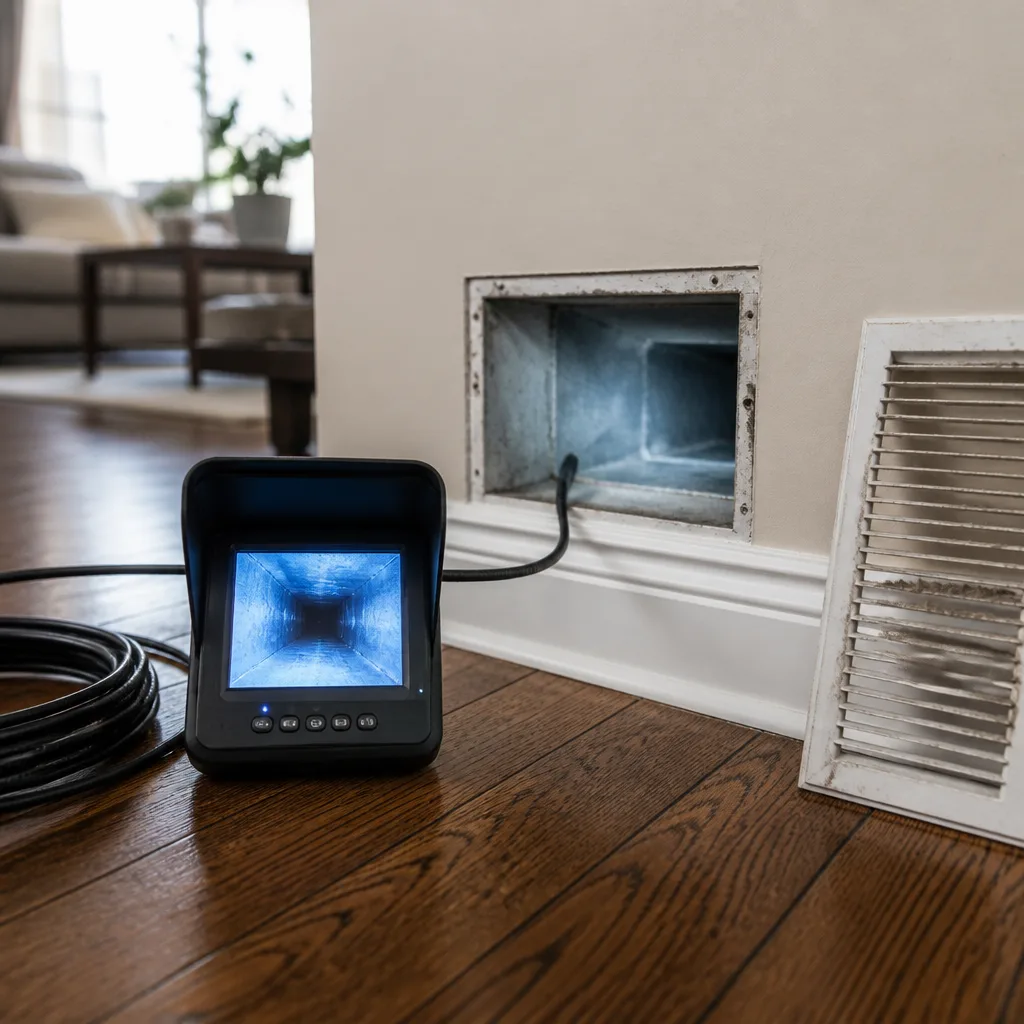
Whole-system duct and dryer vent check with before-and-after photos - you see exactly what came out of your vents
That "$99 whole-house special" is a bait ad - the real number appears once they are in your hallway, or the "clean" is a shop-vac at the register. We photograph the inside of your ducts before and after instead.
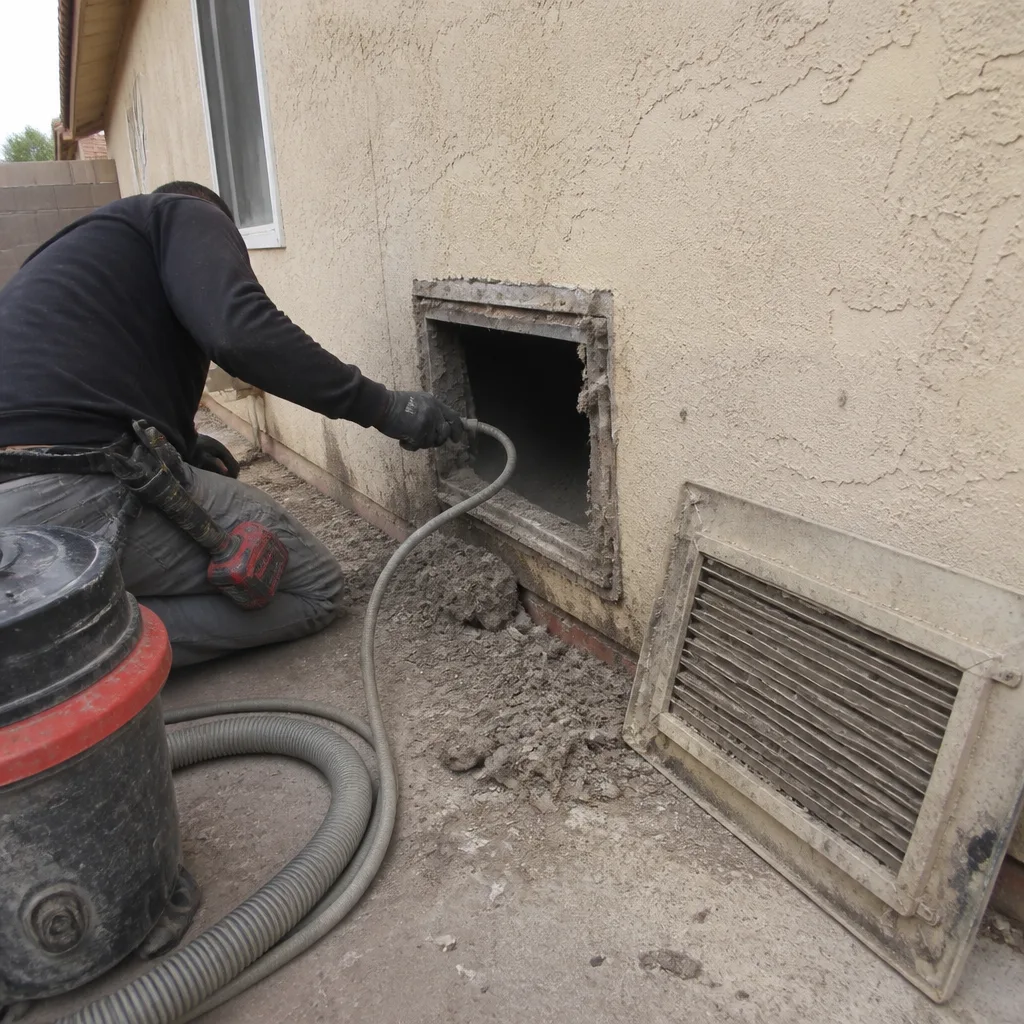 Before
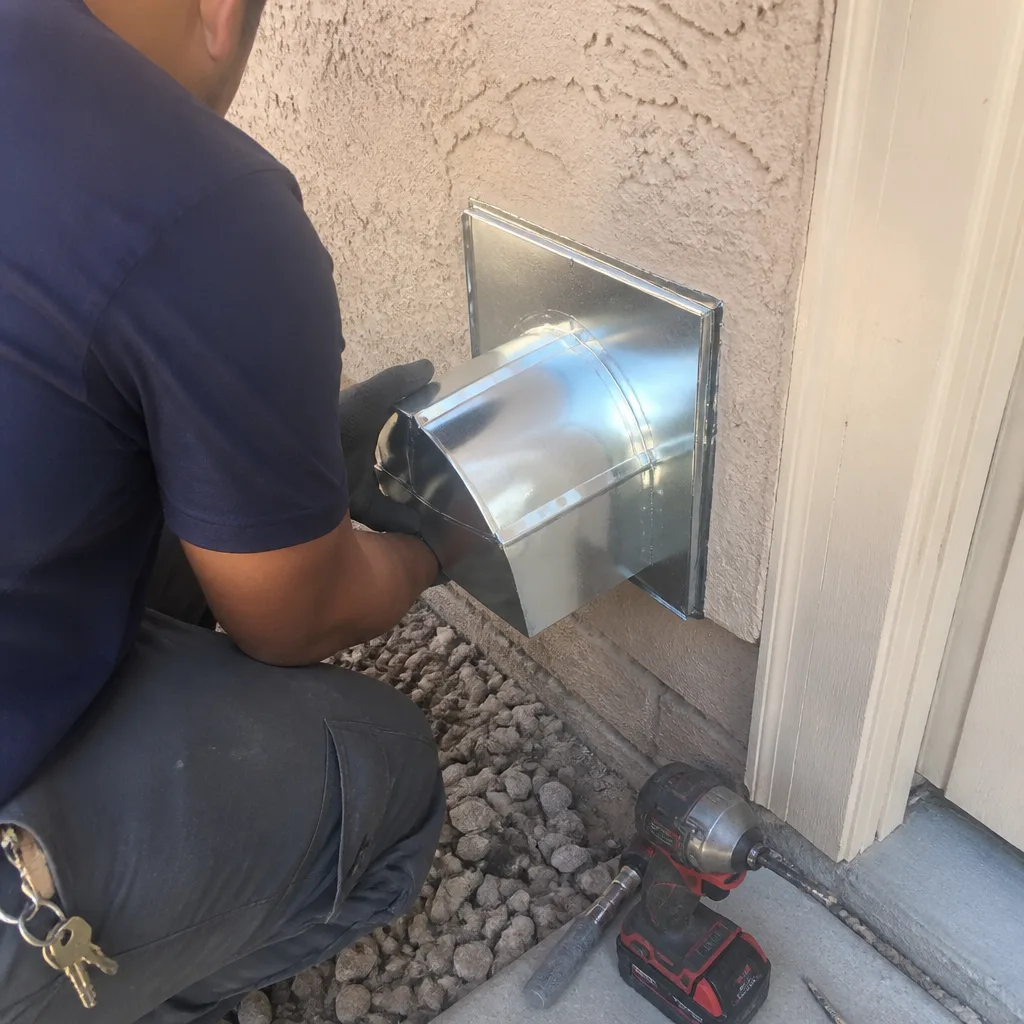 After
After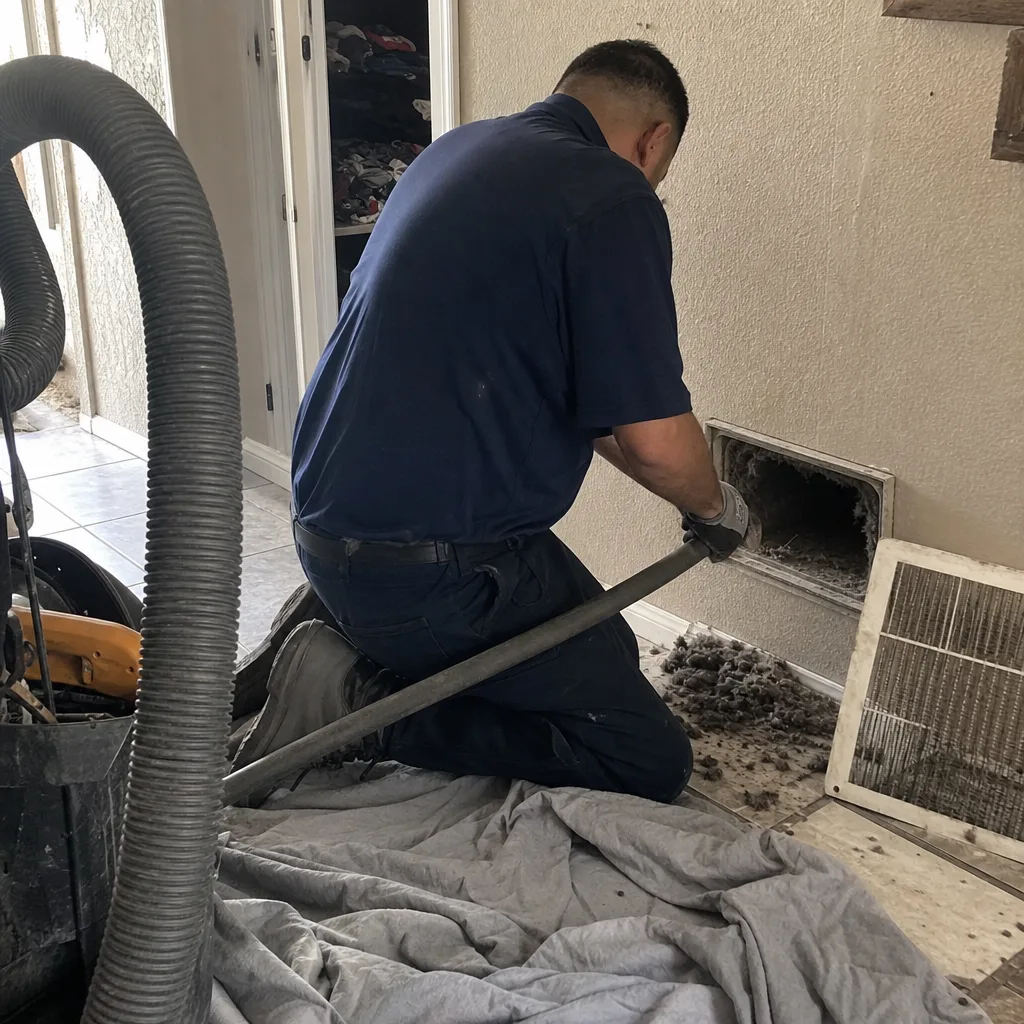 Before
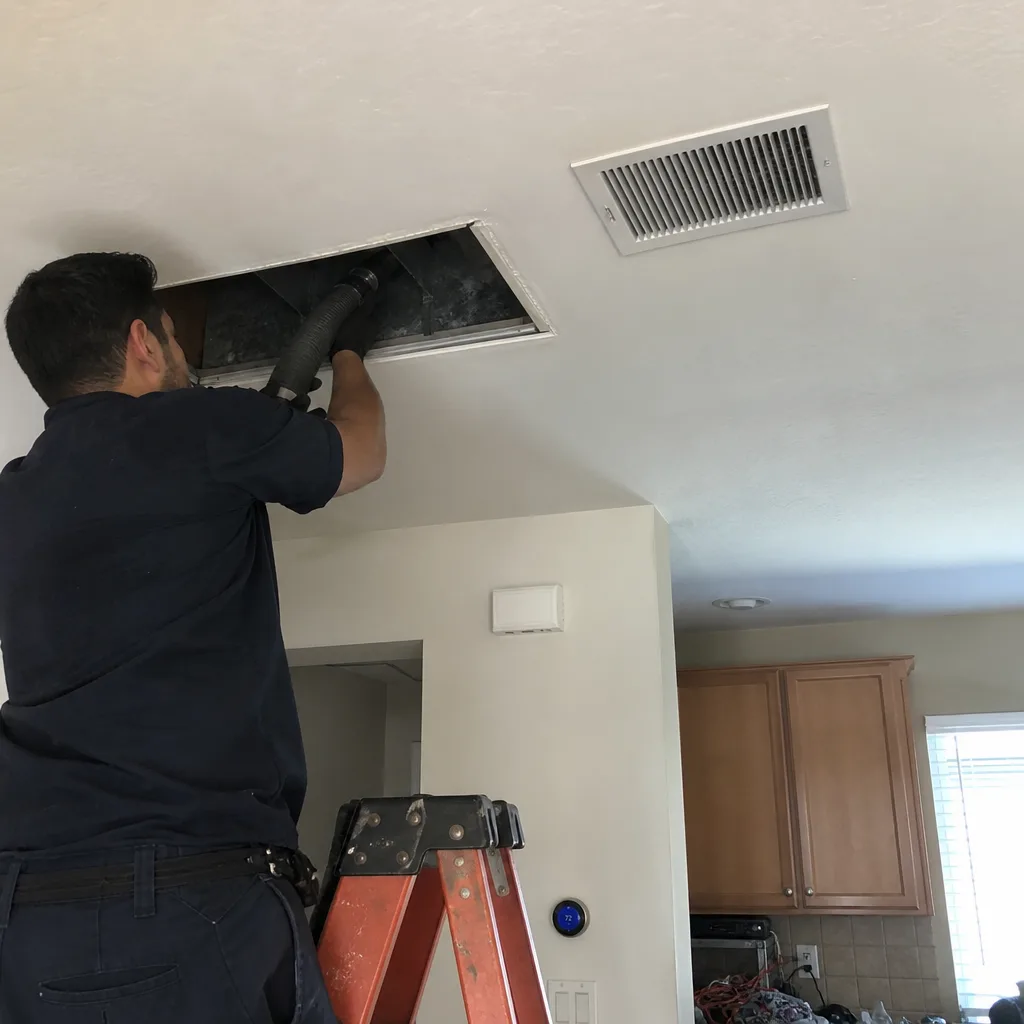 After
After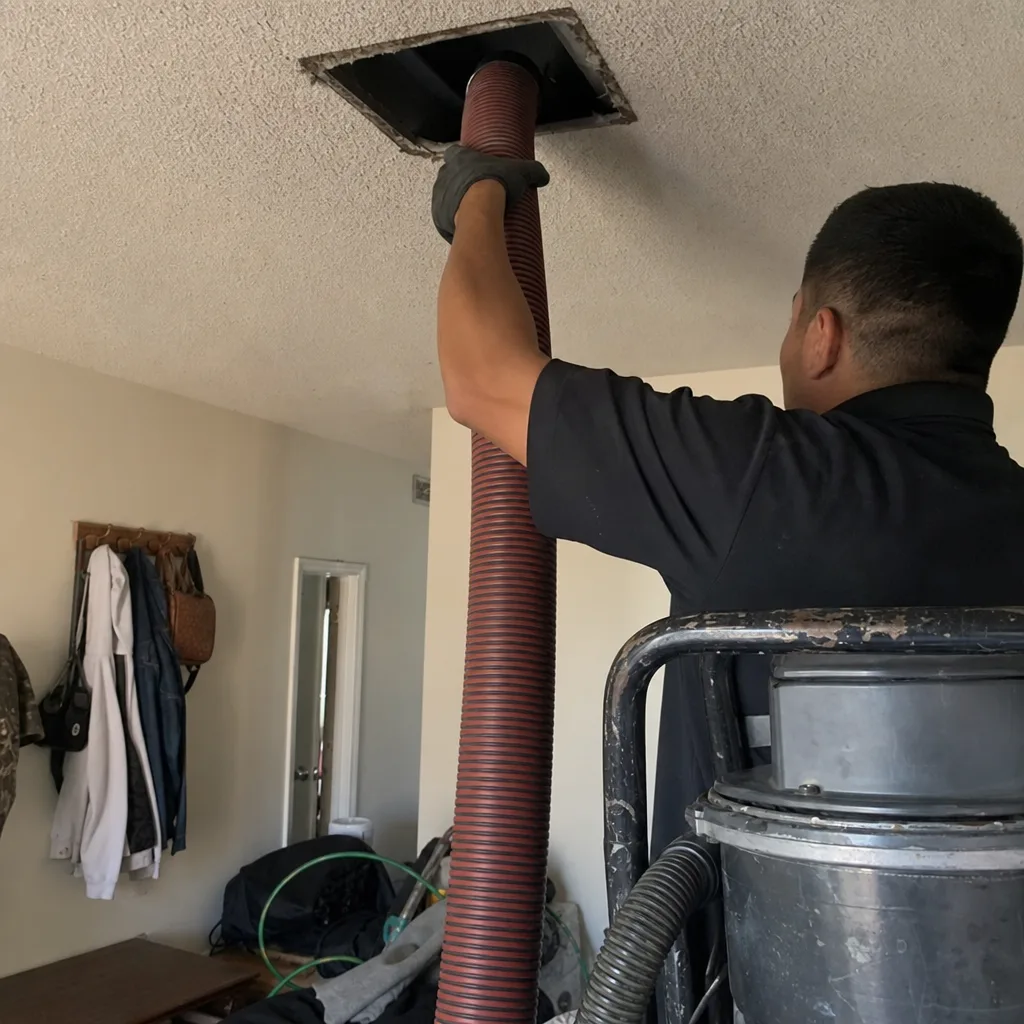 Before
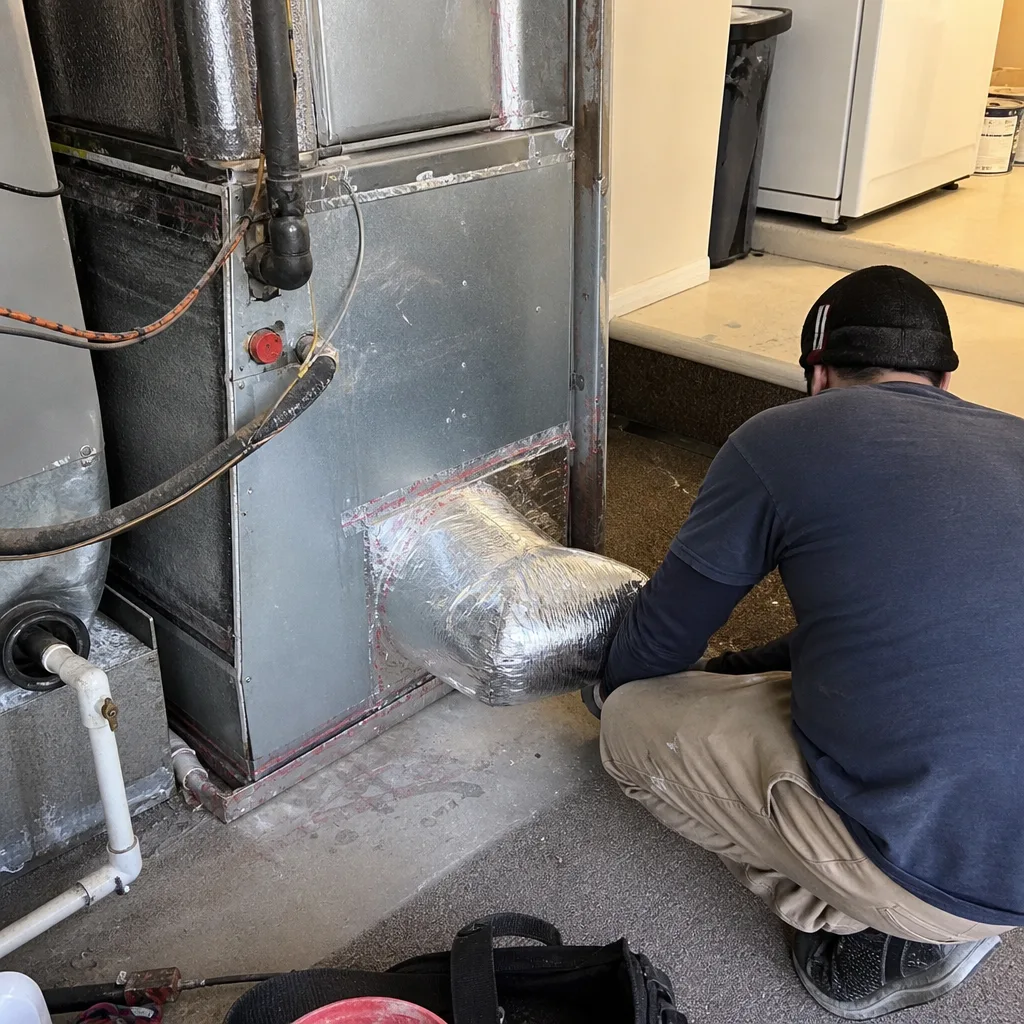 After
AfterHow to Hire a Air Duct Cleaning Contractor in Gilbert: A Step-by-Step Guide
The Arizona Attorney General’s office has issued consumer advisories specifically about HVAC and duct cleaning bait-and-switch pricing. The $79 coupon model isn’t just annoying; it’s a documented pattern with a paper trail in state consumer protection records. In Gilbert, where dust storms and monsoon debris load duct systems heavier than most U.S. markets, homeowners face a hiring problem: every company looks identical online until a technician is already in your attic. This guide gives you a pre-hire filter that works before anyone enters your home. You’ll learn the three phone questions that separate legitimate operators from upsell artists, how to verify Arizona ROC registration, what a real written estimate contains, and why the first five minutes inside your house reveal everything.
Quick Answer
Hiring a legitimate Air Duct Cleaning contractor in Gilbert means verifying Arizona ROC licensure, demanding a written price before anyone arrives, and confirming what documentation you’ll receive when the job ends. The right contractor can answer all three over the phone; bait-and-switch operators cannot. Expect whole-system pricing between $400 and $900 for most Gilbert homes, with documented photo records included as standard deliverables.
Table of Contents
- Why the $79 Coupon Model Fails in Gilbert
- The Three Phone Questions That Filter Out Bad Actors
- How to Verify Arizona ROC Registration
- What a Legitimate Written Estimate Contains
- Red Flags in the First Five Minutes
- The 365-Day Accountability Standard
- Equipment and Documentation Standards
- Gilbert Climate, Codes, and Neighborhood Considerations
BeforeAfterWhy the $79 Coupon Model Fails in Gilbert
The $79 air duct cleaning coupon is a loss-leader designed to get a foot in the door. In practice, the technician arrives, inspects the system, and produces a revised invoice that typically runs $600 to $1,200. The Arizona Attorney General has documented this pattern repeatedly. Consumers file complaints not because the work was poor, but because the price bore no resemblance to the advertised rate.
Gilbert’s market conditions make this especially common. The town’s rapid growth between 2015 and 2025 added thousands of homes in communities like Morrison Ranch, Agritopia, and Adora Trails. Many of these homeowners are first-time duct cleaning buyers with no baseline for what the service should cost. The coupon model exploits this information gap.
Here’s how the economics actually work. A truck, two technicians, fuel, insurance, and equipment depreciation cost a legitimate operation roughly $180 to $240 per job before labor. A $79 price cannot cover this. The business model requires the in-home upsell to survive. This is not speculation; it’s arithmetic.
The alternative is straightforward: a contractor who names a real price before arrival. At CleanRun Air Duct Cleaning Gilbert home, every job starts with a written price under Haven Standard Clause 1. No exceptions. The price is based on linear feet of ductwork, number of registers, and access requirements, not on what the technician thinks you’ll pay once he’s standing in your hallway.
Gilbert homeowners should understand that our climate intensifies the stakes. Dust storms deposit fine particulate that accumulates in return plenums (the central collection chamber where air enters the HVAC system). Monsoon moisture can create conditions for microbial growth in fiberglass-lined ductwork, common in homes built during the 2015-2020 construction boom. A legitimate cleaning addresses these conditions with specific equipment and documentation. A coupon operation runs a vacuum for twenty minutes and leaves.
The Three Phone Questions That Filter Out Bad Actors
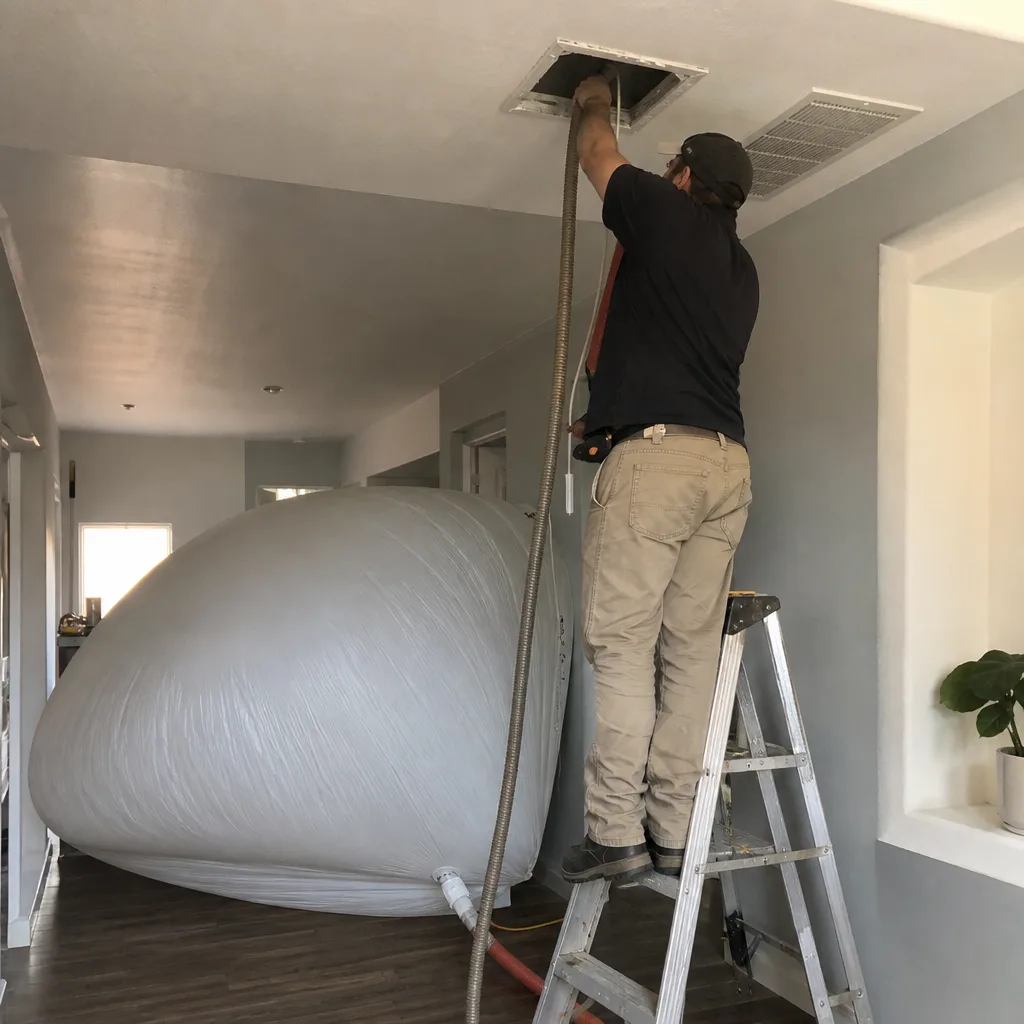
Before you schedule any contractor, call and ask these three questions. Record the answers. A legitimate operator will respond with specifics. A bait-and-switch operation will deflect, defer, or become evasive.
- Will you put the full price in writing before anyone arrives at my home?
This is the single most effective filter. A legitimate contractor has a pricing structure based on measurable factors: linear feet of duct, number of supply and return registers, and access difficulty. They can calculate this from your square footage and system description, then email or text a written estimate. A bait-and-switch operator will say they need to see the system first, or that pricing “depends on what we find.” What they mean is: the price depends on what they think you’ll pay.
At CleanRun, Haven Standard Clause 1 requires a written price before any work starts. Every time. If a contractor cannot or will not do this, the conversation is over.
- What is the CFM rating of your extraction equipment, and what brand do you use?
CFM (cubic feet per minute) measures airflow volume. For residential duct cleaning, effective negative-pressure extraction requires equipment rated at minimum 2,000 CFM, with 5,000+ CFM preferred for larger systems. The contractor should know this number immediately. If they don’t know their equipment’s CFM rating, they don’t understand their own tools.
Ask the brand. Professional-grade equipment comes from manufacturers like Abatement Technologies, Nikro, and Rotobrush. These are verifiable brands with published specifications. A contractor using unmarked or consumer-grade shop vacuums cannot achieve the negative pressure required to dislodge adhered debris from duct walls. In Gilbert’s dusty environment, this matters more than in moderate climates.
- What documentation do I receive when the job is finished?
The answer should include: before-and-after photos of every duct run, a written scope of work completed, and a warranty or guarantee in writing. Not “we’ll show you on the tablet.” Not “the technician will explain what he did.” Physical or digital documentation that you can review later, share with your HVAC service provider, or use if a dispute arises.
A contractor who photographs every duct run has accountability built into their process. A contractor who does not photograph cannot prove what was accomplished. This distinction separates documented work from undocumented claims.
If any answer is vague, schedule nothing. The time you spend on another call is less than the time you’ll spend disputing an invoice or cleaning up after inadequate work.
How to Verify Arizona ROC Registration
Arizona requires air duct cleaning contractors to hold a Registrar of Contractors license. This is not optional, and it is not the same as a business license. Here’s how to verify it, and why it matters for your homeowner’s insurance.
Step 1: Get the license number. Ask the contractor for their ROC number over the phone. A legitimate contractor provides this immediately. At CleanRun, the license number is published on every page, not buried in a footer.
Step 2: Verify at roc.az.gov. Enter the number in the Arizona Registrar of Contractors license search. Confirm three things: the license status is “Active,” the classification includes work on HVAC or duct systems, and the business name matches what you’re being told.
Step 3: Check the classification. Duct cleaning contractors should hold a license that covers mechanical or HVAC work. An unlicensed crew performing work in your home creates liability exposure. If they damage a duct run, puncture a plenum, or compromise electrical components near the air handler, your homeowner’s insurance may deny the claim because unlicensed work voids coverage in many policies.
Step 4: Verify insurance. The ROC database shows whether the contractor carries current bond and insurance. Ask for a certificate of insurance directly from their provider if you want additional confirmation.
Gilbert homeowners in HOA-governed communities like Power Ranch or Seville should note: some associations require proof of contractor licensing for work that affects building systems. An unlicensed job can create compliance problems that outlast the cleaning itself.
Haven Standard Clause 3: Verified Crews requires background-checked, uniformed technicians identified by name before arrival. This is not a marketing claim; it’s a documented standard you can hold the company to.
What a Legitimate Written Estimate Contains
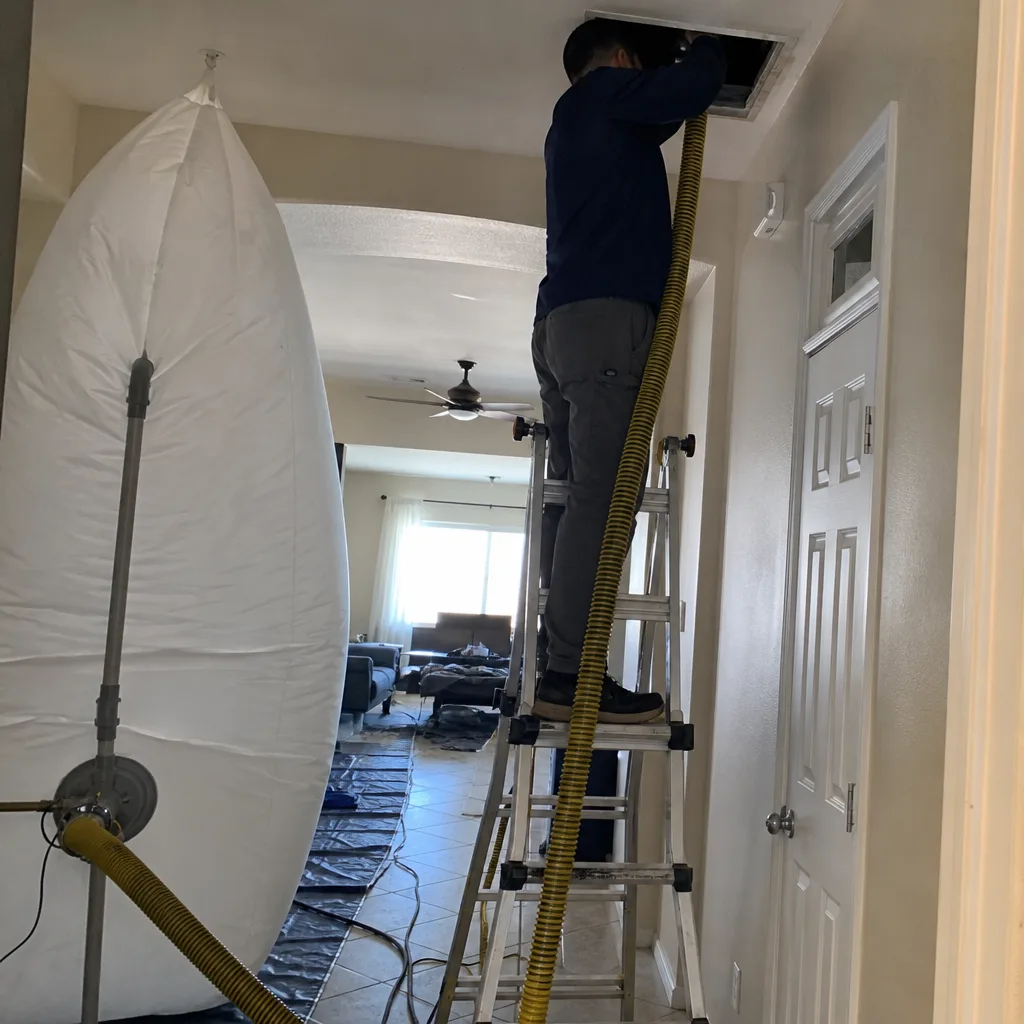
A written estimate before arrival is your primary protection against invoice shock. But not all written estimates are equal. Here’s what legitimate documentation includes, and what omissions signal trouble.
| Element | What It Means | Red Flag If Missing |
|---|---|---|
| Linear feet of ductwork | Total length of supply and return runs to be cleaned | Price given without system measurement |
| Register count and type | Number of supply and return registers; floor vs. wall vs. ceiling | Vague reference to “all vents” |
| Access points required | Where technicians will cut access for equipment entry | No mention of access or repair responsibility |
| Equipment specifications | CFM rating, brand, and method (negative-pressure, contact, or hybrid) | “Professional equipment” with no details |
| Antimicrobial treatment scope | If proposed: product name, application method, EPA registration | Generic “sanitizing” with no product identification |
| Total price and payment terms | Single number, no per-vent add-ons, payment schedule stated | Price “subject to evaluation” or per-vent structure |
The per-vent pricing model is a specific warning sign. A contractor quotes $X per register, then counts more registers than you expected, or discovers “additional returns” once work begins. Whole-system pricing eliminates this manipulation. One flat price per system, agreed before work starts.
In Gilbert’s market, whole-system air duct cleaning for a typical 2,000 to 3,000 square foot home runs between $400 and $700 for standard cleaning, and $600 to $900 when antimicrobial treatment or access repair is included. See our Air Duct Cleaning Cost Breakdown: The Gilbert Homeowner’s Reference for 2026 for detailed pricing factors. Prices below this range indicate corners being cut; prices significantly above require justification in the estimate details.
CleanRun provides a Free Second Opinion on any written estimate. Bring a competitor’s quote; we put our number next to it in writing. This is not a sales tactic; it’s a transparency practice that lets you compare scope-to-scope rather than headline-to-headline.
Red Flags in the First Five Minutes
Even with proper phone screening, the in-home interaction reveals what phone calls cannot. These red flags appear in the first five minutes and should halt the job before it starts.
- Vague scoping without measurement. The technician arrives and immediately begins discussing “packages” or “levels” of service without measuring ductwork, counting registers, or inspecting the air handler. Legitimate work requires specific scoping; vague packages exist to create upgrade pressure.
- Pricing that appears only after system inspection. If the price you were given over the phone changes because the technician “didn’t realize” your system configuration, this is the bait-and-switch in real time. A written estimate based on your description should be honored unless you materially misrepresented the system.
- Pressure to decide before the truck leaves. “I can only hold this price if you sign today” or “my manager needs an answer in the next hour” are standard high-pressure tactics. There is no legitimate reason a duct cleaning price expires in hours. The equipment and labor cost the same tomorrow.
- Equipment that doesn’t match what was described. You were told 5,000 CFM negative-pressure extraction. The technician carries a portable unit that fits in a car trunk. Ask for the model number and look it up while he watches.
- No photo documentation setup. A contractor who claims to document every run but carries no camera system, or whose “documentation” consists of a single before-and-after of one register, is not performing the work described.
- Request for full payment before work begins. Standard practice is payment upon completion, after you’ve reviewed the documentation. Full prepayment removes your leverage if the work is inadequate.
In Gilbert’s summer months, when attic temperatures exceed 140°F, technicians may also cite “heat emergency” pricing or claim that equipment is overheating and requires additional cost to complete. This is fabrication. Professional equipment operates in these conditions daily; it’s a desert climate, not an anomaly.
The 365-Day Accountability Standard
Every contractor mentions guarantees. Few specify what they mean in writing. Understanding this distinction protects you from legal fluff dressed as promise.
“Satisfaction guaranteed” sounds definitive. Legally, it is nearly meaningless. It obligates the contractor to make you satisfied, but satisfaction is subjective and unenforceable without specific standards. A contractor can claim you were satisfied enough, or that your expectations were unreasonable, and the guarantee evaporates into interpretation.
A legitimate accountability standard specifies:
- What constitutes “done right” in measurable terms
- What the contractor will do if work does not meet this standard
- Timeframe for remedy
- Whether remedy includes re-cleaning, repair, or refund
- Written confirmation on every job, not just marketing materials
The 365-Day Done Right Promise at CleanRun specifies: if the work is not right, we make it right. This is backed in writing on every job, not stated in advertising copy alone. The written guarantee accompanies the photo record and scope documentation as a standard deliverable. If debris remains in a duct run, if an access panel fails, if airflow improvement does not match what was documented, the remedy is specified and time-bound.
For Gilbert homeowners, this matters because duct systems are not immediately visible. You cannot inspect your own attic ductwork easily. A 365-day window lets you observe HVAC performance across seasons: summer cooling load, monsoon humidity, winter heating cycles. If the cleaning was inadequate, the symptoms appear over months, not minutes.
When evaluating any contractor’s guarantee, ask for the specific written document you’ll receive. Read it before scheduling. If the guarantee exists only on a website or in a technician’s verbal assurance, it does not exist in a form you can enforce.
Equipment and Documentation Standards
The equipment a contractor uses determines what they can actually remove from your ducts. The documentation they provide determines whether you can verify the work. Both are inspectable before you commit.
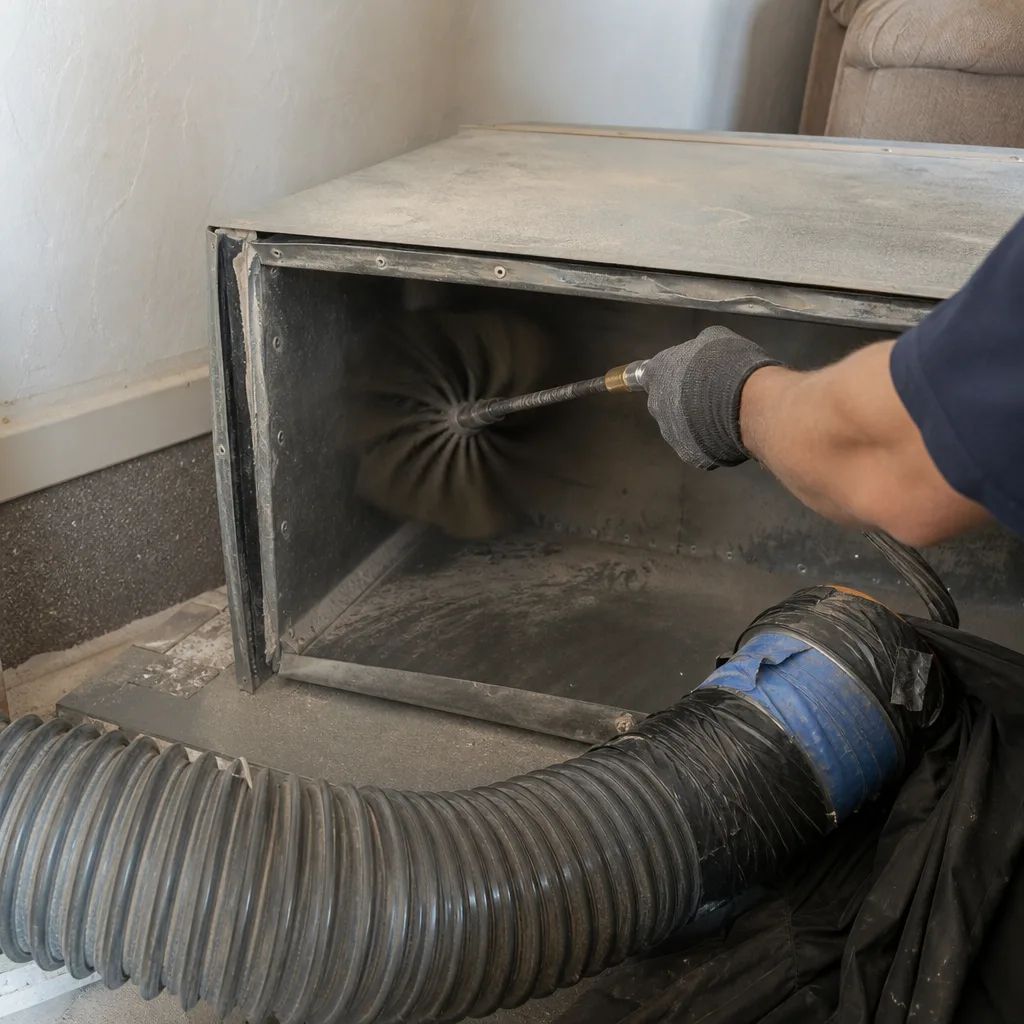
Negative-pressure extraction (using a powerful vacuum to create suction throughout the duct system) is the baseline method for residential cleaning. Effective negative-pressure requires sufficient CFM to overcome the resistance of the duct network. For context: a standard shop vacuum generates roughly 100 to 200 CFM. Professional duct cleaning equipment from Abatement Technologies or Nikro operates at 2,000 to 5,000+ CFM. The difference is not incremental; it’s categorical.
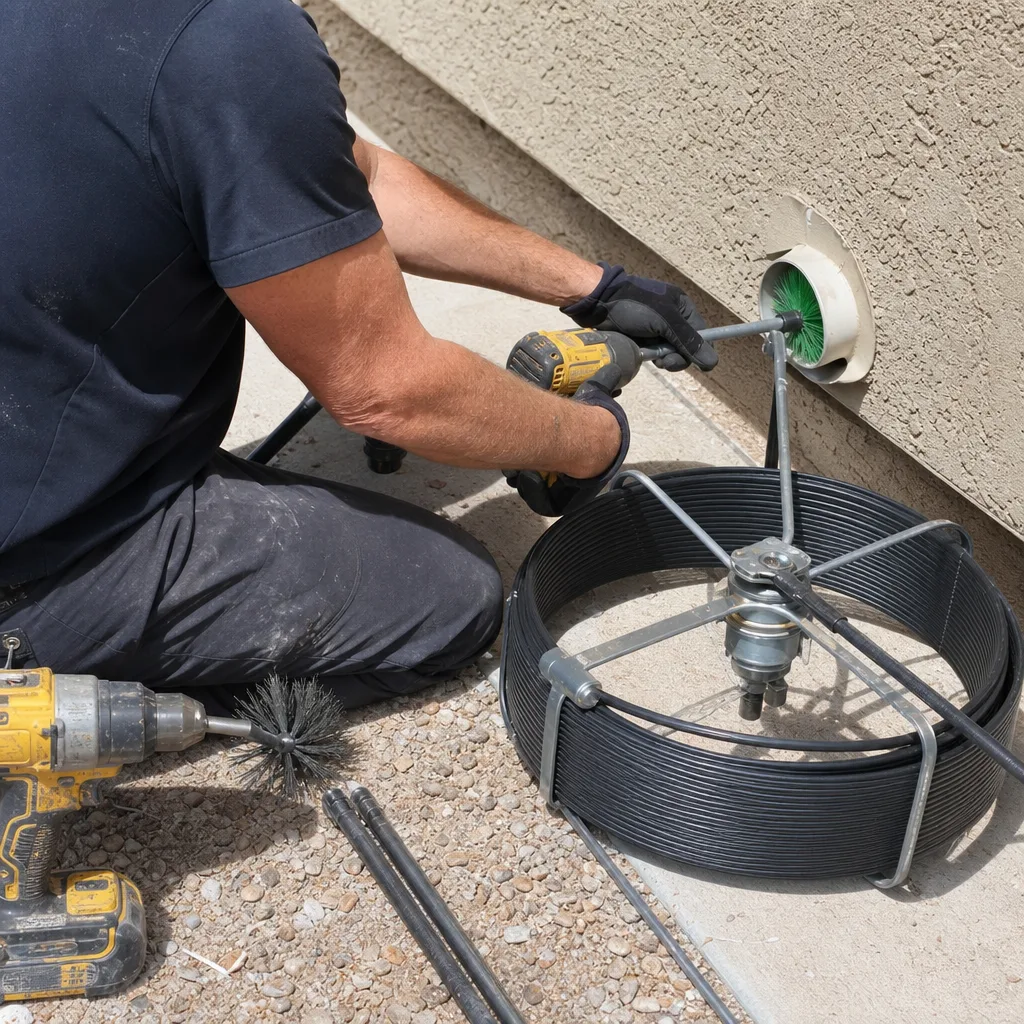
Contact cleaning uses rotating brushes or whips that physically dislodge debris from duct walls. This is often combined with negative-pressure extraction in a hybrid approach. Rotobrush manufactures contact cleaning equipment with integrated vacuum capture, suitable for lighter contamination or maintenance cleaning.
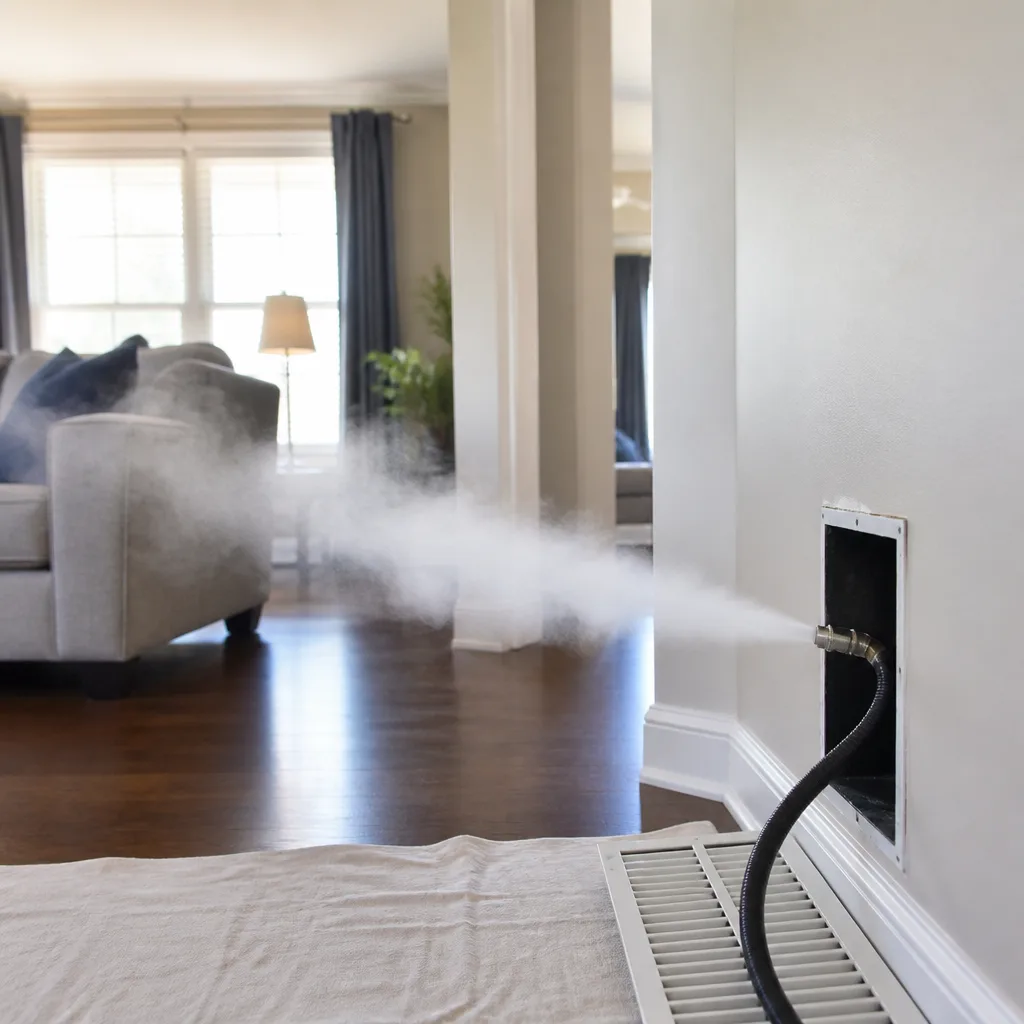
Antimicrobial treatment, when applied, should use EPA-registered products with documented safety data sheets. The contractor should name the product, not describe it as “our proprietary solution.” You have the right to know what is being aerosolized into your air distribution system.
The documentation standard matters equally. At CleanRun, every job concludes with a Documented Photo Record: the inside of every duct run, photographed before and after, delivered to the customer as part of the standard job record. This practice has been held since the first job in 2013. The photo record lets you verify that “cleaned” means removed debris, not disturbed debris. It gives you evidence if you need to dispute quality or file an insurance claim related to HVAC performance.
When calling contractors, ask: “Will I receive photos of every duct run, before and after, as part of the standard job?” A yes with specifics indicates documented accountability. A yes with qualifications, or a no, indicates otherwise.
Gilbert Climate, Codes, and Neighborhood Considerations
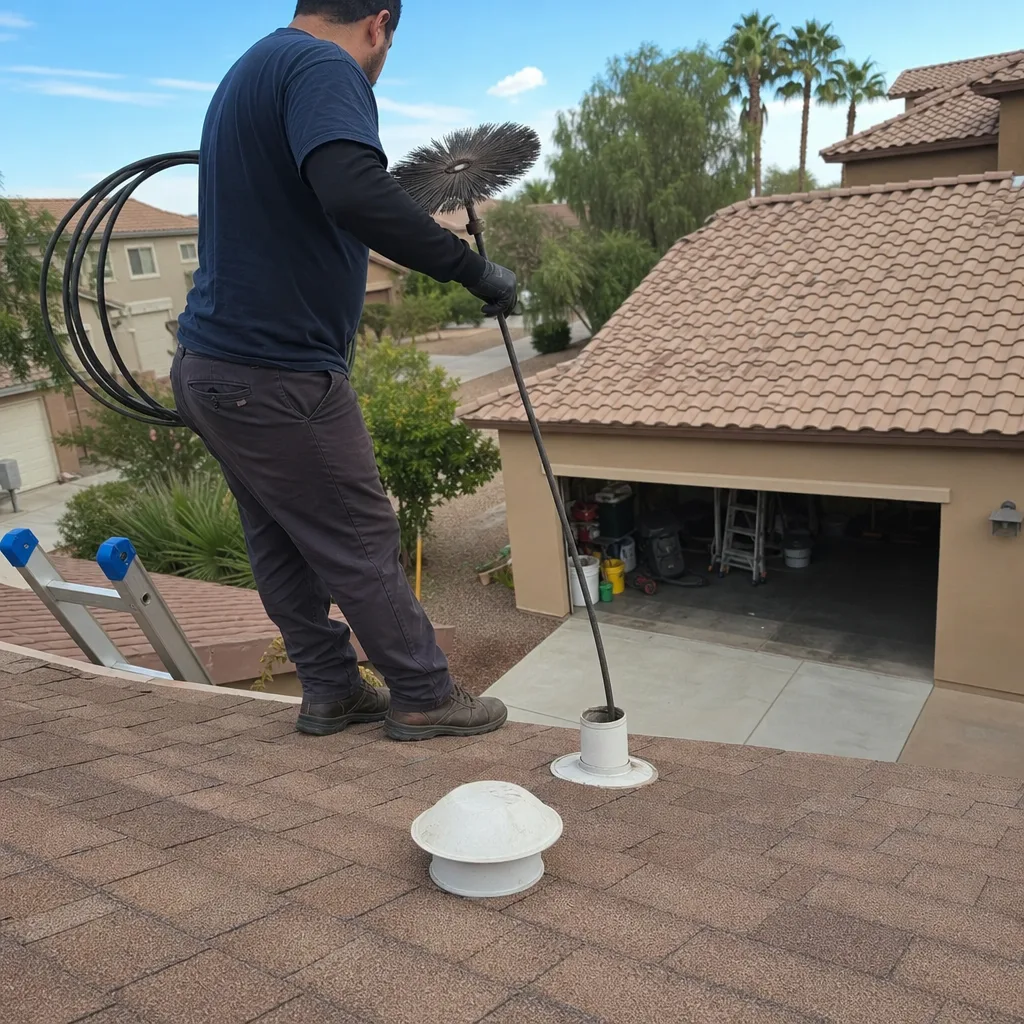
Gilbert’s environment creates specific conditions that affect duct cleaning scope, frequency, and method. Understanding these helps you evaluate whether a contractor’s proposal matches your actual needs. Explore more guides & resources in our blog for ongoing homeowner education.
Dust and particulate load. The Phoenix metro area, including Gilbert, experiences multiple dust storms annually. Haboob events deposit fine particulate that penetrates building envelopes and accumulates in return ductwork. Homes near agricultural areas or construction zones, including newer developments in the southeast Gilbert growth corridor, experience elevated loading. This does not mean ducts need monthly cleaning; it means standard “every three to five year” intervals from moderate climates may be inadequate here. Many Gilbert homeowners benefit from inspection every two to three years, with cleaning frequency based on what the camera shows, not the calendar.
Monsoon moisture. July through September brings humidity spikes that can create condensation in ductwork, particularly in homes with oversized cooling equipment that short-cycles. Fiberglass-lined ductwork, common in production homes built 2015-2020, can support microbial growth if moisture and organic debris coexist. A legitimate contractor inspects for this condition and documents findings photographically. Antimicrobial treatment should be proposed based on evidence, not as routine upsell.
Neighborhood-specific construction. Older Gilbert neighborhoods like the historic downtown area or early Agritopia phases may have galvanized steel ductwork with sealed joints that have degraded. Newer communities like Adora Trails or Whitewing at Higley feature flex duct systems with different failure modes. A contractor should adjust method and access strategy based on what your home contains, not apply a single approach to every structure.
Local code and permit considerations. Duct cleaning itself does not typically require permits in Gilbert or Maricopa County. However, duct repair, sealing, or modification may trigger permit requirements depending on scope. A contractor performing repair work should know whether your project requires permitting and should handle this as part of their scope. Unpermitted modifications can create problems at resale or during insurance claims.
Air Duct Cleaning in Gilbert requires contractors who understand these local factors, not technicians dispatched from a regional call center with standardized scripts.
Common Mistakes to Avoid
- Booking based on lowest price without scope comparison. A $79 coupon and a $600 written estimate are not comparable services. The coupon price is a fiction designed to enable upselling. Compare written estimates line-by-line, not headline-to-headline.
- Assuming all contractors carry the same insurance. Verify ROC registration and ask for a certificate of insurance. An unlicensed contractor damaging your ductwork or HVAC components can leave you with uncovered repair costs.
- Neglecting to ask about access repair responsibility. Duct cleaning requires access points. Who repairs them afterward? What materials are used? Vague answers here lead to unfinished work or additional charges.
- Accepting verbal guarantees without written documentation. “Satisfaction guaranteed” spoken by a technician is not enforceable. Written terms, delivered with the job record, are.
- Ignoring equipment specifics. CFM ratings and brand names are verifiable. A contractor who cannot name their equipment is not operating professionally.
- Failing to request the photo record before payment. Documentation is your verification. If you pay before reviewing photos, you lose leverage for dispute.
- Scheduling during monsoon season without moisture inspection. If your ducts have moisture issues, cleaning without addressing the source can worsen conditions. A camera inspection should precede any work in humid months.
When to Call a Professional
Schedule a professional inspection if you observe visible dust emission from registers, inconsistent airflow between rooms, musty odors when the system cycles, or if your home was built during Gilbert’s 2015-2020 construction boom and has never had ductwork evaluated. After any major dust storm or home renovation, camera inspection reveals whether debris loading warrants cleaning.
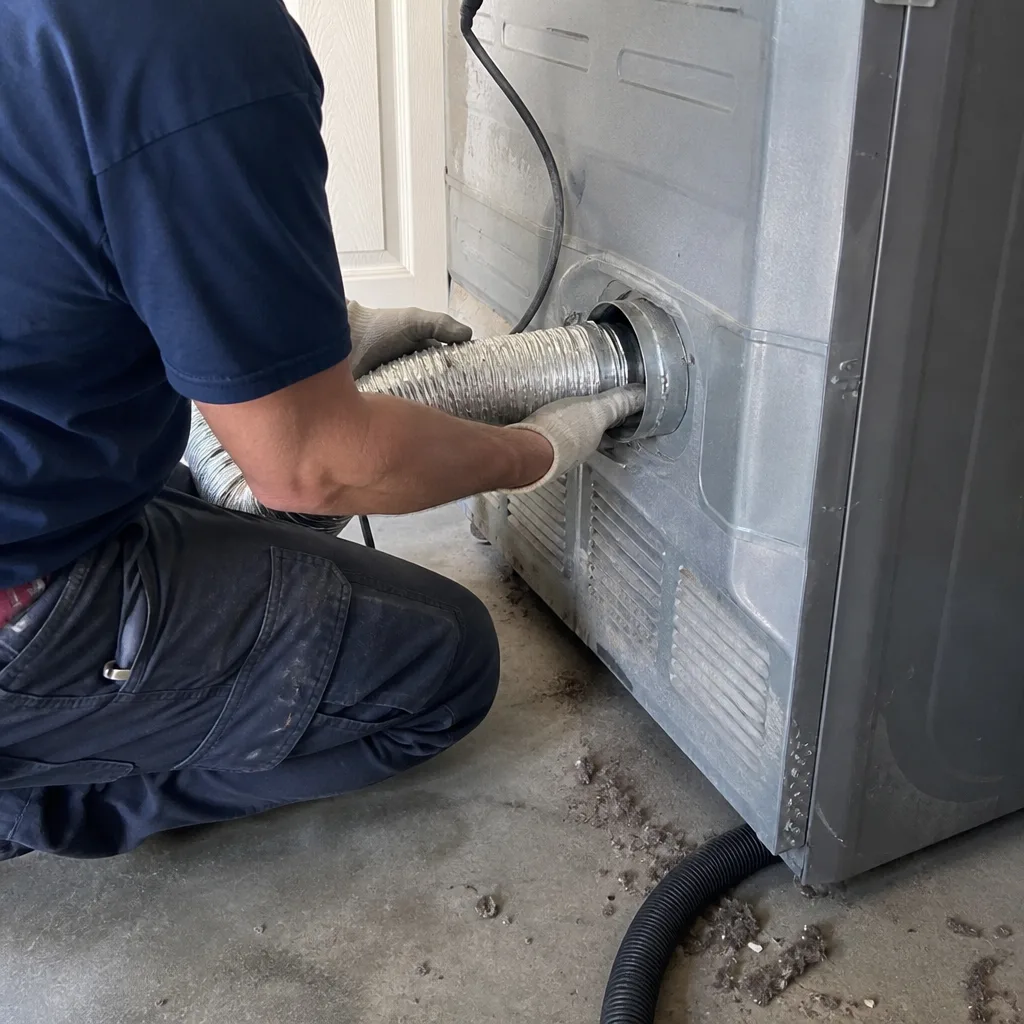
CleanRun Air Duct Cleaning Gilbert offers free estimates in Gilbert. Every estimate is written, itemized, and delivered before any work is scheduled. Call (520) 666-7643 to request yours. We also provide Dryer Vent Cleaning in Gilbert and HVAC Cleaning in Gilbert with the same documentation standards.
Frequently Asked Questions
Whole-system air duct cleaning in Gilbert typically runs $400 to $700 for standard service in a 2,000 to 3,000 square foot home, and $600 to $900 when antimicrobial treatment or access repair is included. Per-vent pricing is a common bait-and-switch structure; insist on one flat price per system agreed before work starts. Call (520) 666-7643 for a written estimate with no obligation.
The $79 to $199 quotes are loss-leaders designed to enable in-home upselling. The Arizona Attorney General has documented this pattern. A legitimate quote accounts for labor, equipment, insurance, and documentation at rates that allow the business to operate sustainably. If a price seems impossible, the work is impossible, or the real price appears later.
Demand a documented photo record of every duct run, before and after, as a standard deliverable. Review these photos before final payment. The photo record should show the interior surface of each run, not just register openings. Without this documentation, you have only the contractor’s word.
Most Gilbert homes benefit from inspection every two to three years due to elevated dust loading from desert climate and construction activity. Actual cleaning frequency depends on what camera inspection reveals: debris accumulation, moisture conditions, and occupant sensitivities. Homes near active construction or agricultural areas may need more frequent evaluation.
Air duct cleaning addresses the distribution network: supply and return ductwork, registers, and plenums. HVAC cleaning includes the air handler components: coils, blower, and drain pan. Some contractors offer both; some do not. Clarify scope in your written estimate to avoid paying for ductwork while your air handler remains contaminated.
Consumer-grade equipment cannot achieve the negative pressure required to remove adhered debris from duct walls, and DIY attempts can damage flexible ductwork or dislodge sealed joints. For maintenance, you can vacuum register covers and change filters. For system cleaning, professional equipment and documentation standards apply. Call (520) 666-7643 if you’re unsure whether your conditions warrant professional service.
The Bottom Line
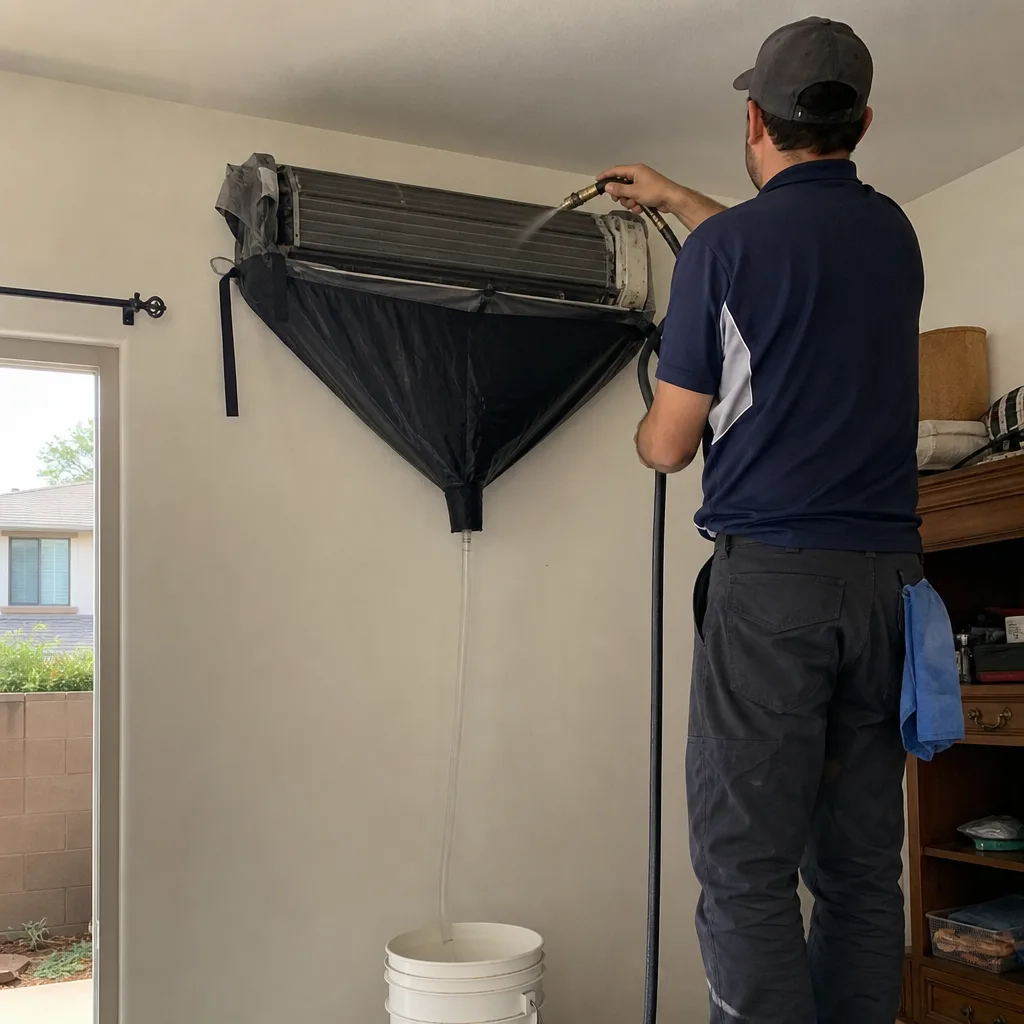
Hiring an air duct cleaning contractor in Gilbert requires filtering out an industry structure built on deception. The $79 coupon model is not a discount; it’s a documented consumer protection problem. Protect yourself with three phone questions about written pricing, equipment specifications, and documentation. Verify Arizona ROC registration. Insist on a written estimate that specifies linear feet, register count, access points, equipment, and total price. Watch for red flags in the first five minutes of any in-home interaction. And demand a written, time-bound accountability standard, not verbal assurances. The contractor who can answer all of this before arrival is the contractor who will still be accountable after the truck leaves.
Written by Tomas Reyes, Owner at CleanRun Air Duct Cleaning Gilbert, serving Gilbert since 2013.