
Last updated September 23, 2026
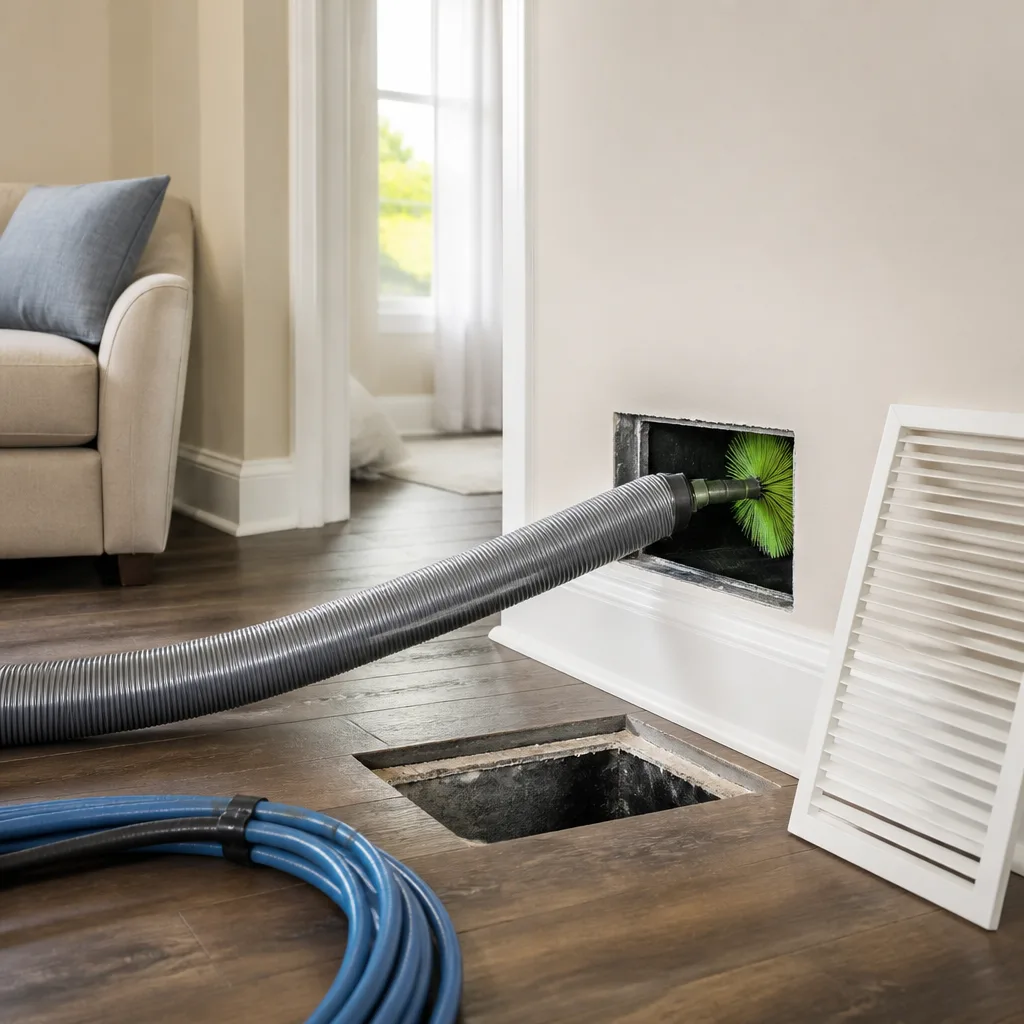
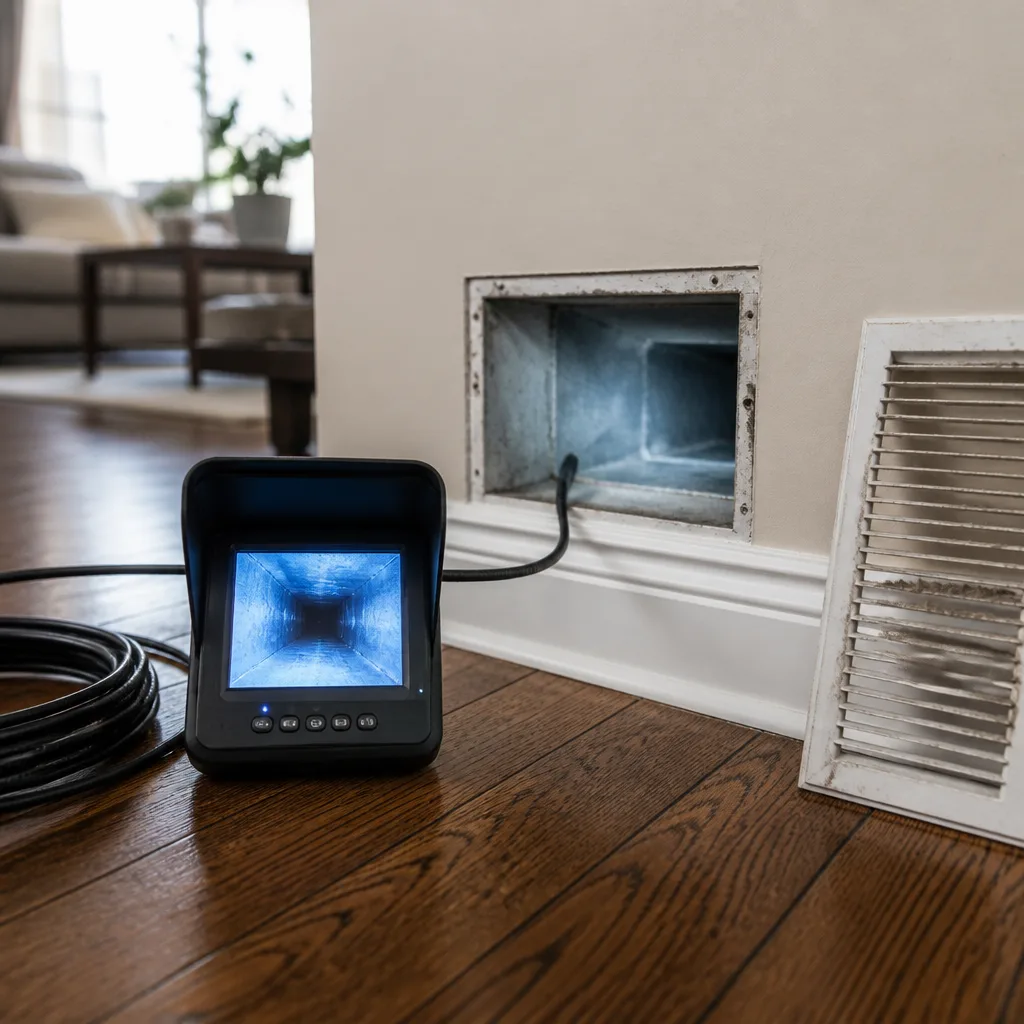
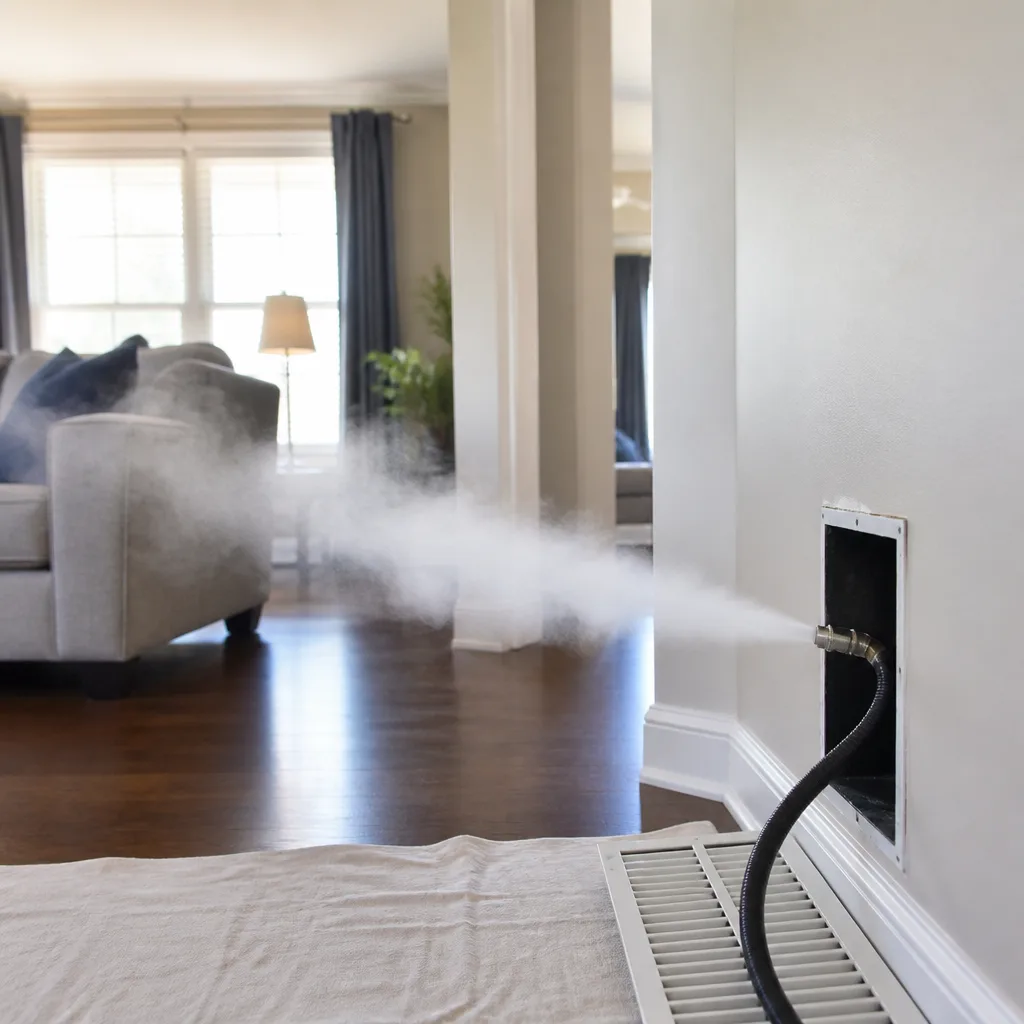
Whole-system duct and dryer vent check with before-and-after photos - you see exactly what came out of your vents
That "$99 whole-house special" is a bait ad - the real number appears once they are in your hallway, or the "clean" is a shop-vac at the register. We photograph the inside of your ducts before and after instead.
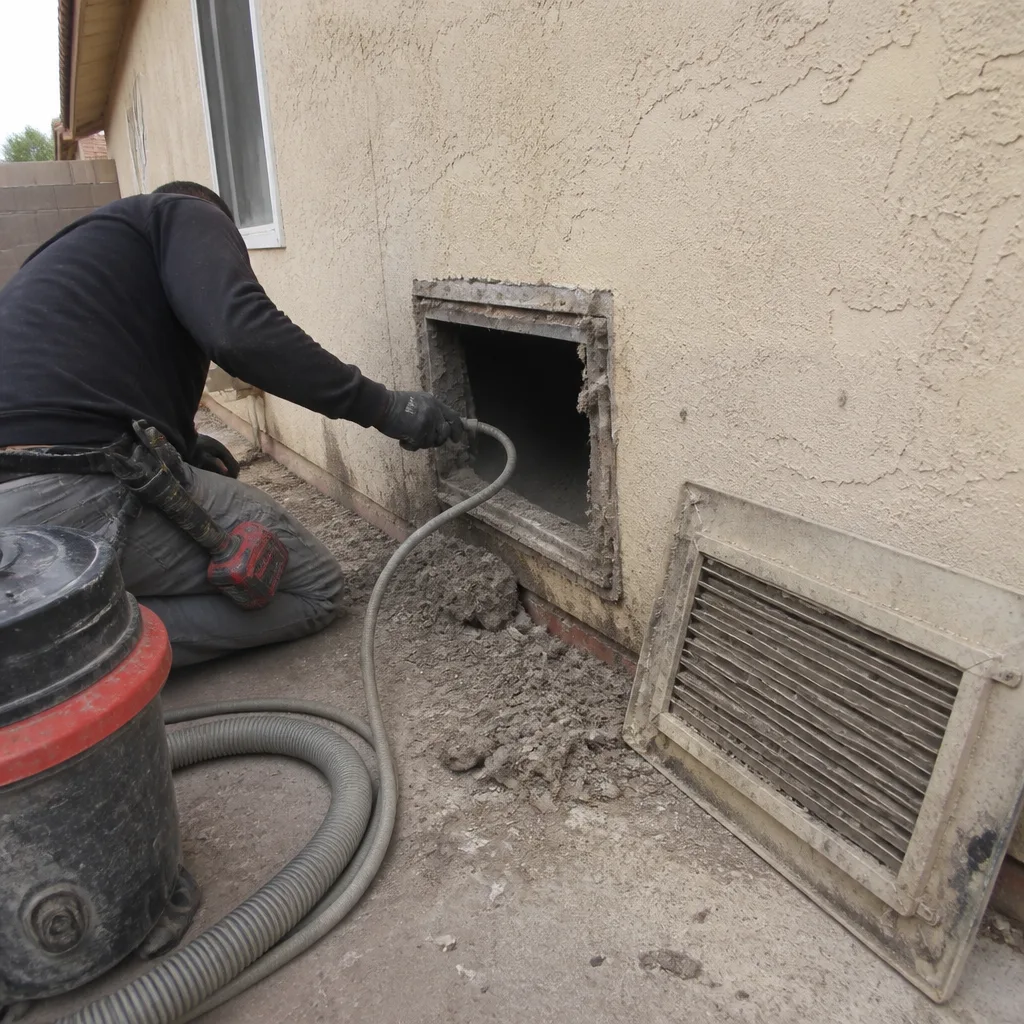 Before
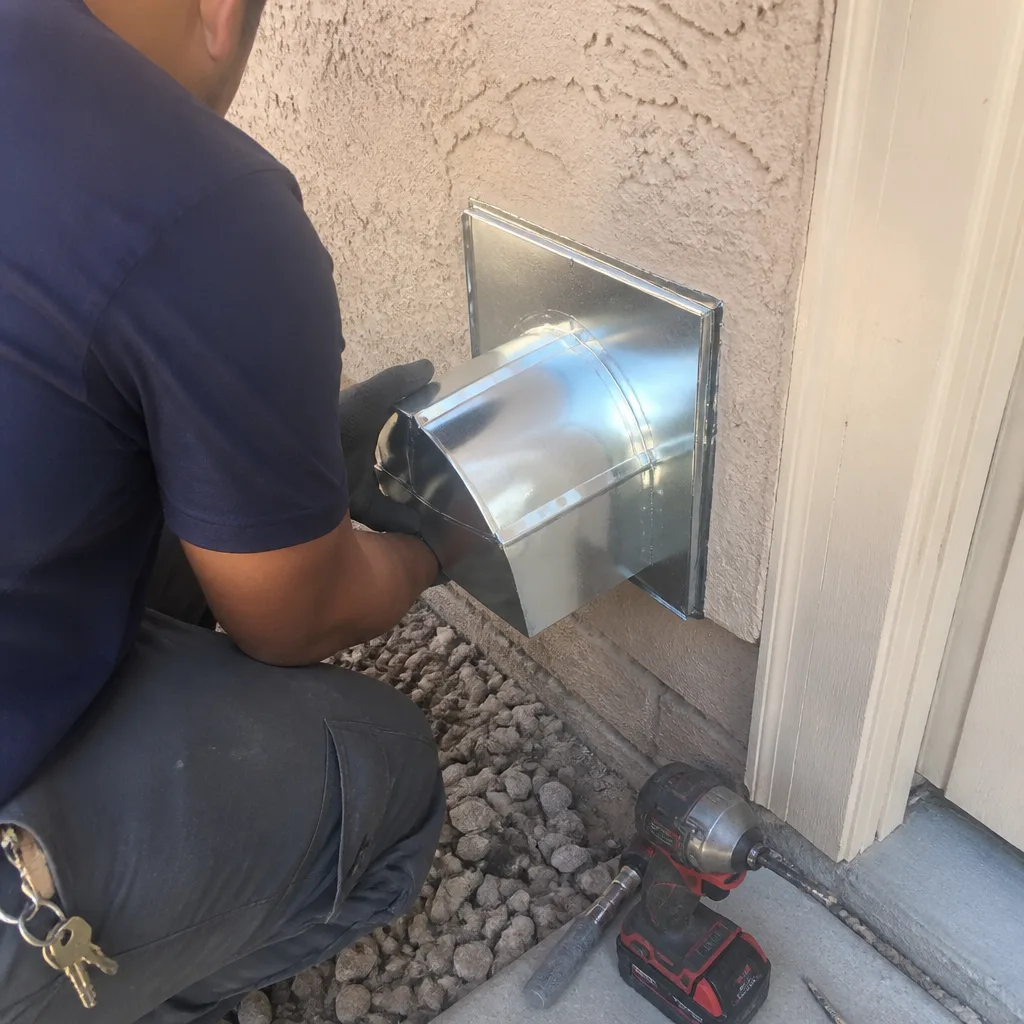 After
After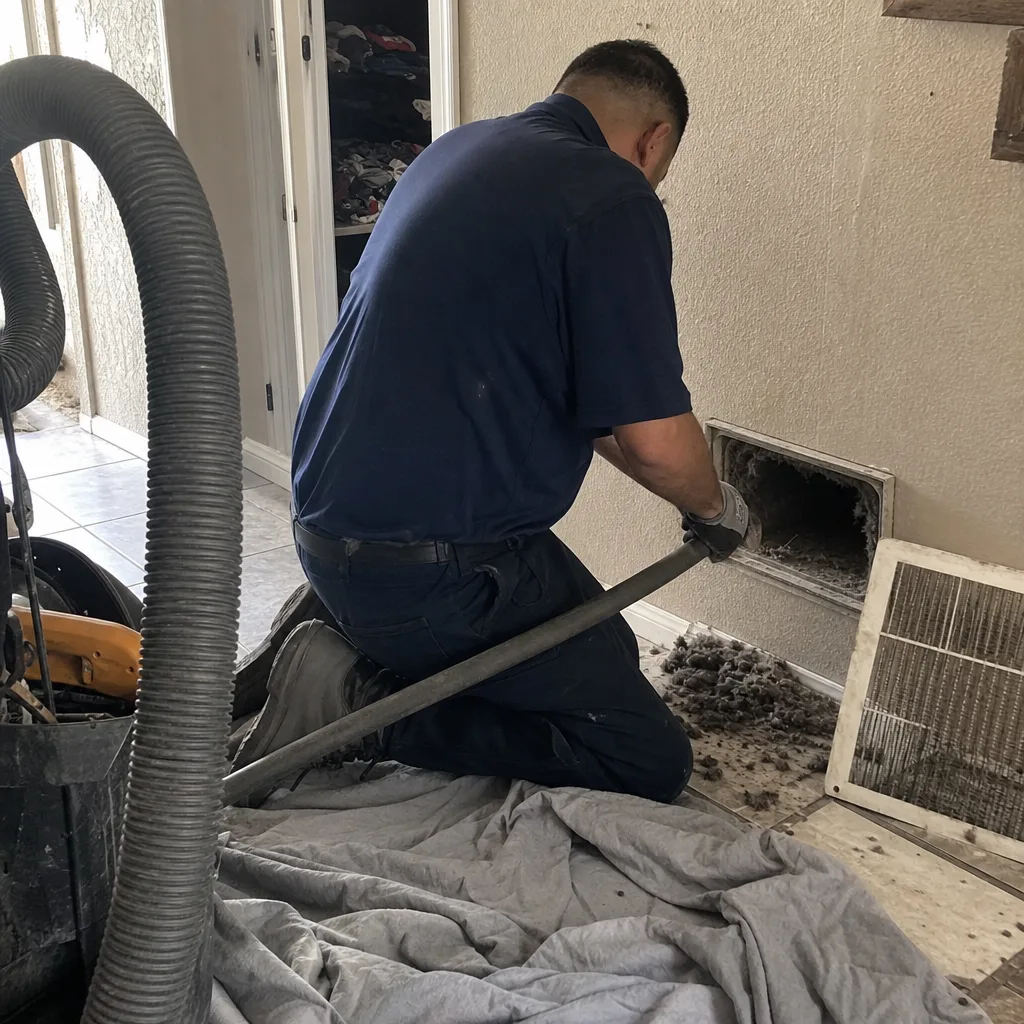 Before
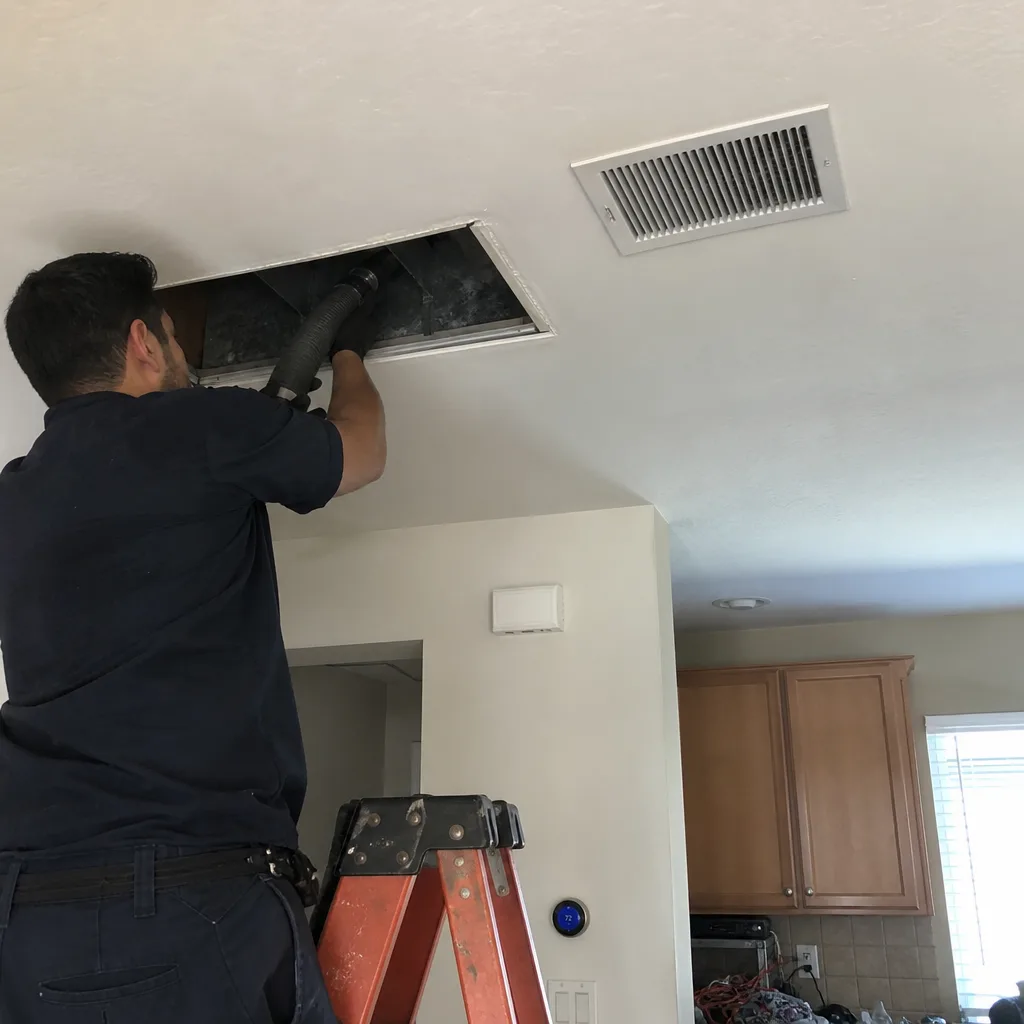 After
After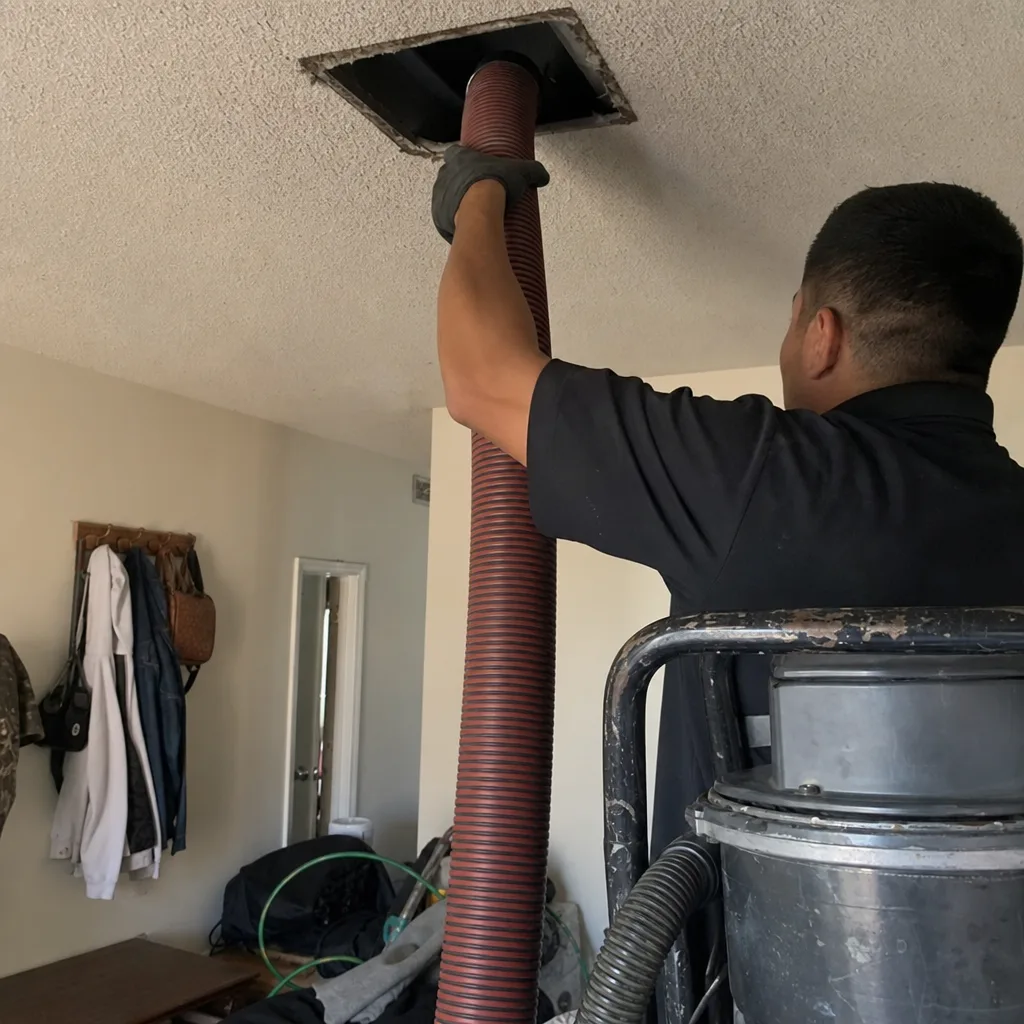 Before
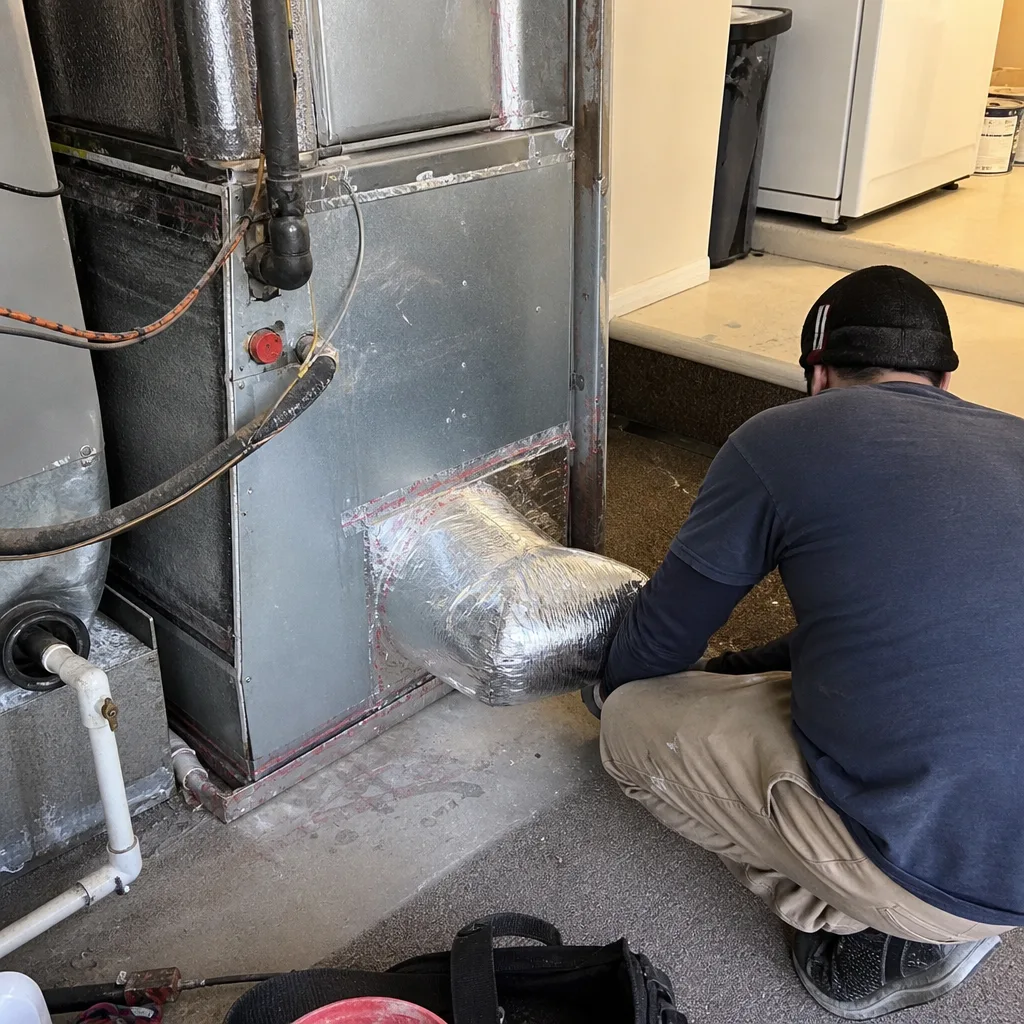 After
AfterSeasonal Air Duct Cleaning Care for Gilbert: Year-Round Homeowner’s Guide
From May through September, a Gilbert home’s air handler may log 16 or more hours of runtime per day. That’s roughly the annual runtime of a Chicago home compressed into five months. Debris accumulation and filter loading happen at a proportionally accelerated rate, yet most seasonal duct advice treats Arizona like Vermont with cacti. In this guide and our Air Duct Cleaning Maintenance Checklist for Gilbert Homeowners, you’ll learn how Gilbert’s actual two-phase mechanical cycle, the long high-load cooling season and the brief off-season when biological growth conditions peak, should shape every decision you make about your ductwork. We’ll cover what to inspect before first cooling call, how to assess haboob infiltration, why winter carries hidden mold risk, and how to build a photo record that proves whether your ducts are getting cleaner or dirtier over time.
Quick Answer
Air Duct Cleaning in Gilbert follows a two-phase cycle, not four seasons. The high-load cooling season (May-September) demands pre-season inspection and accelerated filter changes due to 16+ hour daily runtime. The off-season (October-April) is when accumulated debris settles and monsoon moisture creates the highest biological growth risk, making this the optimal window for deep cleaning and repair. Homeowners should inspect registers after haboobs, document conditions with dated photos, and schedule professional cleaning with photo-verified results every 2-3 years, or annually if construction is active nearby.
Table of Contents
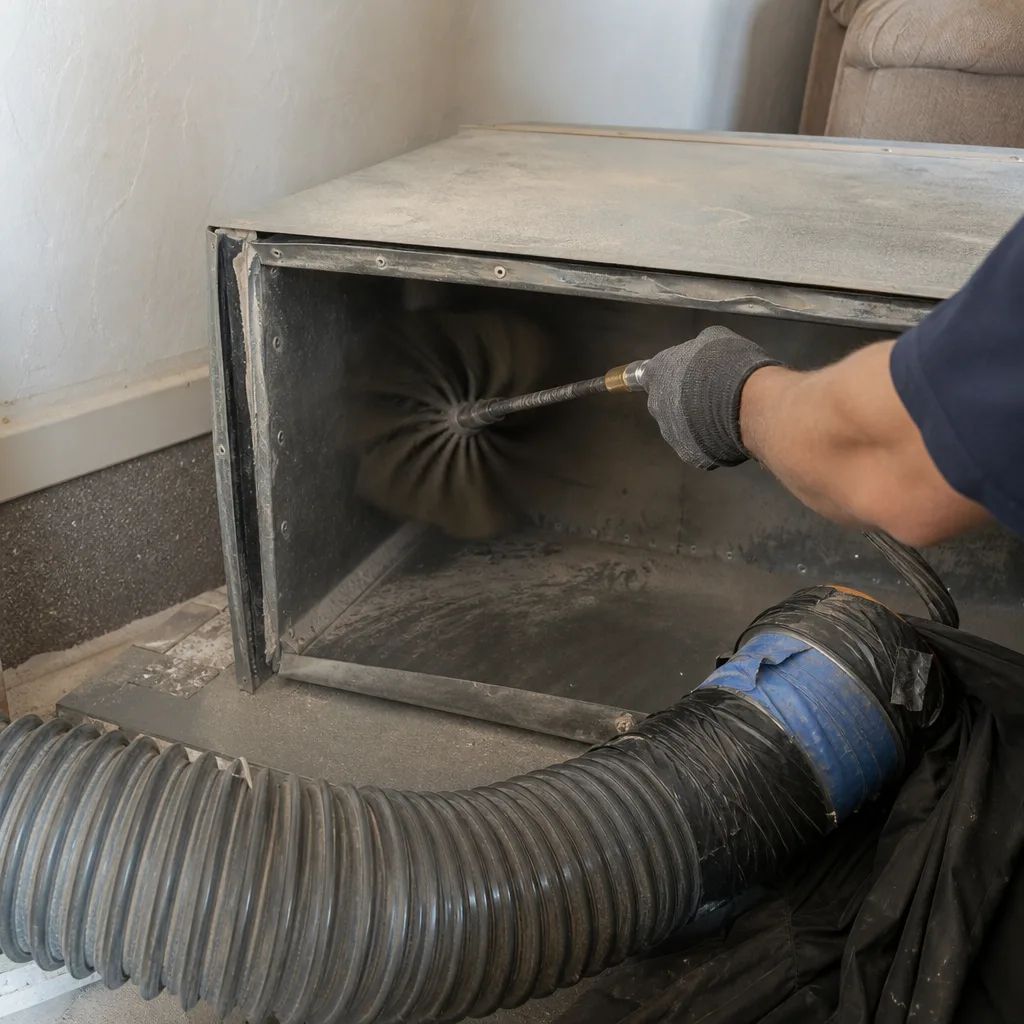
- Gilbert’s Two-Phase Mechanical Cycle, Not Four Seasons
- Pre-Season Inspection: March-April Checklist
- Haboob Aftermath Protocol: Assessing Dust Storm Infiltration
- High-Load Season Care: May-September
- The Risky Off-Season: Why Gilbert’s Brief Winter Matters
- Post-Construction Season Check: October
- How to Document Your Duct System with a Phone Camera
- What Seasonal Duct Care Costs in Gilbert
BeforeAfterGilbert’s Two-Phase Mechanical Cycle, Not Four Seasons
Most seasonal home maintenance guides import a four-season framework that doesn’t survive contact with Gilbert’s climate. The reality is simpler and more demanding. Your HVAC system operates in one of two states: high-load cooling, or everything else.
The high-load phase typically runs from early May through late September. During this window, ambient temperatures in Gilbert routinely exceed 105°F, and attic ductwork can reach 140°F or higher. Your air handler works not just to cool air, but to push it through thermally stressed ducts against significant pressure. Every hour of runtime pulls particulate through the return, loads the filter, and deposits debris at velocity changes - elbows, transitions, and the plenum (the central distribution box where all duct runs connect).
The off-season phase, roughly October through April, brings cooler temperatures but creates its own problems. Runtime drops to 2-4 hours daily or less. Reduced airflow means less dilution of whatever accumulated during summer. Monsoon moisture that entered the system in July or August, often through compromised flex duct seams in attic runs, now sits in insulation with insufficient air movement to dry it. This is when we find the most active biological growth in Gilbert homes, not during the sweltering months when homeowners assume their ducts are “too dry” for mold.
We’ve documented this pattern across 52,000+ homes since 2013. The air duct cleaning in Gilbert that produces the most dramatic photo records is almost always performed in October or November, when summer debris is fully deposited and moisture issues have had time to develop.
Key implications for homeowners:
- Filter changes should accelerate during high-load season, not follow a rigid quarterly schedule
- The “best” month for professional cleaning is typically October, when summer loading is complete and before holiday scheduling conflicts arise
- Winter complaints about musty odors often trace to summer moisture that went unaddressed
- Thermal cycling between 140°F attic days and 50°F nights stresses duct joints and seals year-round, not seasonally
Pre-Season Inspection: March-April Checklist
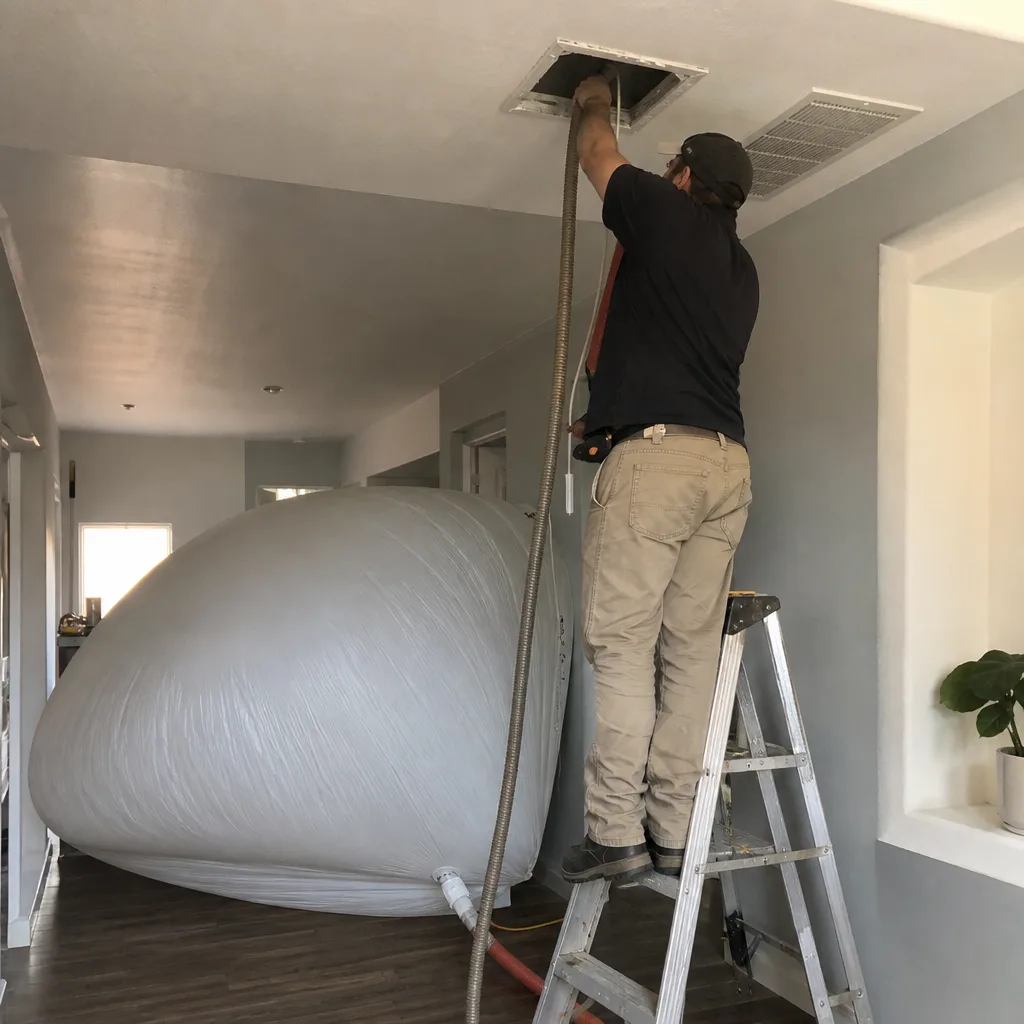
Before the first cooling call of the year, a focused inspection prevents the small failures that become expensive mid-July emergencies. We recommend homeowners complete this checklist themselves, then call for professional evaluation if any item flags concern, or explore more guides & resources for deeper maintenance strategies.
What to Check
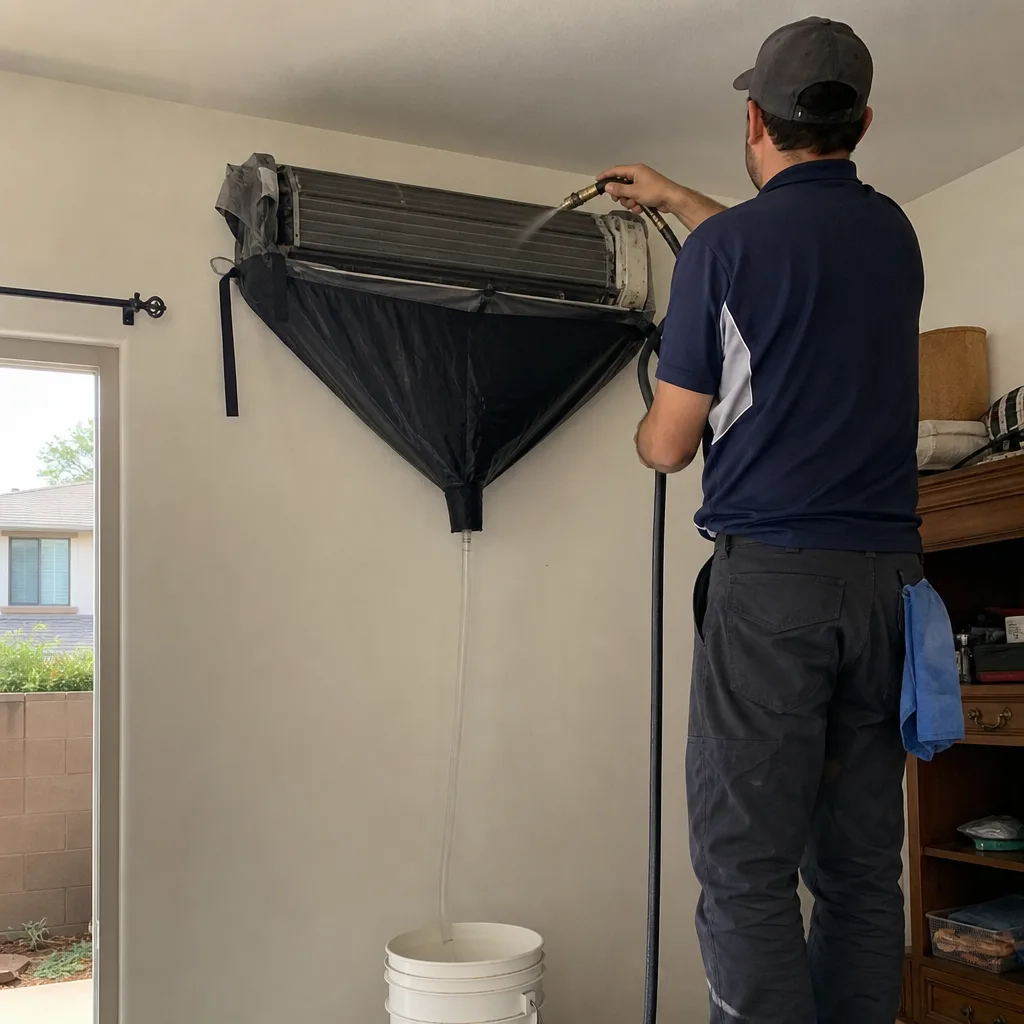
- Evaporator coil condition. The coil sits above your furnace or air handler and removes heat from circulating air. Access requires removing a panel, so only proceed if you’re comfortable doing so safely. Look for dust matting or any dark staining that suggests prior moisture issues. A clean coil in March means efficient heat transfer all summer. A dirty coil forces longer runtime and pulls more debris through the system.
- Condensate drain pan and line. The pan catches water condensed from humid indoor air. In Gilbert, this pan sees intense use once monsoon humidity arrives. Check for standing water, rust, or cracks. The drain line should flow freely; a clogged line in July can overflow and damage ceilings. Pour a cup of water through the line and confirm it exits at the exterior termination.
- Duct joint integrity after thermal cycling. Walk your attic if accessible, or inspect visible ductwork in garages or crawl spaces. Look for separated flex duct collars, sagging runs, and tape that has peeled from temperature extremes. Gilbert’s attic thermal cycling, 140°F days to 50°F nights, is brutal on adhesives. A 1/8-inch gap at a joint can pull attic air into the system continuously.
- Return air pathway. The return grille should seal tightly to the wall or ceiling. Gaps here pull unfiltered air from wall cavities, which in Gilbert often contain blown cellulose insulation and decades of construction dust.
- Filter fit and condition. Remove the filter and hold it to light. If you can see through it clearly, it’s still functional. Check that it seats snugly without bypass gaps. A 1-inch filter loaded after a single Gilbert summer may need replacement before the season even starts.
If you find separated joints, moisture staining, or coil matting, these are not DIY repairs. The coil requires specialized cleaning agents that won’t damage aluminum fins. Duct sealing in attics involves working in 140°F spaces with proper respiratory protection. CleanRun Air Duct Cleaning Gilbert home provides free estimates, and we’ll put a written price to any needed work before a single panel comes off, per Haven Standard Clause 1.
Haboob Aftermath Protocol: Assessing Dust Storm Infiltration
Gilbert sits in the path of the North American Monsoon, and July through September brings dust storms that deposit fine particulate across the entire Phoenix metro area. The 2011 July 5 haboob dropped an estimated 3,000 to 5,000 tons of dust across the region. Your duct system is not sealed against this.
After any major dust event, assess infiltration before simply changing the filter and assuming the problem is solved. Filters capture what passes through them. They do not capture what enters through leaks downstream.
Register Inspection Method
Remove two or three supply registers, the grilles where conditioned air enters your rooms, and inspect with a flashlight. Look for:
- Fine dust accumulation on the duct walls immediately behind the register
- Debris patterns that suggest airflow direction changes, indicating possible blockages
- Moisture staining or musty odor, which suggests the dust carried enough organic material to support growth
Pay particular attention to registers in rooms that felt “dusty” immediately after the storm. These often indicate return-side leaks pulling attic or wall cavity air that bypassed the filter entirely.
Consumer Particle Counter Verification
A basic laser particle counter, available for $50-$150 from hardware retailers, provides objective data. Measure ambient particle counts (0.5 micron and 2.5 micron) in a room with the system off, then with the system running for 15 minutes. If counts rise with system operation, your ducts are contributing particulate, not removing it. Document these readings with dates. We’ve had Gilbert homeowners in Power Ranch and Agritopia present six months of counter data that clearly showed post-haboob degradation, then improvement after professional cleaning with negative-pressure extraction.
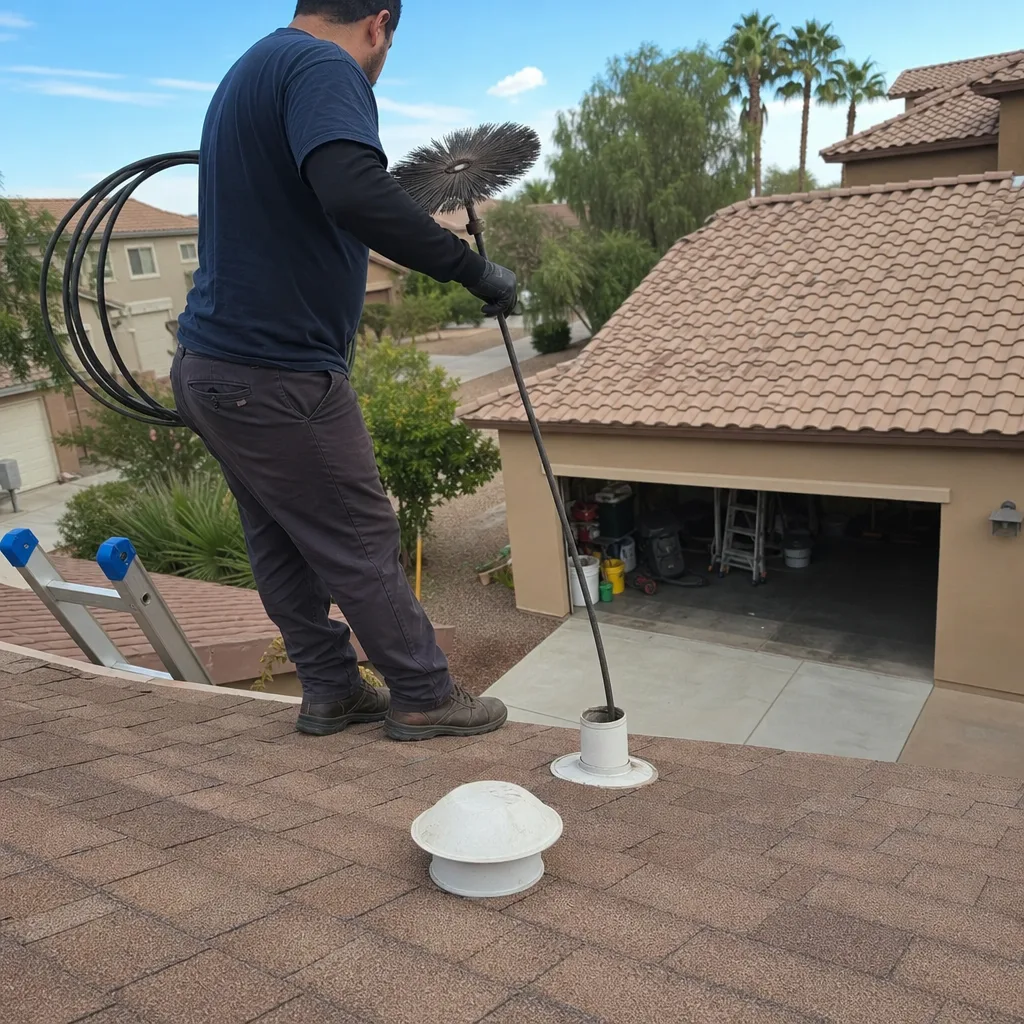
The critical distinction: vacuum noise without source removal just redistributes this dust. Professional cleaning with equipment like the Rotobrush and Nikro systems we deploy uses mechanical agitation plus negative-pressure extraction to remove debris rather than mobilize it. Every dryer vent cleaning in Gilbert and duct cleaning we perform includes a Documented Photo Record of every run, so you can verify what came out rather than trust a verbal report.
High-Load Season Care: May-September
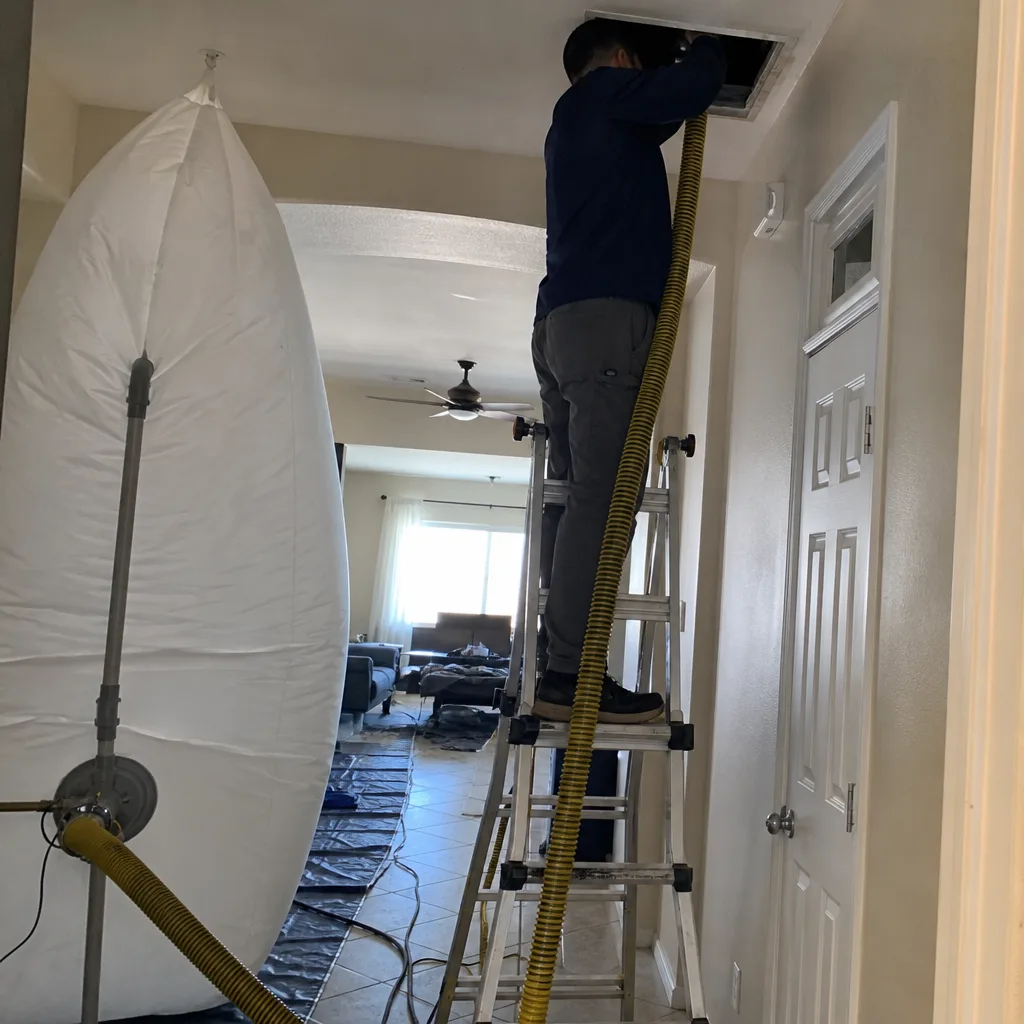
Once cooling season begins, your role shifts from prevention to monitoring. The system is under maximum stress, and small problems compound quickly.
Filter Management
Standard 1-inch pleated filters in Gilbert high-load conditions typically require replacement every 30-45 days, not the 90 days printed on the packaging. That packaging assumes moderate use in mixed climates. Your system moves more air in July than many systems move in a quarter elsewhere.
We recommend MERV 8-11 for most Gilbert homes. Higher MERV ratings restrict airflow and can stress blower motors in already demanding conditions. If you want enhanced filtration, upgrade the filter cabinet to accept 4-inch or 5-inch media, which provides more surface area and longer service life without the pressure drop. Honeywell and Aprilaire both manufacture compatible retrofit cabinets we’ve installed in Gilbert homes from Morrison Ranch to Seville.
Register and Return Monitoring
Monthly, check that all supply registers are fully open and unobstructed. Closing registers to “save energy” increases static pressure and can cause blower motor failure. Check return grilles for dust accumulation on the grille face, which indicates filter bypass or grille loading.
Thermostat Runtime Logging
Modern thermostats track daily runtime. A sudden increase without corresponding temperature change suggests duct leakage, coil degradation, or filter restriction. Compare week-over-week; a 20% runtime increase is worth investigating before it becomes a 50% increase and a compressor replacement.
What Professional Service Looks Like During High-Load Season
We do not recommend scheduling full duct cleaning during peak summer. Attic temperatures make the work hazardous for technicians and can compromise extraction equipment performance. However, this is the critical window for:
- Emergency duct repair for separated joints causing immediate efficiency loss
- Coil cleaning when performance has measurably degraded
- Drain pan and line service to prevent overflow
Any service during this window should include photo documentation of conditions found, since you’re unlikely to want repeat attic access until October. Our crews carry Abatement Technologies portable HEPA filtration to protect your home from any debris mobilized during repair work.
The Risky Off-Season: Why Gilbert’s Brief Winter Matters
Counterintuitively, the months when your system runs least are when ductwork faces the highest biological risk. This is the single most misunderstood aspect of Gilbert duct maintenance.
Here’s the mechanism. Monsoon season, July through mid-September, introduces moisture into the duct system through multiple pathways: infiltration at compromised joints, condensation on cool duct surfaces in humid attic air, and occasional drain pan overflow. During high-load season, continuous airflow provides some drying. Once temperatures drop and runtime decreases in November through February, that moisture persists.
Mold and bacterial growth require three conditions: moisture, organic material, and temperatures between 40°F and 100°F. Gilbert’s winter attic temperatures sit squarely in this range. The dust that loaded all summer provides the organic material. The reduced airflow provides the stagnant conditions. We’ve pulled photo records from January jobs in Gilbert’s Cooper Commons and Spectrum at Val Vista that show active growth on duct interior surfaces, always traced to moisture events months prior that the homeowner had forgotten.
Off-Season Action Items
- Schedule deep cleaning and inspection in October or November. This timing captures all summer loading while temperatures permit full attic work. The photo record establishes your baseline for the year ahead.
- Inspect insulation condition around flex duct. Wet or compressed insulation loses R-value and can harbor growth against the duct exterior. We replace damaged insulation with Guardsman-labeled products rated for Arizona attic conditions.
- Run the fan periodically. Even without heating or cooling need, 15 minutes of fan-only operation daily provides air movement that inhibits stagnation. Most thermostats have a “circulate” setting for this purpose.
- Monitor for musty odors at first heating use. The first heating cycle in December often mobilizes dormant spores. If you smell mustiness that dissipates after an hour, growth is likely present and should be assessed professionally.
The 365-Day Done Right Promise applies to any work performed during this window. If conditions recur, we make it right. The guarantee is in writing on every job, not a verbal assurance subject to manager discretion.
Post-Construction Season Check: October
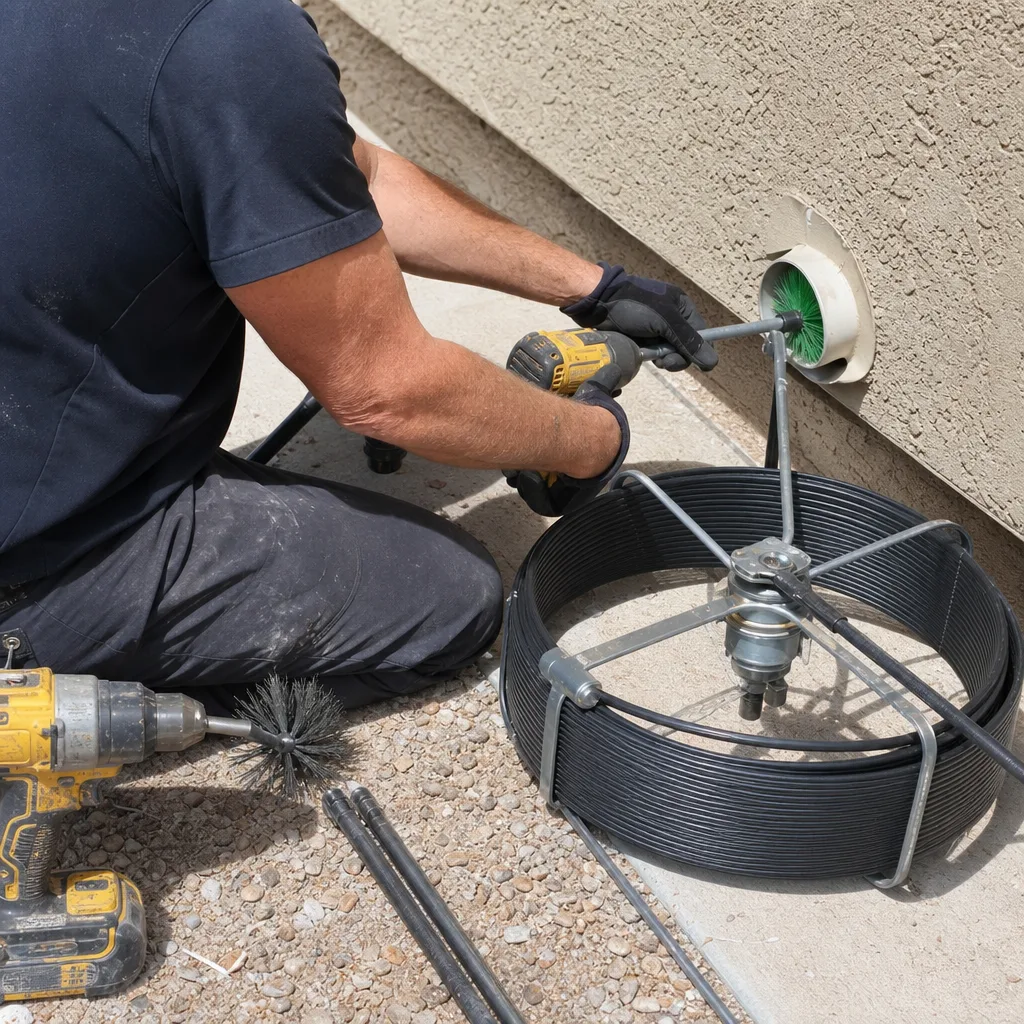
Gilbert’s building activity follows its own calendar. The cooler months bring increased construction as concrete and framing cure more predictably. New developments in Gilbert’s southeast corridor, and infill construction in established neighborhoods, generate particulate that loads ducts differently than ambient outdoor dust.
Construction dust has three distinguishing characteristics that make it more problematic than typical household debris:
- Drywall dust is extremely fine, often below 1 micron, and passes through standard filters. It deposits in duct runs as a uniform film that reduces airflow efficiency.
- Wood fiber from framing and trim work is larger and more irregular, creating turbulence that catches other debris at joints and elbows.
- Adhesive and sealant particles carry volatile compounds that can produce odors when heated by attic temperatures and then distributed through the home.
If your home was built between 2015 and 2025, or if active construction occurs within 500 feet, schedule a post-construction inspection in October regardless of when you last had service. We use borescope cameras to inspect the plenum and first elbows, where construction dust typically deposits heaviest. The photo record from this inspection often shows conditions that surprise homeowners who believed their “new” ducts were clean.
For homes in active construction zones, consider upgrading to media filtration with an Aprilaire or Honeywell whole-house system. These mount at the air handler and provide MERV 13+ filtration without the pressure drop of high-MERV 1-inch filters. We size and install these systems with written pricing before work begins, per Haven Standard Clause 1.
How to Document Your Duct System with a Phone Camera
A longitudinal photo record is the most underutilized tool in residential duct maintenance. It transforms subjective complaints (“the air seems dusty”) into objective trend data. It protects you from contractors who claim work was performed that cannot be verified. And it provides the documentation that supports warranty claims, insurance disputes, and resale disclosures.
What to Photograph
- Return grille and filter, monthly. Date-stamped photo showing filter condition at replacement. Over time, you’ll see loading patterns that correlate with seasons, landscaping changes, or construction activity.
- Supply register interiors, quarterly. Remove the register, photograph the duct walls 6-12 inches inside with flash. Look for dust accumulation, staining, or debris changes.
- Condensate drain pan, at season start and end. Document cleanliness and any water staining.
- Thermostat runtime screens, monthly. Screenshot daily or weekly runtime. Sudden increases are early warning indicators.
- Any professional service documentation. When CleanRun performs work, you receive a Documented Photo Record of every duct run, before and after, as a standard deliverable. Archive these with dates.
How to Label and Store
Use consistent file naming: YYYY-MM-DD_location_condition. Example: 2024-10-15_MasterBR_Supply_before.jpg. Store in a dedicated cloud folder shared with all household decision-makers. When you call for service, reference specific photos by date. A technician who hears “the October 15 master bedroom supply photo showed black staining” knows exactly where to focus inspection.
We’ve had Gilbert homeowners present five years of photo records that clearly demonstrated progressive duct degradation from a single unresolved joint separation. The longitudinal data made the repair decision obvious and supported their home sale disclosure without drama.
What Seasonal Duct Care Costs in Gilbert
Honest pricing is central to the Haven Standard. See our Air Duct Cleaning Cost Breakdown: The Gilbert Homeowner’s Reference for 2026 for published ranges so you can budget before calling, then provide a written fixed price for your specific system before any work begins.
| Service | Gilbert Price Range | What’s Included |
|---|---|---|
| Full air duct cleaning, single system | $450 - $750 | All supply and return duct runs, plenum, registers; negative-pressure extraction with Rotobrush or Nikro equipment; Documented Photo Record of every run |
| HVAC cleaning (coil, blower, cabinet) | $280 - $450 | Evaporator coil cleaning, blower wheel removal and cleaning, cabinet sanitization; before/after photos |
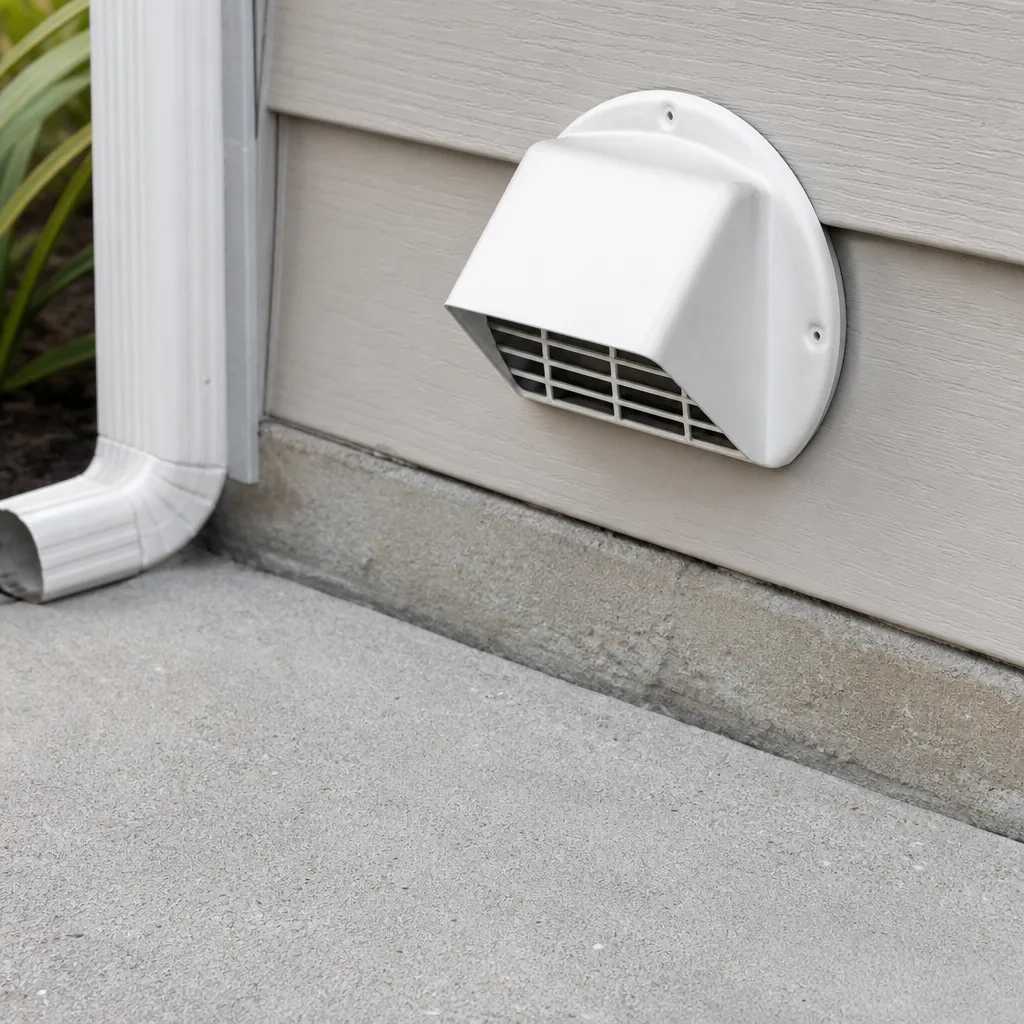
| Dryer vent cleaning | $150 - $250 | Full vent run from dryer to exterior termination; airflow verification; photo documentation |
| Duct repair and sealing | $200 - $600 | Joint resealing, flex duct replacement, collar repair; priced per linear foot and accessibility |
| Air quality and sanitizing treatment | $180 - $350 | EPA-registered antimicrobial application to duct interiors; applied after mechanical cleaning, not as substitute |
These are whole-system prices, not per-vent teasers that balloon on arrival. Haven Standard Clause 1 requires written price agreement before work starts, every time. We also offer a Free Second Opinion on any written estimate from another contractor. Bring their quote; we’ll put our number next to it in writing.
Homes with multiple systems, extensive flex duct in inaccessible attics, or post-construction conditions may fall outside these ranges. The written estimate process accounts for your specific configuration without pressure or upsell.
Common Mistakes to Avoid
- Following a rigid quarterly filter schedule. Gilbert’s high-load season demands 30-45 day filter changes for standard 1-inch media. The “change every 3 months” advice on packaging assumes moderate use in temperate climates.
- Ignoring haboob aftermath. Changing the filter after a dust storm addresses only what passed through the filter. Infiltration at duct leaks downstream continues until identified and sealed.
- Scheduling duct cleaning in peak summer. Attic temperatures above 130°F compromise technician safety and extraction equipment performance. October through April provides better conditions and more thorough results.
- Accepting “cleaning” without photo documentation. Verbal assurance that “your ducts are clean” is unverifiable. Demand before/after photos of every run, included as standard deliverable, not an upsell.
- Closing supply registers to “save energy.” This increases static pressure, stresses blower motors, and can cause duct joint failure. If a room is too cold, the system is likely oversized or poorly balanced, not over-supplied.
- Using high-MERV 1-inch filters without system verification. MERV 13 in a 1-inch frame often restricts airflow enough to damage equipment. Upgrade the filter cabinet to 4-inch or 5-inch media instead.
- Dismissing winter mustiness as “just dust.” In Gilbert, musty odors at first heating use often indicate biological growth from summer moisture that went unaddressed. Early inspection prevents spread.
When to Call a Professional
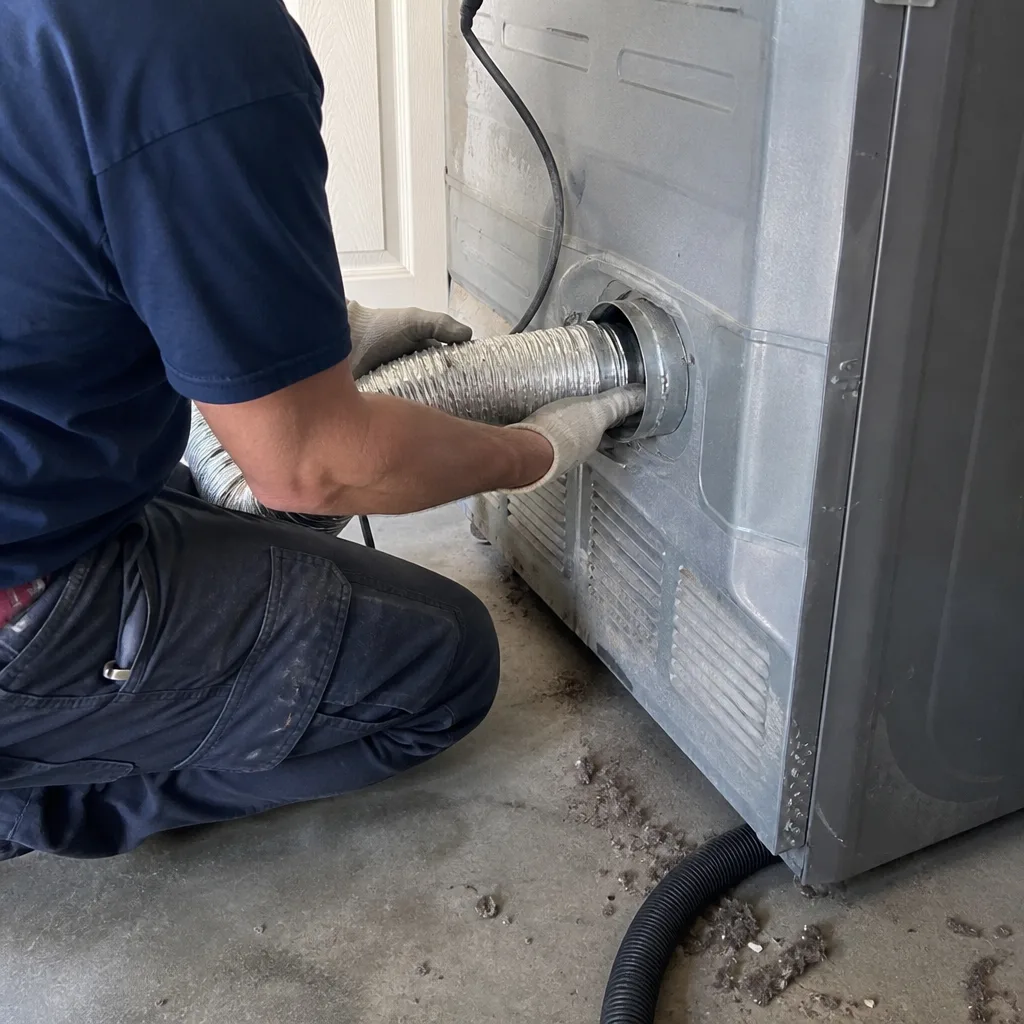
Some conditions require trained evaluation and equipment that homeowners cannot reasonably access. Call for professional assessment if you observe: visible mold or moisture staining on registers or ductwork; sudden increase in dust accumulation throughout the home; musty odors that persist beyond the first heating cycle; thermostat runtime increases of 20% or more without temperature setting changes; post-haboob conditions where register inspection shows infiltration beyond the filter; or any ductwork in attic spaces during summer months, where heat exposure creates safety hazards for DIY inspection.
CleanRun Air Duct Cleaning Gilbert offers free estimates throughout Gilbert and surrounding communities. Every estimate includes a written price before work begins, backed by Haven Standard Clause 1. Our technicians are background-checked and uniformed, identified by name before arrival per Haven Standard Clause 3: Verified Crews. Call (520) 666-7643 to schedule.
Frequently Asked Questions
Every 2-3 years for typical residential systems, or annually if your home is near active construction, you’ve experienced major haboob infiltration, or occupants have respiratory sensitivities. The October-November window typically produces the most comprehensive results due to completed summer loading and workable attic temperatures. Call (520) 666-7643 for a written estimate on your specific system.
The $79-$129 coupon model typically covers a brief vacuum insertion at one or two access points, not full system cleaning. The price escalates once the technician is in your home. CleanRun’s pricing is system-based and agreed in writing before work starts, per Haven Standard Clause 1. Every run is photographed before and after, so you can verify what was actually done. Bring any competitor’s written quote for a Free Second Opinion.
Demand a Documented Photo Record of every duct run, included as standard deliverable, not an optional add-on. CleanRun has provided this on every job since 2013. The photos should show date stamps, identifiable duct features, and clear before/after differences. Without documentation, you’re trusting a verbal report against your financial interest.
No. Monsoon moisture enters duct systems through compromised joints, drain pan issues, and condensation on cool surfaces in humid attic air. Once inside, it persists in insulation and low-airflow areas. Gilbert’s brief winter, with reduced system runtime, provides ideal stagnant conditions for biological growth. We’ve documented active mold in January from moisture events the previous July.
Duct cleaning addresses the distribution network: supply and return duct runs, plenum, and registers. HVAC cleaning addresses the air handler components: evaporator coil, blower wheel, and cabinet interior. Both are necessary for complete system hygiene. Duct cleaning without coil cleaning leaves the source of contamination intact; coil cleaning without duct cleaning leaves the distribution network loaded. CleanRun offers both services with integrated photo documentation.
Homeowners can and should perform register inspection, filter changes, and basic monitoring as described in this guide. However, complete duct cleaning requires negative-pressure extraction equipment, mechanical agitation tools, and safe access to attic ductwork that may traverse 140°F spaces. The National Air Duct Cleaners Association recommends professional service for complete cleaning. CleanRun uses Rotobrush, Nikro, and Abatement Technologies equipment operated by technicians trained under the H.A.V.E.N. Standard.
The Bottom Line
Gilbert’s duct maintenance follows a two-phase reality: the long, punishing cooling season when debris accumulates at accelerated rates, and the off-season when that debris settles and moisture creates biological risk. Structure your care around these actual conditions, not imported four-season advice. Inspect before first cooling call, assess after haboobs, clean in October when conditions are optimal, and document everything with dated photos. The homeowners who avoid surprises are those who treat their duct system as a mechanical asset with a verifiable maintenance history, not a hidden infrastructure they assume is fine until it isn’t.
Written by Tomas Reyes, Owner at CleanRun Air Duct Cleaning Gilbert, serving Gilbert since 2013.