
Whole-system duct and dryer vent check with before-and-after photos - you see exactly what came out of your vents
That "$99 whole-house special" is a bait ad - the real number appears once they are in your hallway, or the "clean" is a shop-vac at the register. We photograph the inside of your ducts before and after instead.
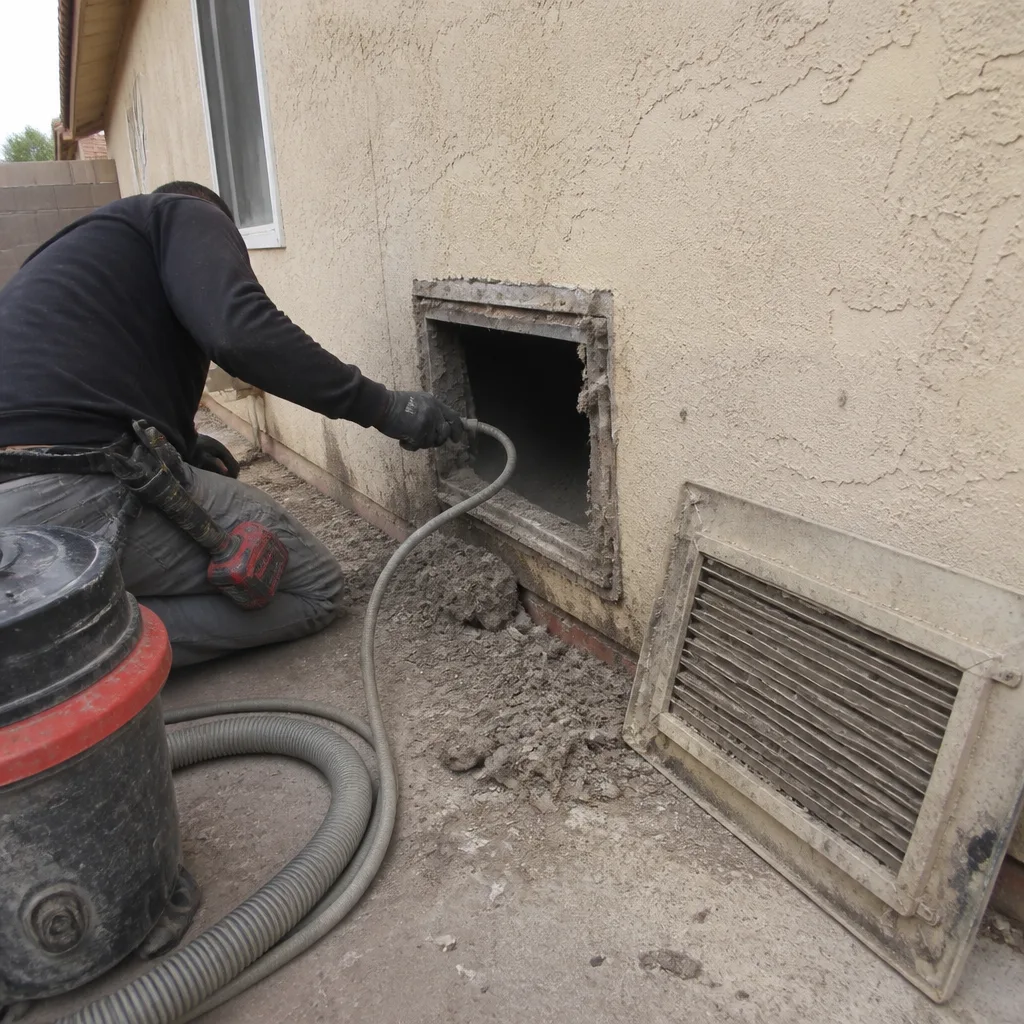 Before
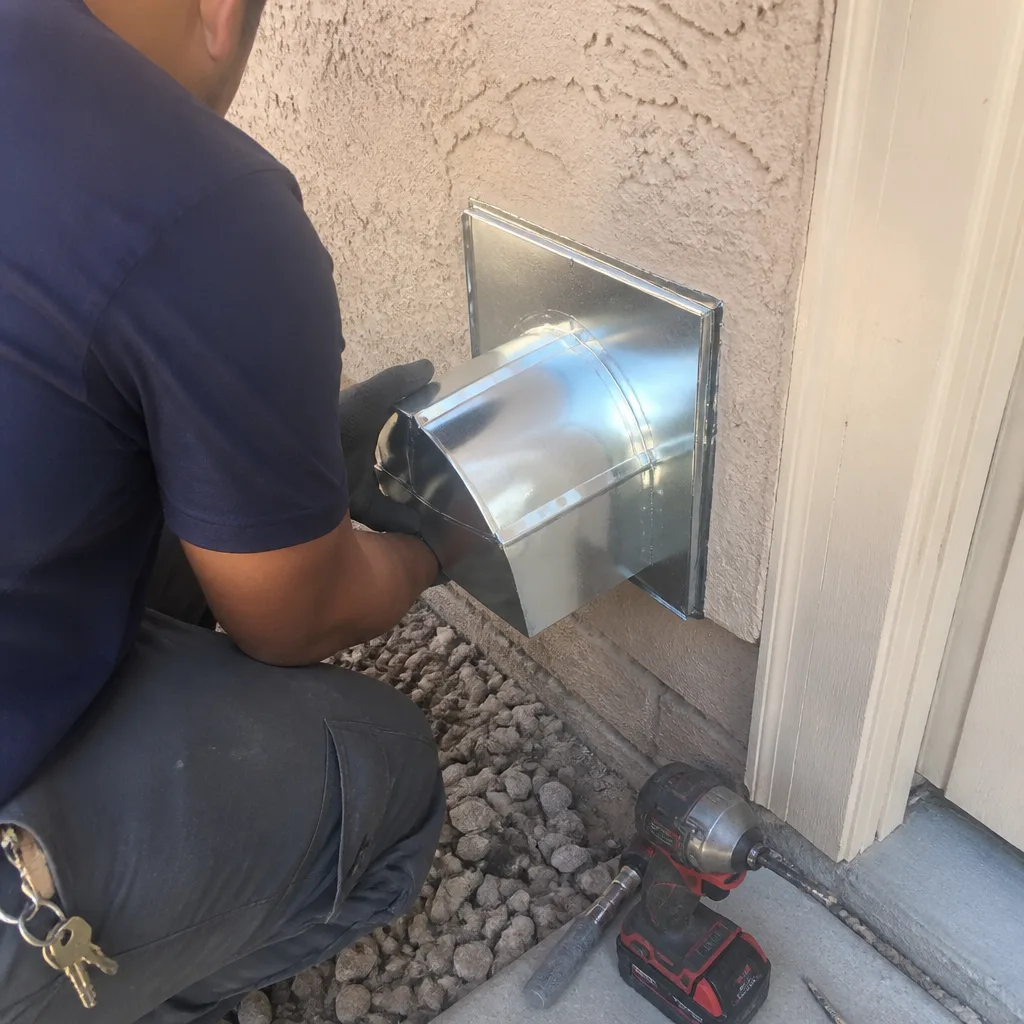 After
After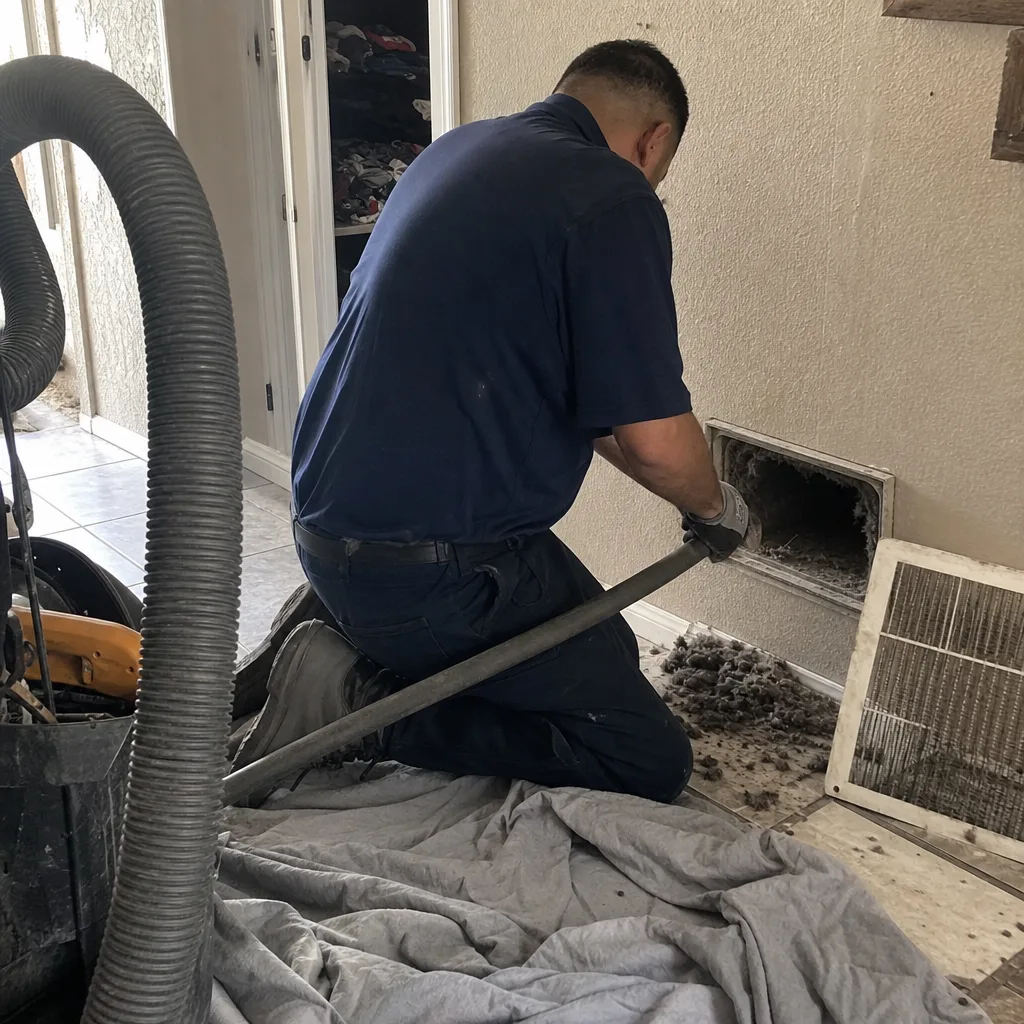 Before
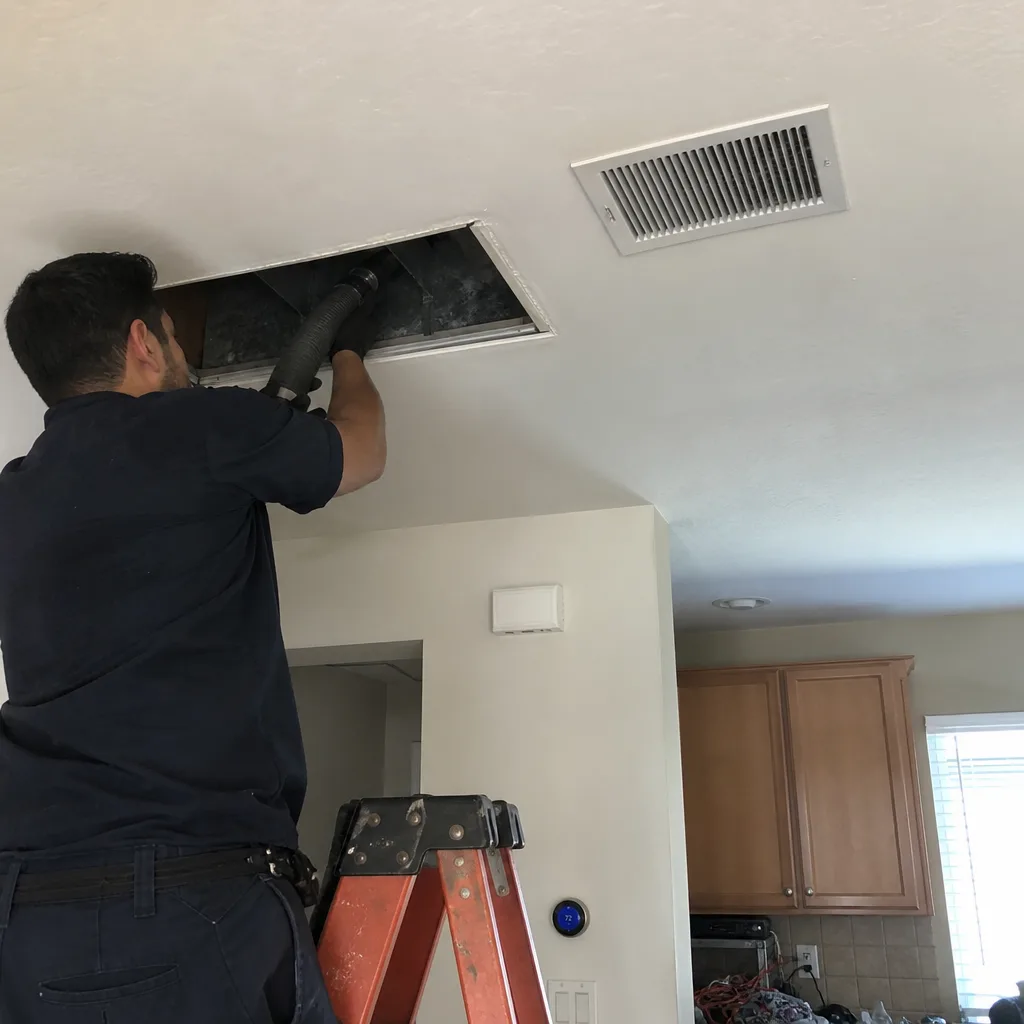 After
After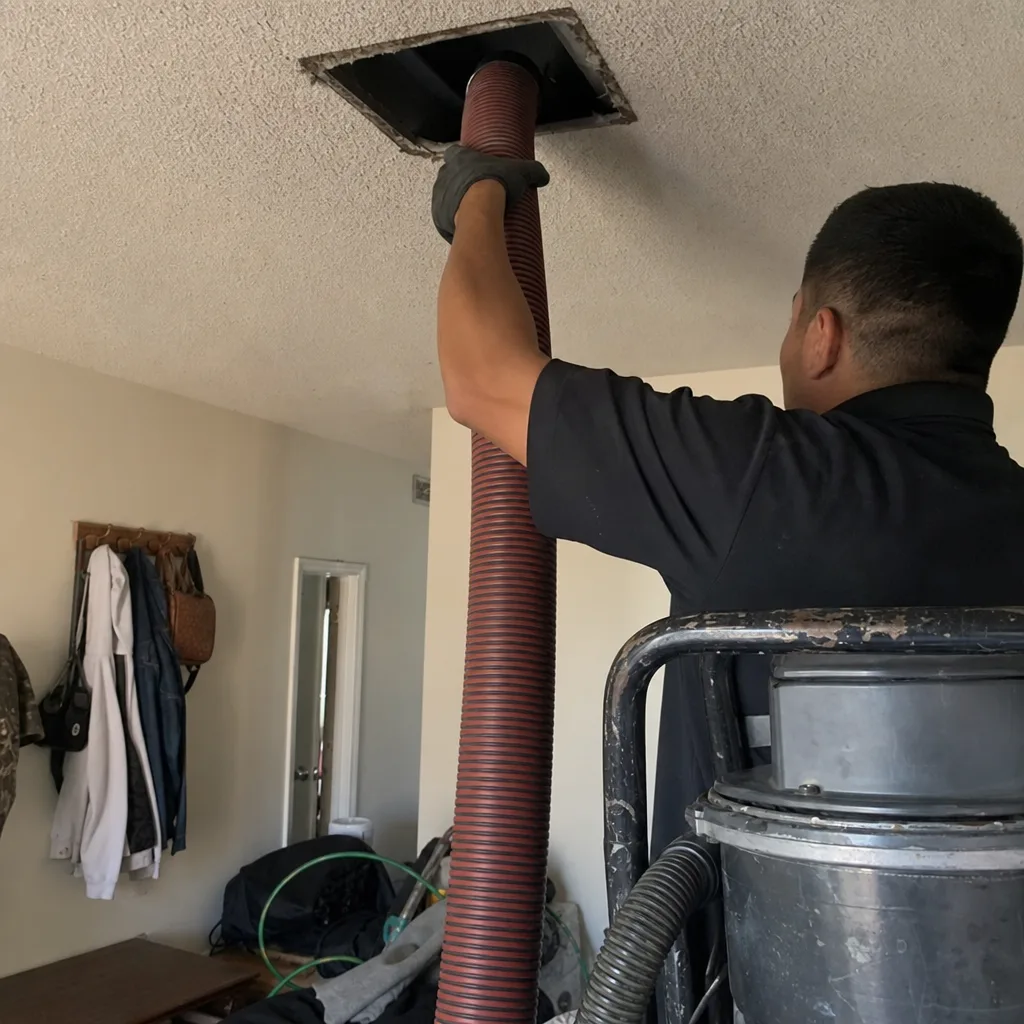 Before
 After
AfterSupply Duct Cleaning in Gilbert, AZ
Supply duct cleaning focuses on the duct runs that carry conditioned air from your HVAC system’s air handler outward to every room in your home – the pressurized side of the system that pushes treated air through your living spaces. In Gilbert, where HVAC systems run eight to ten months a year and desert dust is a constant houseguest, supply ducts accumulate a specific mix of fine particulate, construction debris, and biological growth that standard filter maintenance doesn’t address. If you’re noticing uneven airflow between rooms, a visible film of dust on supply registers, or a stale smell that follows the air when the system kicks on, supply duct cleaning is the right starting point.
CleanRun Duct Repair & Cleaning has documented the inside of supply duct systems in Gilbert homes since 2013 – more than 52,000 jobs, every one with a written price before work started and a camera record when the crew left. Tomas Reyes built the company around one operating principle: show the customer what’s in their ductwork with Video Inspection before recommending anything. If you’d like a written price for your home before any work begins, call us at (520) 666-7643. A live person answers every call.
Supply duct cleaning is a specific scope within our broader Air Duct Cleaning in Gilbert service. This page covers what makes supply ducts distinct, what the process looks like inside your home, and what honest pricing looks like for Gilbert’s market.
What Makes Supply Ducts Different From Return Ducts
A forced-air HVAC system moves air in a loop. Return ducts pull air from the living space back to the air handler; supply ducts push conditioned air out. That directional difference matters for cleaning because supply ducts operate under positive pressure – air is always moving outward through them when the system runs. That airflow carries fine particles past your filter, through the air handler, and into the duct runs themselves, where they settle at elbows, joints, and transitions.
The plenum – the main distribution box that connects the air handler to all supply runs – is where debris concentrates first. From there, individual duct runs branch out to each register (the grille you see in the ceiling or floor of each room). In older Gilbert homes built in the 1980s and 1990s, those runs are often sheet metal with insulated flex duct connections. In homes built after 2000, flex duct dominates, and its corrugated interior liner traps particulate in every ridge. Cleaning the two types requires different tooling and different contact time.
Trade vocabulary used here plainly: a duct run is a single branch from the plenum to one register. Negative-pressure extraction means a powerful vacuum unit pulls air toward the equipment while agitation tools break debris loose – the debris moves toward the vacuum, not back into your living space. That sequence matters; a shop-vac attached at the register and run forward pushes loosened debris deeper into the system.
When You Need Supply Duct Cleaning
- Dust accumulates on supply registers within days of cleaning them. In Gilbert, the combination of desert silica and high-efficiency HVAC cycling means even well-filtered systems pass fine particles through duct walls and joints. If you’re wiping supply grilles every week and still see a gray film, the interior of the duct run is the source.
- Airflow is noticeably weaker in one or more rooms. Debris build-up at an elbow or transition fitting restricts the cross-section of the duct and reduces delivery pressure at the register. Rooms farthest from the air handler – common in larger Gilbert homes with longer duct runs – show this symptom first.
- Your HVAC system ran through construction or a remodel. Drywall dust and insulation fiber are dense enough to pass most filters. Gilbert’s strong residential construction market means a significant number of homes here were either remodeled or had neighboring construction running while the HVAC system was in operation. Camera inspection almost always finds packed debris at the first elbow past the plenum in these cases.
- The home sat vacant or had infrequent filter changes. Supply ducts in a home that ran without filters, or with filters changed less than quarterly in Gilbert’s dust environment, develop debris layers that photo-document clearly – typically 1-3 inches of compacted particulate at low-point transitions.
- You smell a musty or stale odor that moves with the airflow. Gilbert’s monsoon season (July through September) raises indoor humidity temporarily, and supply ducts that have organic debris in them can develop biological growth during that window. The smell intensifies when the system first kicks on and typically fades once air has been circulating for a few minutes – that pattern points to the supply side.
- It’s been more than five years since your last documented duct cleaning. The National Air Duct Cleaners Association suggests cleaning every three to five years under normal use. In Gilbert’s year-round cooling climate, systems cycle far more hours annually than in northern states, which compresses that timeline. If you have no photo record of a previous cleaning, there’s no evidence the work was done correctly.
BeforeAfterOur Supply Duct Cleaning Process
- Written scope and price, delivered before any panel comes off. Haven Standard Clause 1 means you receive a written price specific to your home’s duct count, layout, and condition before we start. We count the supply runs, assess accessibility, and note any conditions – flex duct vs. sheet metal, distance from air handler, presence of a zone damper system – that affect labor or equipment time. The number you see on paper is the number on the invoice.
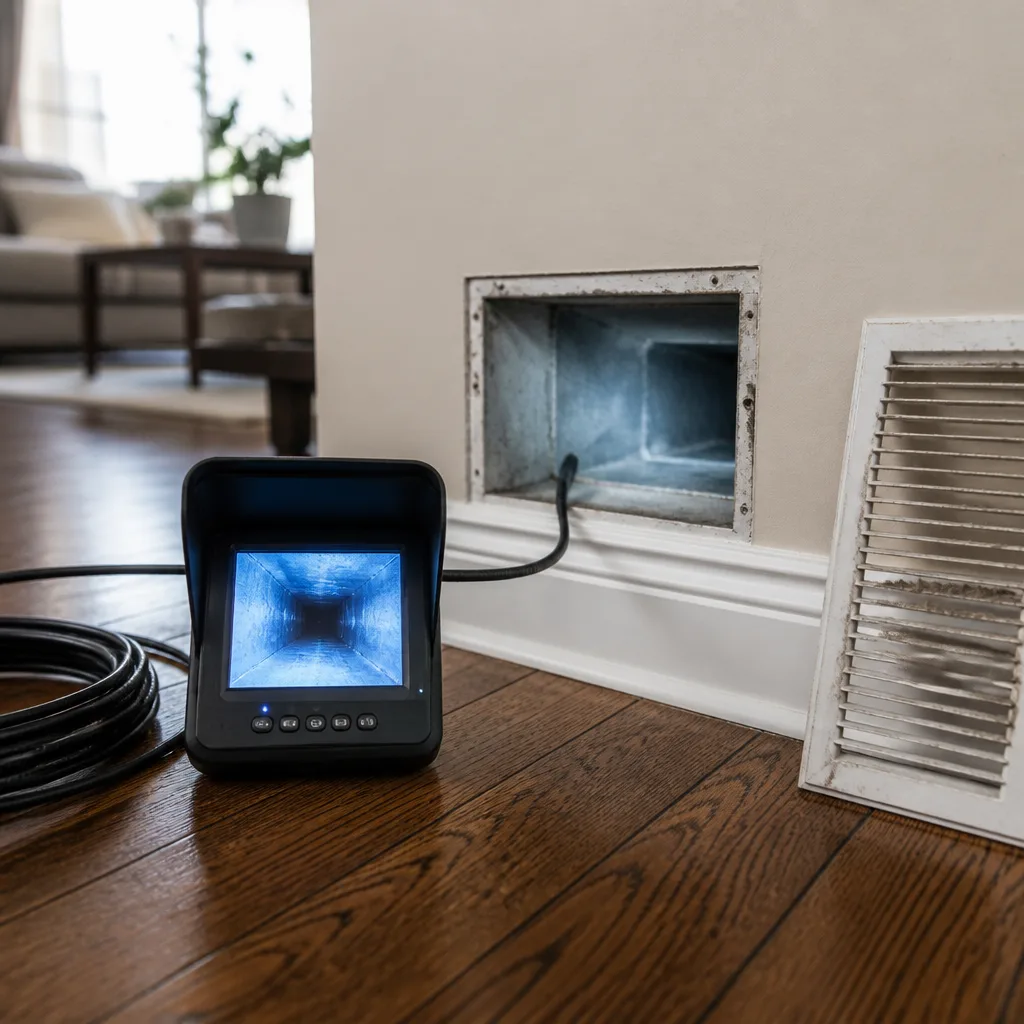
- Pre-cleaning camera documentation of every supply run. Every duct run is photographed at entry before any equipment is introduced. You see what’s in there – debris depth at elbows, liner condition in flex runs, any visible biological growth or pest evidence – before a single tool goes in. This is standard on every CleanRun job, not an add-on, and has been since our first job in Gilbert in 2013. Tomas Reyes made documentation non-negotiable because it’s the only way to prove work was done.
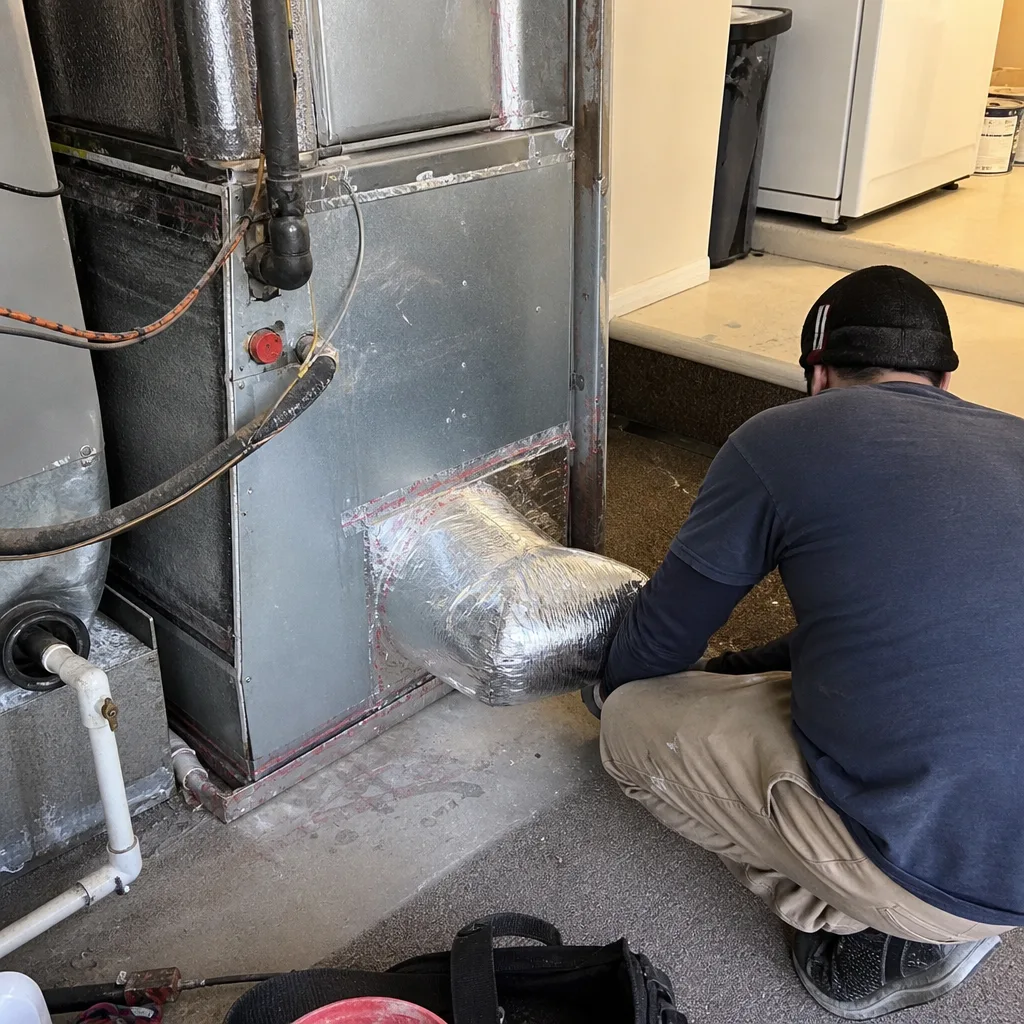
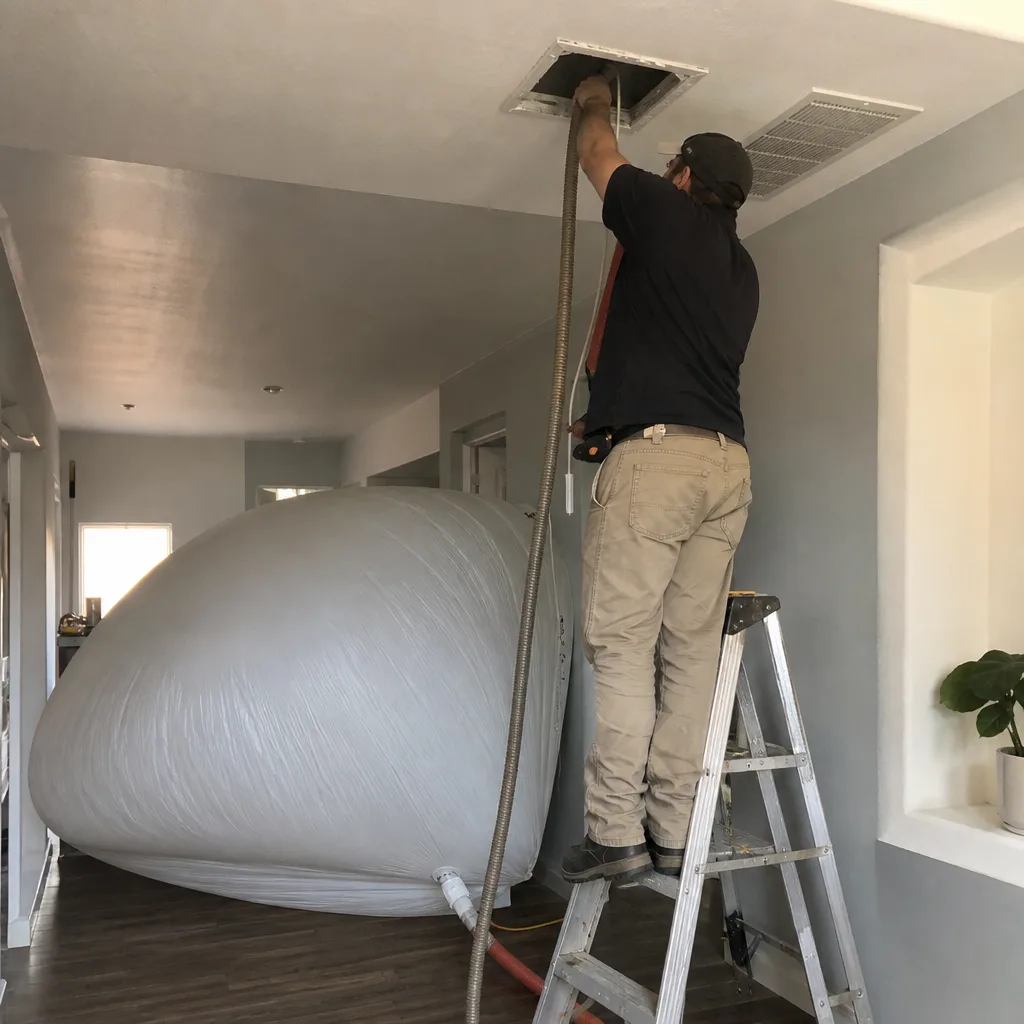
- Plenum isolation and negative-pressure setup. We attach our extraction equipment – a Nikro or Abatement Technologies vacuum unit, depending on system configuration – at the air handler plenum connection, creating a sealed negative-pressure environment. This means all agitation work draws debris toward the extraction point rather than redistributing it into the home. During this phase, supply registers are temporarily sealed with foam plugs so the system works as a closed loop.
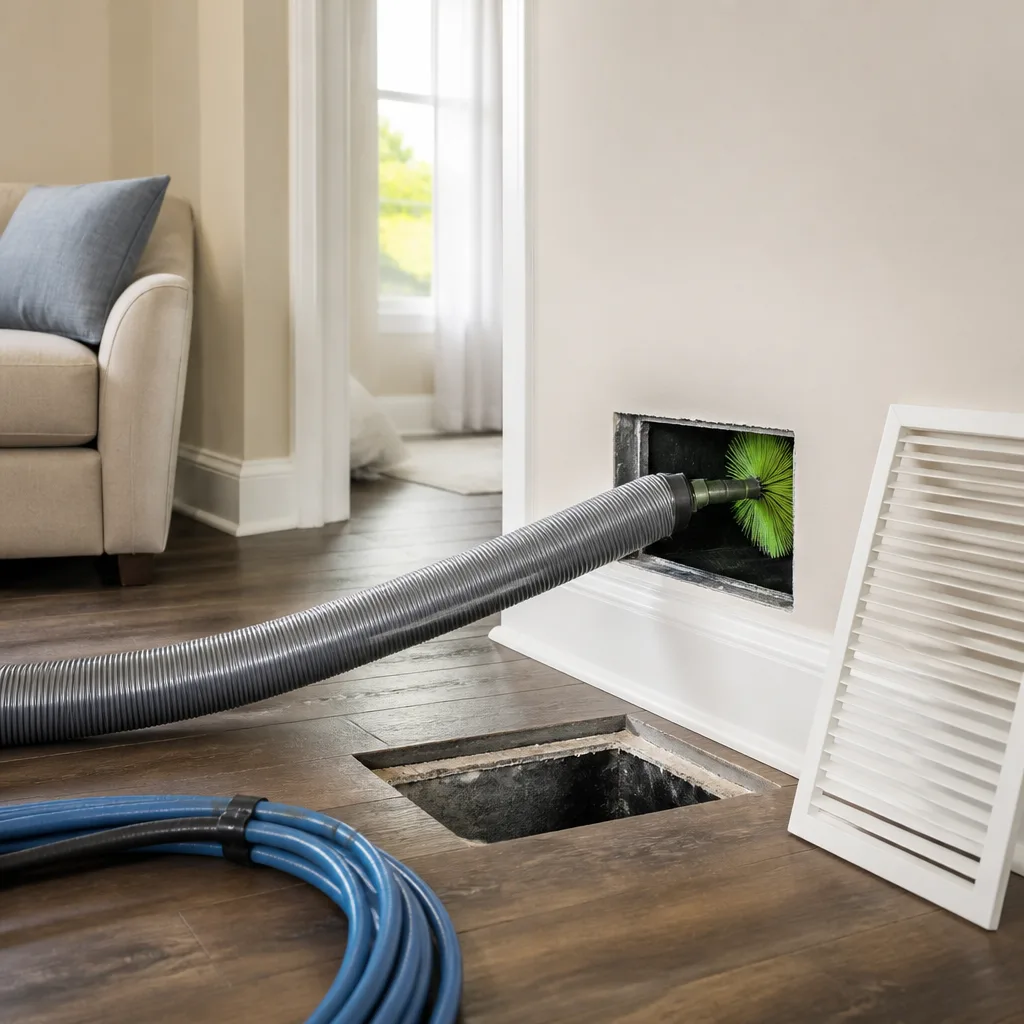
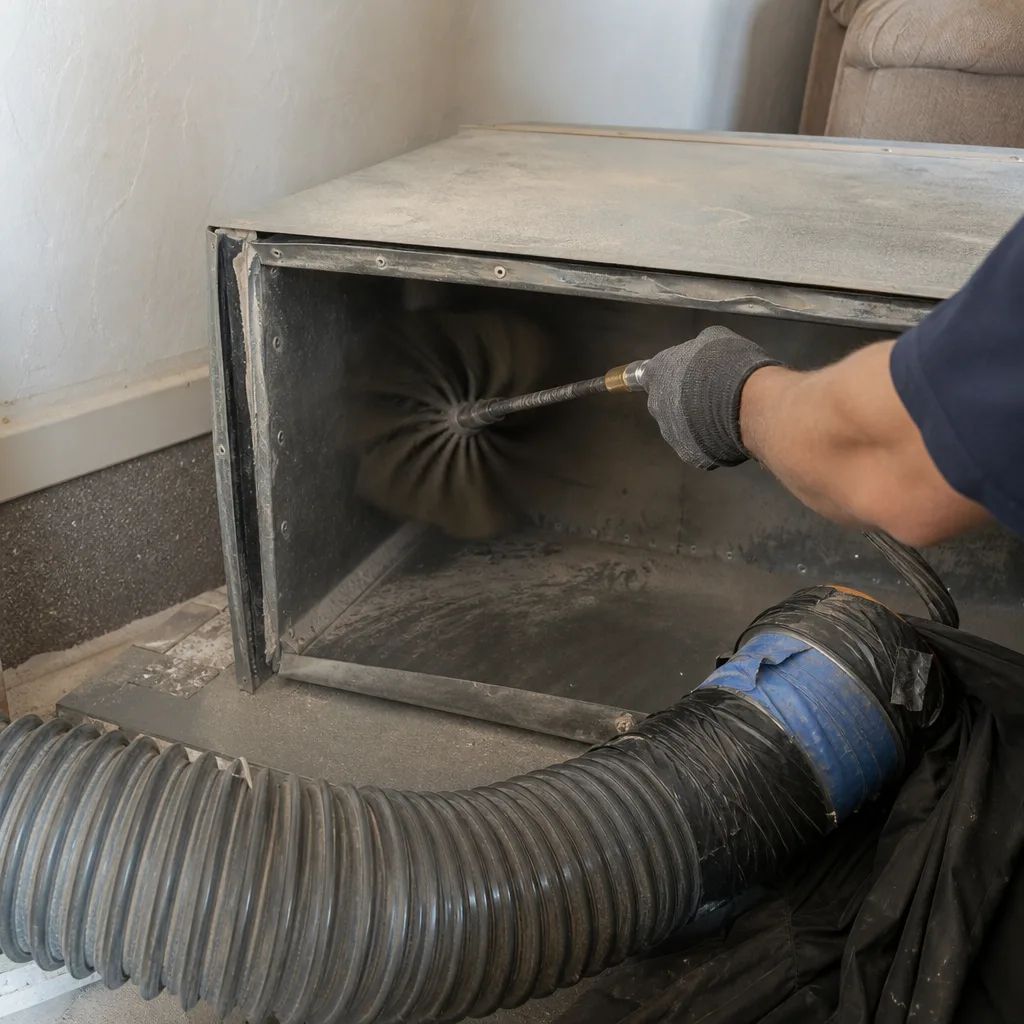
- Mechanical agitation through each supply run. A Rotobrush rotary brush is fed into each individual duct run from the register end, working inward toward the plenum. The brush contact breaks compacted debris from duct walls and liner ridges, and the negative pressure from the extraction unit pulls it through the system to our collection equipment. For sheet metal runs with sharp elbows, we adjust the brush diameter to maintain contact without creating gaps. For corrugated flex duct, contact pressure is calibrated lower to protect the liner.
- Plenum cleaning and air handler connection inspection. After individual runs are cleaned, we clean the supply plenum itself – the main box where all supply runs originate. Debris that has settled there is extracted directly. We also photograph the air handler connection and note any visible duct seal failures, disconnected flex duct joints, or insulation damage that would affect system efficiency. These are documented in writing; any repair scope is quoted separately, in writing, before anything is touched.
- Post-cleaning camera documentation and photo record delivery. Every supply run is re-photographed after cleaning, from the same angle as the pre-job shot. You receive a complete before-and-after photo record as part of the standard job documentation. If any run doesn’t look right, we go back in before we leave. The 365-Day Done Right Promise backs this in writing: if something is not done correctly, CleanRun makes it right – no conditions, no manager approval required.
Supply Duct Cleaning Pricing in Gilbert
How Much Does Air Duct Cleaning Cost? (2026 Price Guide) - Gilbert, AZ: supply duct cleaning typically runs between $280 and $620 for a single-family home, depending on the number of supply runs, duct material, and system accessibility. Here’s how that breaks down by the variables that actually move the number:
| Variable | Typical Range (Gilbert) | Notes |
|---|---|---|
| Base service (up to 10 supply runs) | $280 – $380 | Includes pre/post photography, written scope, and extraction |
| Additional supply runs (per run, 11+) | $18 – $28 per run | Common in Gilbert homes over 2,500 sq ft |
| All-flex duct system (corrugated liner) | Add $40 – $80 | Requires lower-speed agitation; more contact time per run |
| Heavy debris load (documented at inspection) | Add $60 – $120 | Triggered when camera shows build-up exceeding 1.5 inches at elbow |
| Plenum cleaning (included in full-system jobs) | $0 additional | Quoted as part of supply scope, not a separate line item |
| Antimicrobial treatment (optional, quoted separately) | $90 – $160 | Applied only after cleaning; never as a substitute for mechanical agitation |
A few things that do not affect your price: driving distance within Gilbert, number of stories (as long as registers are accessible), and the brand of your HVAC system. What does move the number: duct count, material type, and what the camera finds before we start.
The price you receive is in writing before any work begins – Haven Standard Clause 1. There is no version of a CleanRun job that starts with “we’ll know more once we get in there.” If the camera finds something that changes the scope, we stop, write a revised price, and you decide. For a written estimate on your specific home, call (520) 666-7643.
What We Find Inside Gilbert Supply Ducts
Gilbert’s desert environment produces a specific debris profile that’s different from what you’d find in, say, a Chicago or Seattle home. The dominant materials we photograph in Gilbert supply ducts are fine silica dust (the same material that turns cars orange after a haboob), HVAC filter fiber that has bypassed a loose-fitting filter frame, and construction gypsum from the city’s ongoing residential buildout. In newer neighborhoods like Morrison Ranch and Val Vista Lakes, where homes were built in the early 2000s with high flex-duct content, we regularly find debris compacted in the corrugated ridges within 18 inches of the plenum connection – a spot that shop-vac style cleaning doesn’t reach.
In Gilbert homes near the 202 or power agricultural land on the eastern edges of town, we see higher concentrations of organic particulate in duct systems – fine soil and plant material drawn in through air handler returns during high-wind events. That organic load is the primary reason monsoon-season humidity creates biological growth in supply runs: the food source is already there.
Knowing what’s typically inside ductwork in this specific market is what makes a pre-job camera walk-through useful rather than theatrical. The photo doesn’t exist to alarm you. It exists so the scope of work connects to something visible before you agree to anything.
How Supply Duct Cleaning Connects to Overall Air Quality
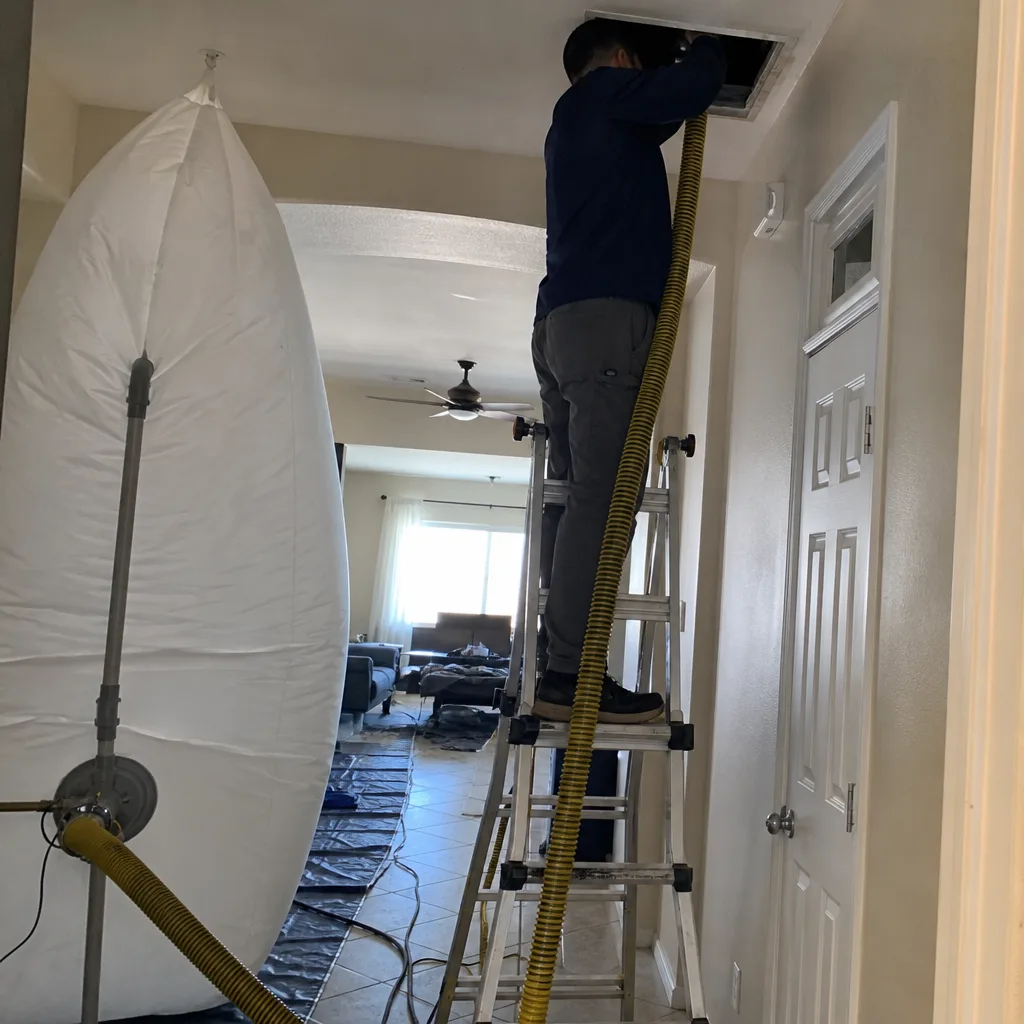
Supply duct cleaning is one component of a complete Air Duct Cleaning in Gilbert service, which covers both the supply and return sides of the system as well as the air handler itself. Cleaning only the supply side makes sense when the return ducts have been cleaned more recently, or when a targeted inspection shows contamination concentrated on the pressurized side. We document both systems during the initial walkthrough and quote them as separate scopes so you can choose what fits your situation and budget.
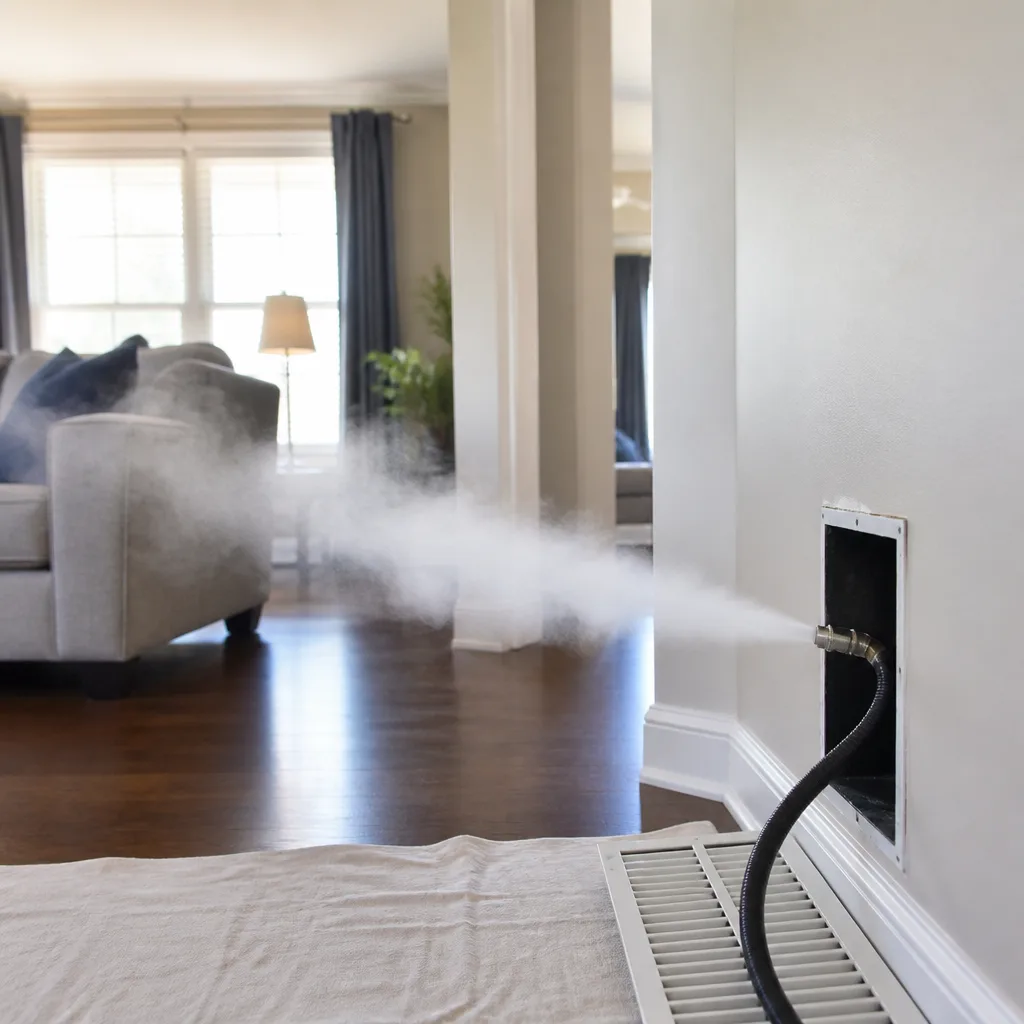
For homes where the supply duct inspection shows biological growth beyond surface-level debris, antimicrobial sanitizing using an EPA-registered fogging agent (applied with Abatement Technologies equipment) is quoted as a separate line item after mechanical cleaning is complete. Sanitizing before cleaning is a sequence that does not work; the debris has to come out first or the treatment has nothing to contact. Any company that leads with sanitizing before showing you a camera image of cleaned duct walls should be asked why.
If your supply duct inspection also reveals unsealed joints, disconnected flex duct connections, or collapsed liner sections, those are documented and quoted under duct repair – a separate scope from cleaning but often addressed on the same visit when the system is already open.
FAQs – Supply Duct Cleaning
How much does supply duct cleaning cost in Gilbert?
How Much Does Air Duct Cleaning Cost in Mesa, AZ? (2026 Price Guide) Supply duct cleaning in Gilbert costs between $280 and $620 for a typical single-family home, depending on the number of supply runs, the duct material (sheet metal vs. flex), and the debris load documented by the camera before work starts. A home with 10 or fewer supply runs in good condition typically falls in the lower portion of that range. A larger home with all-flex duct and visible debris build-up will run higher. You receive the exact number in writing before we begin. Call (520) 666-7643 for a written quote on your specific home – estimates are free.
Can you clean just the supply ducts, or do you have to clean the whole system?
Yes, supply-only cleaning is a valid and frequently quoted scope. It makes sense when the return side has been cleaned within the past two years, when a camera inspection shows contamination concentrated on the supply side, or when budget requires prioritizing one side of the system. We photograph both sides during the initial walkthrough and quote them as separate line items so you can make an informed choice. The supply side and return side are mechanically separate enough that cleaning one does not require disturbing the other.
How long does supply duct cleaning take in a typical Gilbert home?
For a home with 10 to 16 supply runs – which covers most Gilbert homes between 1,800 and 2,800 square feet – expect the supply duct cleaning process to take between 2.5 and 4 hours. That time includes the pre-cleaning camera walk-through, setup of negative-pressure extraction equipment, mechanical agitation of each run, plenum cleaning, and post-cleaning photography. Homes with longer duct runs (common in one-story sprawl layouts common in Gilbert’s eastern neighborhoods) or with all-flex duct systems take longer per run due to the liner contact time required.
Is supply duct cleaning worth it if I just replaced my HVAC system?
A new HVAC unit moves air through the same existing duct system, so anything inside those runs before the replacement is still there after it. In Gilbert, where HVAC replacements often happen during the summer without shutting down construction dust and filter bypass that has built up over years, the camera almost always shows significant debris in the existing supply runs even after a unit swap. The new system will push air through that debris from day one. Whether cleaning is worth it depends on what the camera finds – which is why we photograph first and price second, not the other way around.
The H.A.V.E.N. Standard and What It Means for This Job
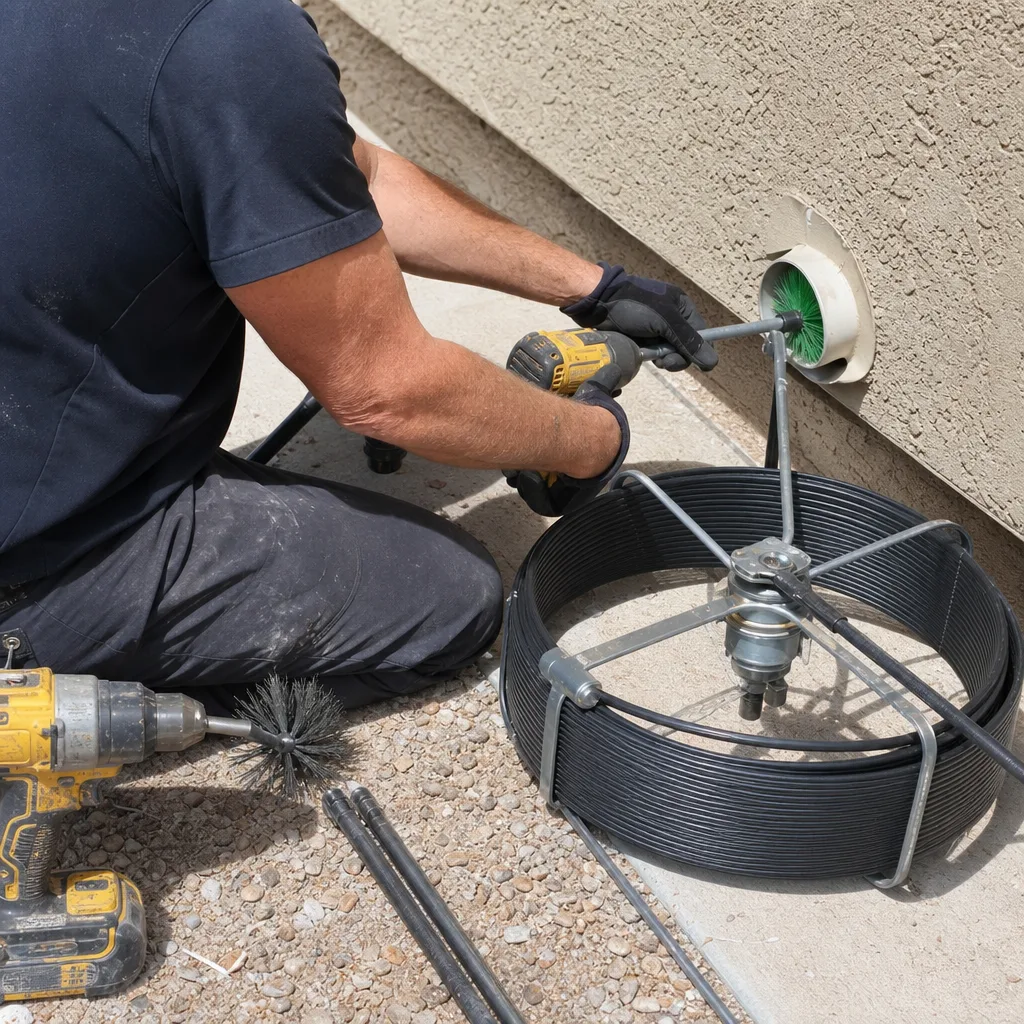
Every CleanRun job operates under the H.A.V.E.N. Standard, which means a few specific things for a supply duct cleaning visit: Haven Standard Clause 1 (written price before work starts) applies without exception. Haven Standard Clause 3 (Verified Crews) means the technician arriving at your door is background-checked, uniformed, and identified by name before arrival – not a subcontractor dispatched without vetting. And the 365-Day Done Right Promise is in writing on your job record, not stated verbally and forgotten when the truck leaves.
CleanRun is independently owned and operated under the Haven Standard, established in 2013 and led by Tomas Reyes. We bring a Free Second Opinion on any written estimate from a competitor – put our written price next to theirs and compare line by line. That offer exists because written prices can be compared and vague quotes cannot.
If you’d like to see what’s inside your supply ducts with our Air Duct Cleaning services before deciding anything, call (520) 666-7643. A live person answers every call. We’ll schedule a walkthrough, photograph what we find, and put a written price in your hands before a single panel comes off.
Key Takeaways
- Supply ducts carry conditioned air from the air handler to each room and accumulate debris at elbows, transitions, and plenum connections – especially in Gilbert’s dust-heavy environment.
- Pricing in Gilbert runs $280 to $620 for most single-family homes; you receive a written price before any work begins, every time.
- Every supply run is photographed before and after the job – before-and-after documentation is included as standard, not an add-on.
- Negative-pressure extraction with Rotobrush agitation and Abatement Technologies or Nikro vacuum equipment is how the work is done; shop-vac style cleaning pushes debris further in, not out.
- The 365-Day Done Right Promise is in writing on every job record.
- Supply duct cleaning can be quoted and performed as a standalone scope, separate from return duct cleaning, when the situation calls for it.
Written by Tomas Reyes, Owner at CleanRun Air Duct Cleaning Gilbert, serving Gilbert.