
Last updated September 23, 2026
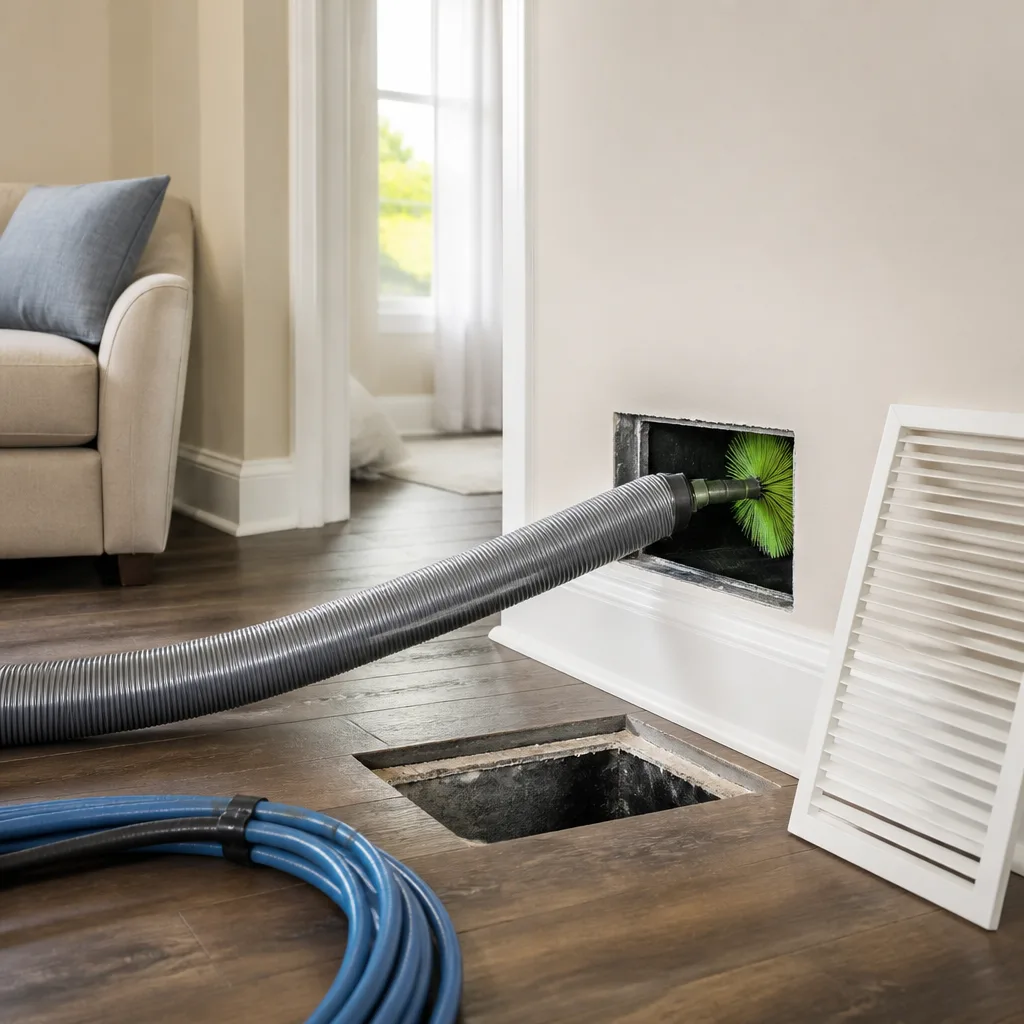
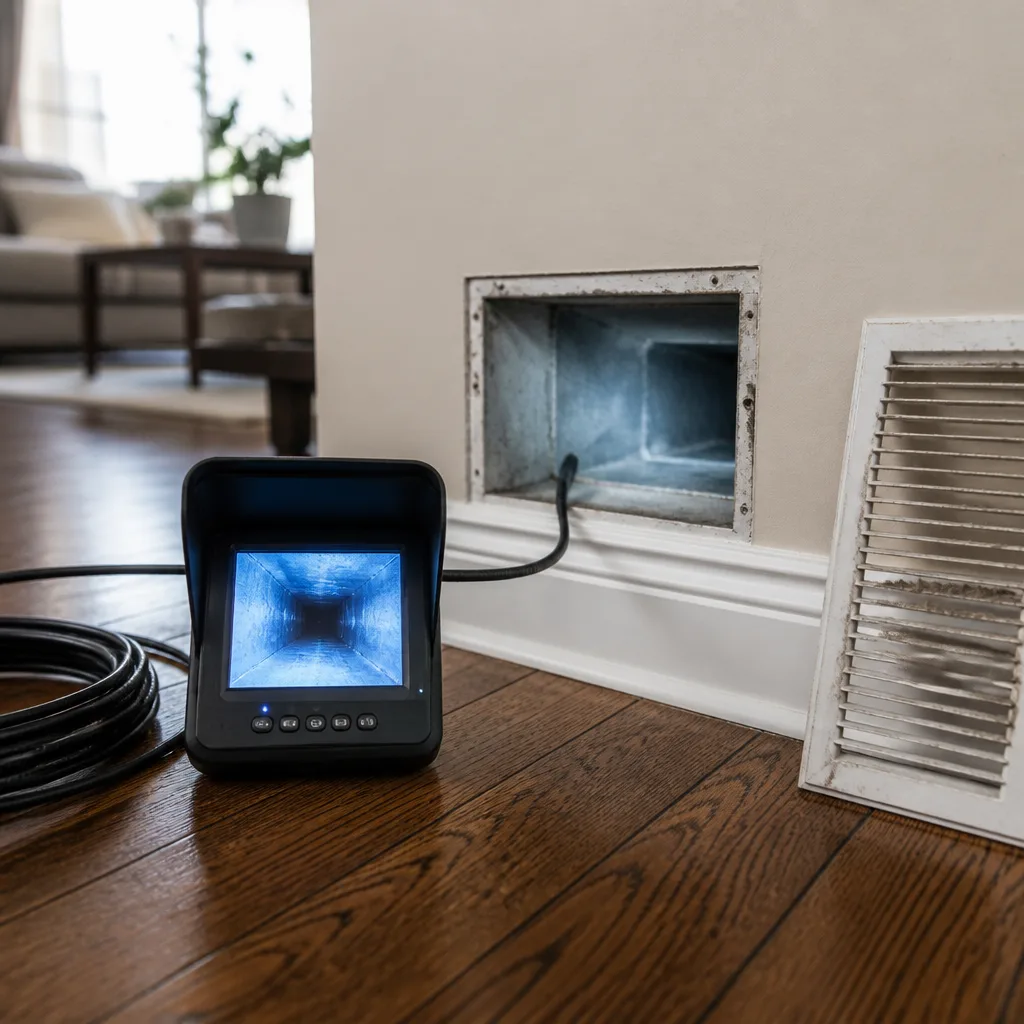
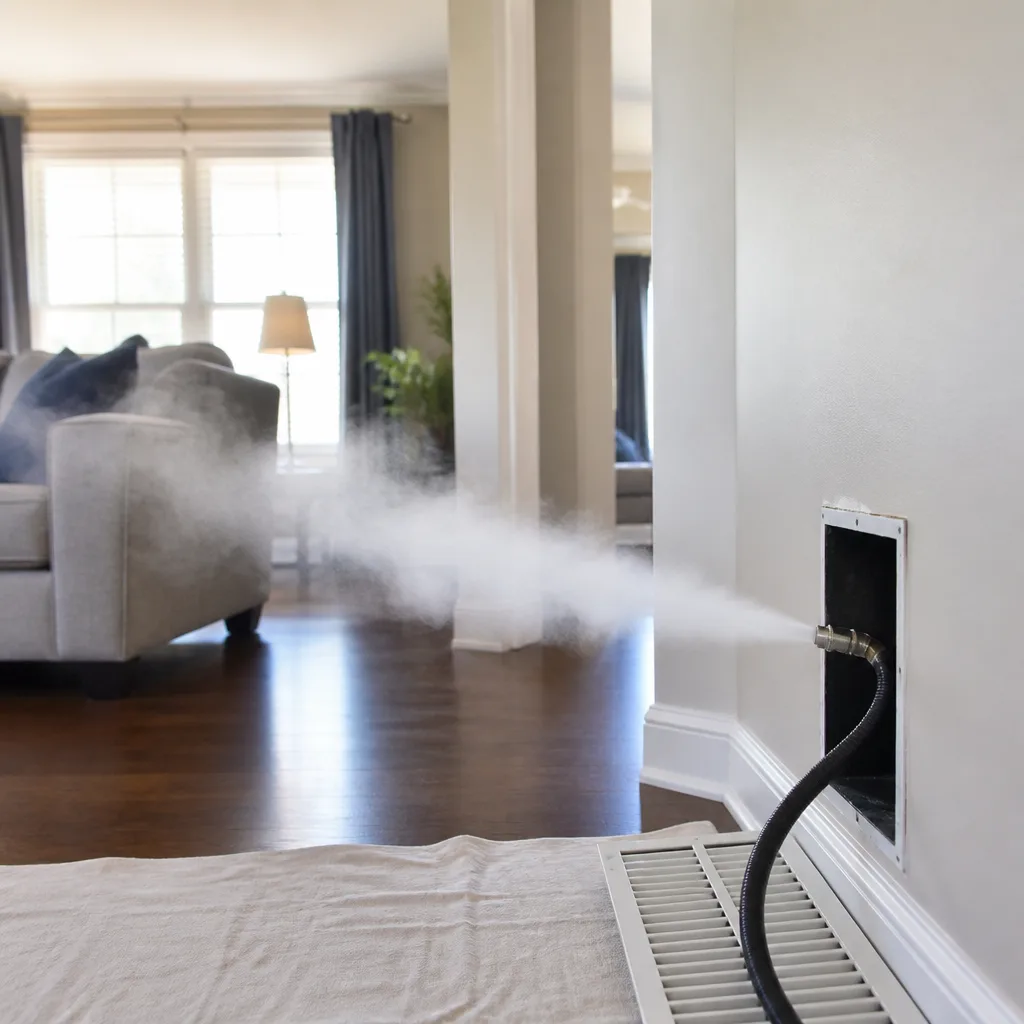
Whole-system duct and dryer vent check with before-and-after photos - you see exactly what came out of your vents
That "$99 whole-house special" is a bait ad - the real number appears once they are in your hallway, or the "clean" is a shop-vac at the register. We photograph the inside of your ducts before and after instead.
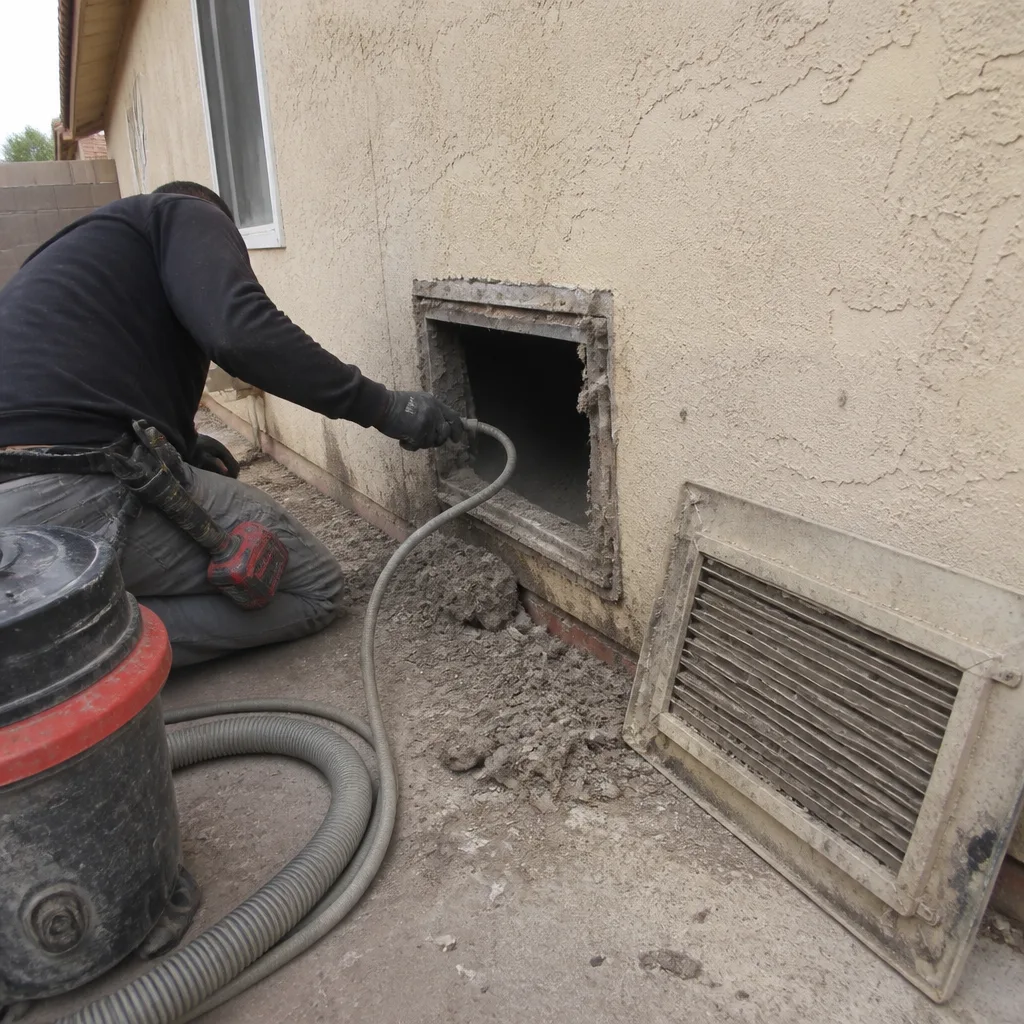 Before
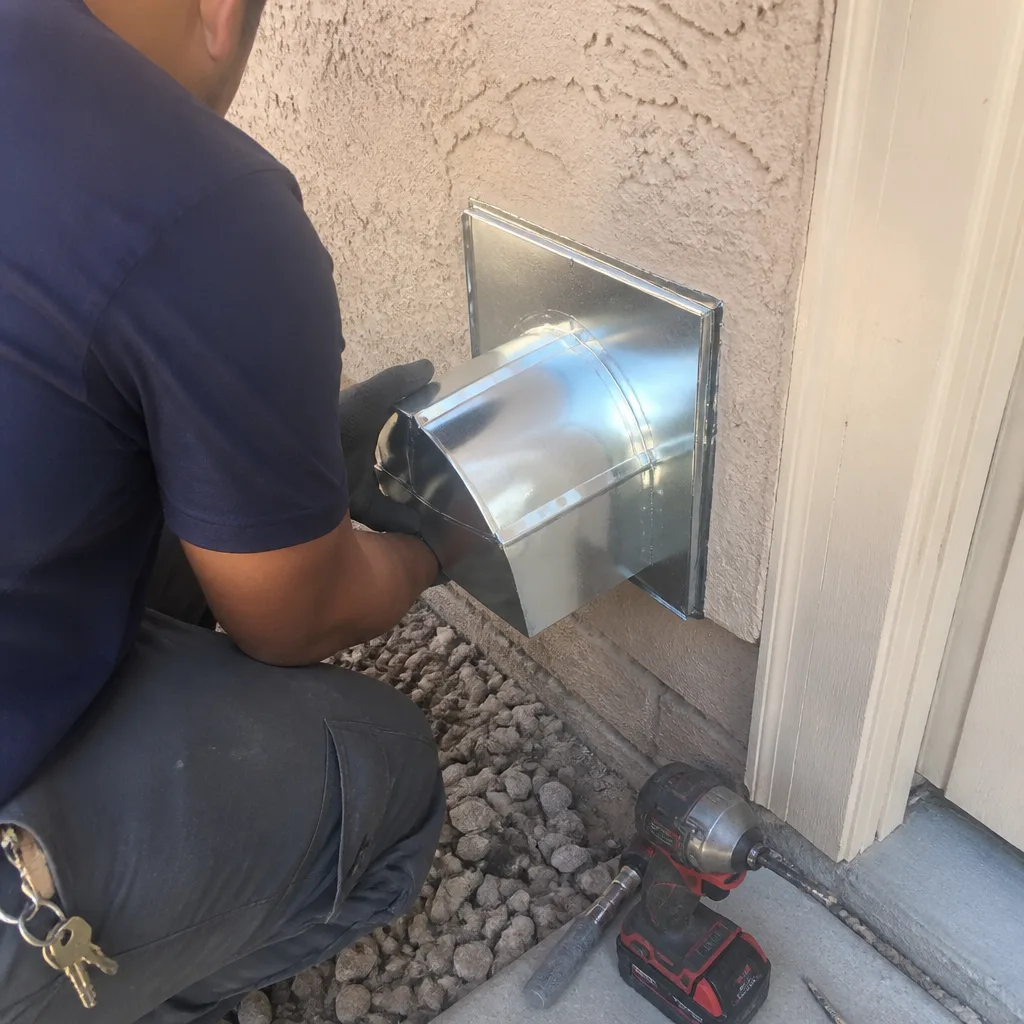 After
After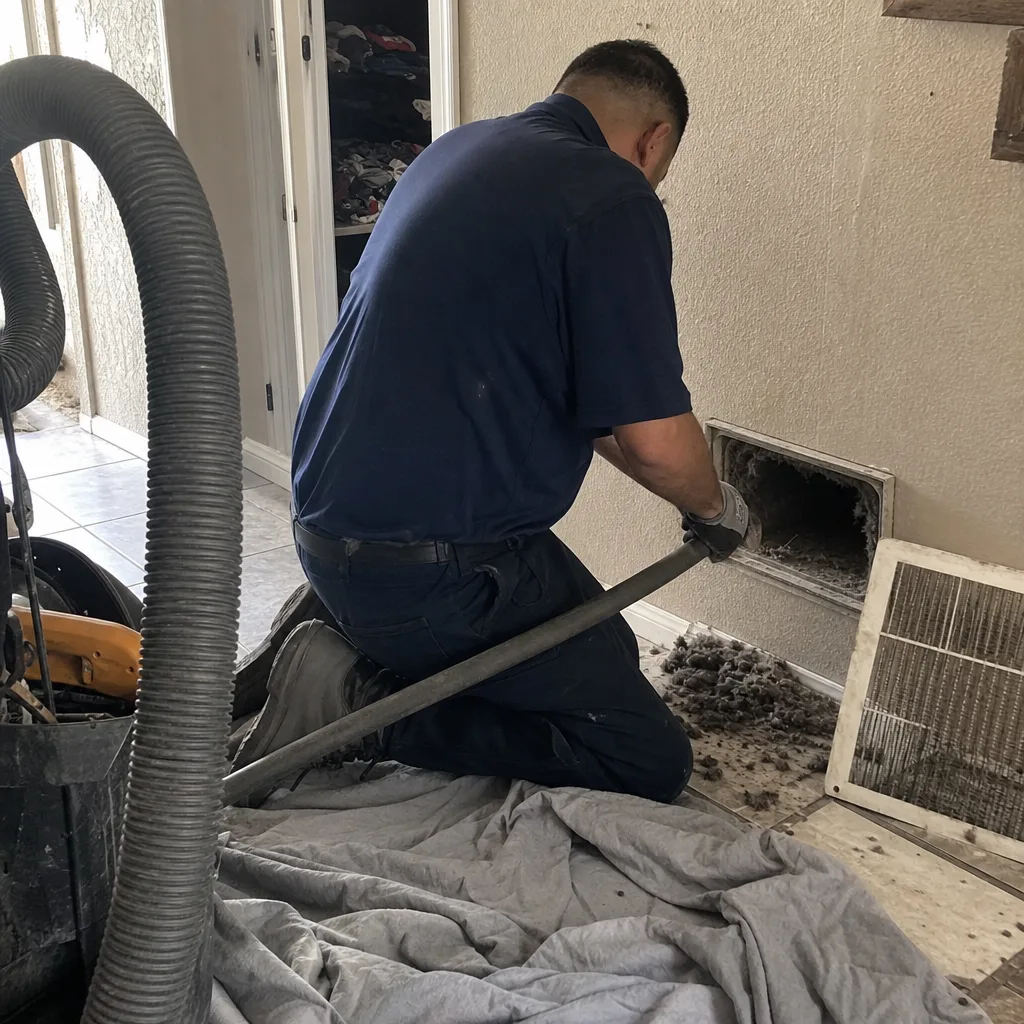 Before
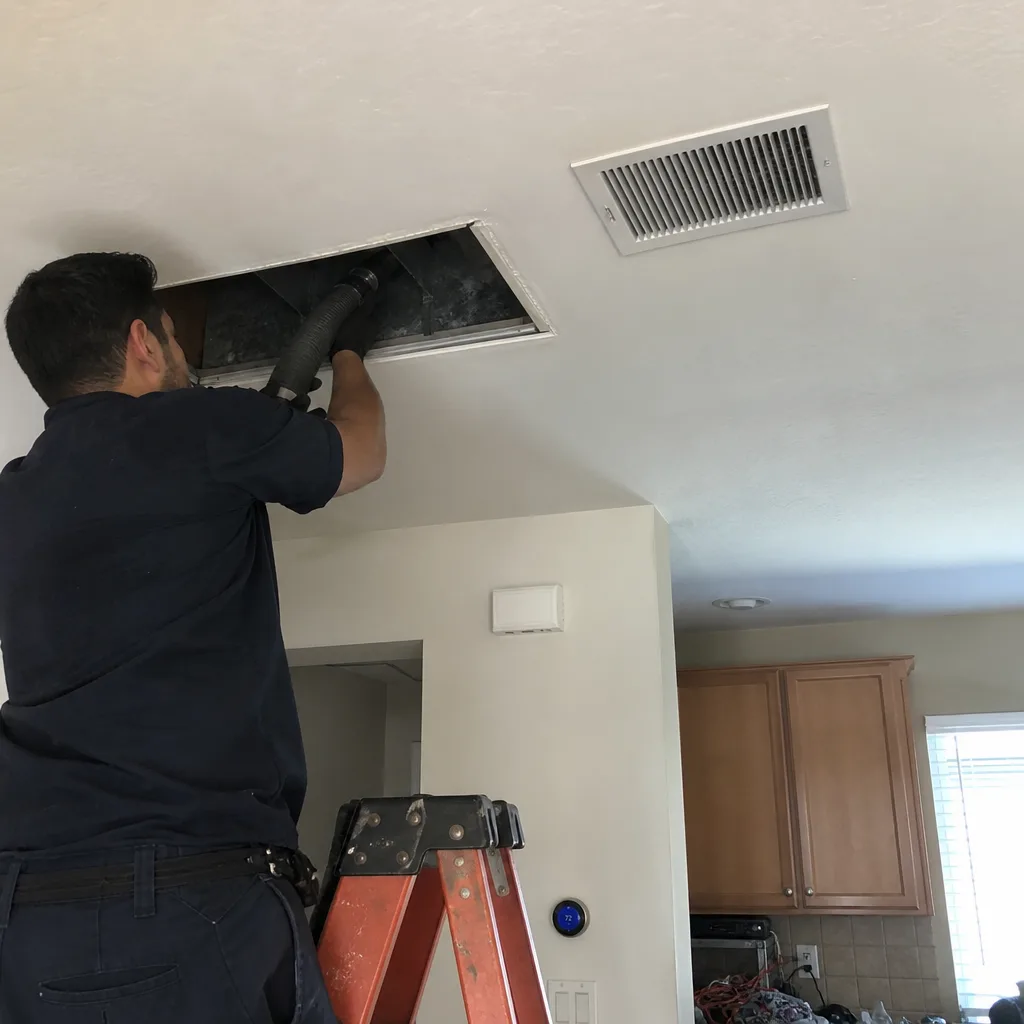 After
After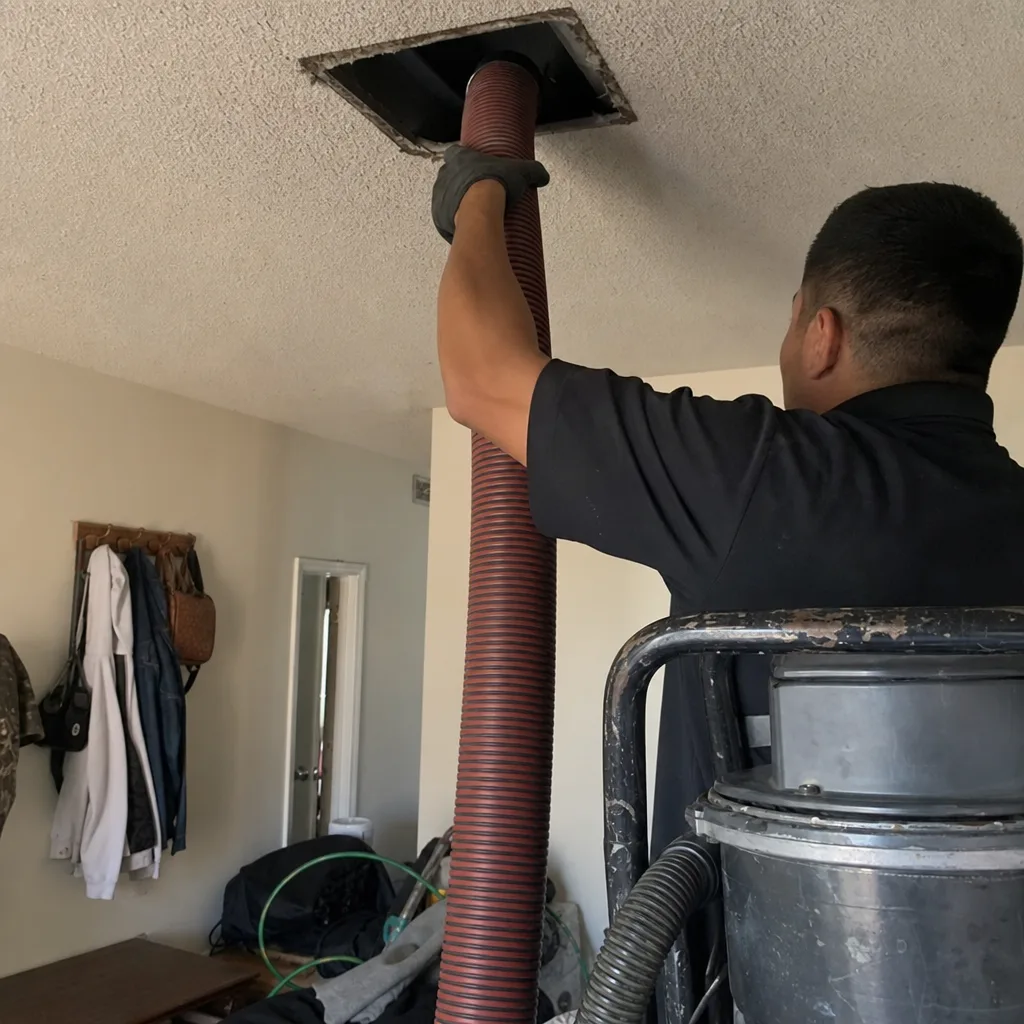 Before
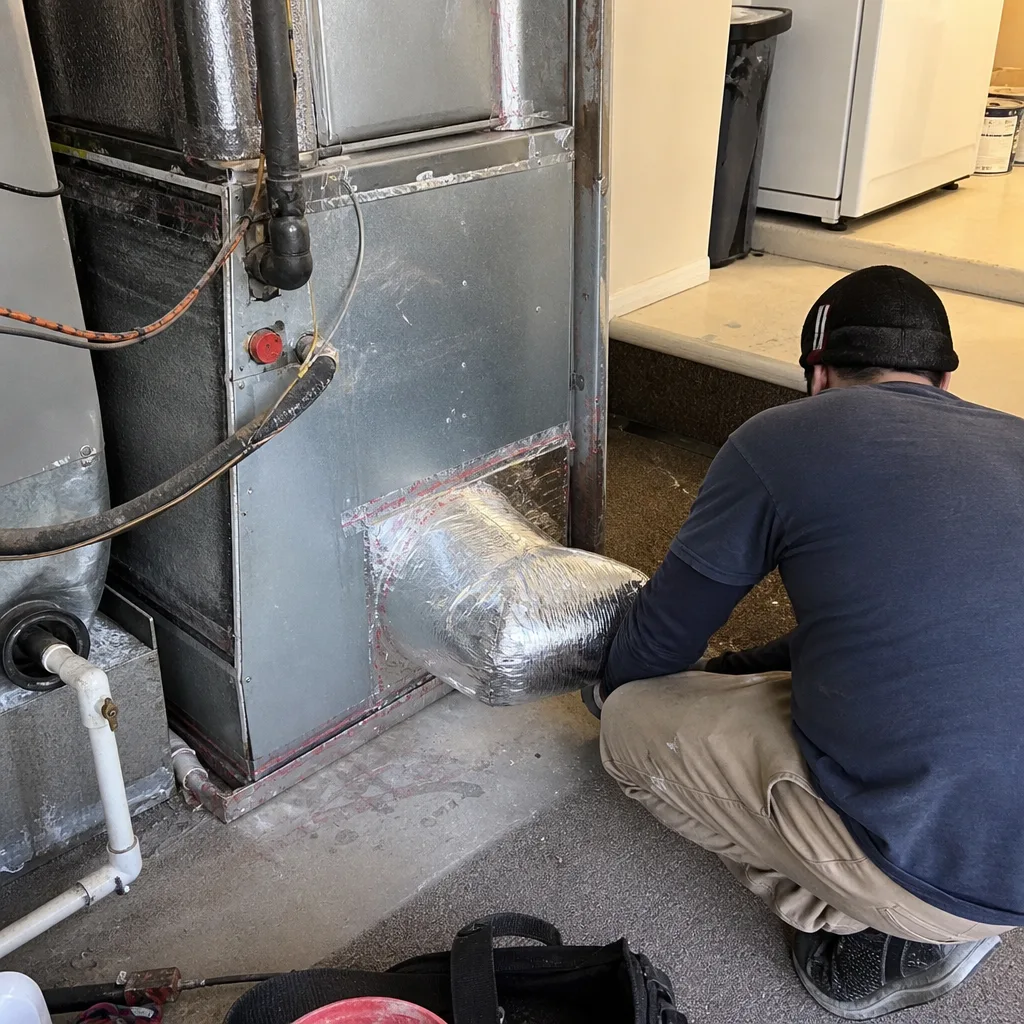 After
AfterAir Duct Cleaning Maintenance Checklist for Gilbert Homeowners
Gilbert’s PM10 particulate readings during haboob season can exceed EPA 24-hour standards by 400%. That dust doesn’t stay outside. A standard annual cleaning schedule wasn’t designed for it. In this guide, you’ll learn how to inspect your own ductwork, calibrate filter changes to actual desert dust load, identify construction debris by sight, and build a documented baseline that makes every future maintenance decision obvious. For related reading, see our article on Air Duct Cleaning Warning Signs: A Gilbert Homeowner’s Reference Guide. This is a checklist organized by observable evidence, not by arbitrary calendar month.
Quick Answer
A proper Air Duct Cleaning services maintenance checklist for Gilbert homeowners includes monthly filter inspection with replacement every 30-60 days during dust season, quarterly register photography to track accumulation, biannual return plenum inspection with a phone camera, and professional negative-pressure extraction every 18-24 months, or immediately after nearby construction or visible debris events. The checklist must account for Gilbert’s near-continuous air handler operation from May through September and the fine particulate load that Midwest-based manufacturer defaults ignore.
Table of Contents
- Why Gilbert Needs Its Own Schedule
- Monthly Filter Inspection & Replacement
- Quarterly Register & Grille Check
- Biannual Return Plenum Self-Inspection
- Post-Construction & New Development Protocol
- Detecting Duct Sealing Failures Between Cleanings
- Logging a Documented Baseline
- When to Schedule Professional Cleaning
BeforeAfterWhy Gilbert Needs Its Own Schedule
Most HVAC maintenance checklists are written for climates where the air handler rests six months a year. In Gilbert, the typical system runs at near-continuous duty from May through September, pulling air through the return every 10-15 minutes around the clock. That volume matters more than calendar time.
The dust itself is different too. Sonoran Desert particulate is smaller, sharper, and more mineral-dense than organic Midwest dust. It abrades filter media faster, embeds in coil fins more stubbornly, and carries a higher silica content that shows up as a pale gray film on registers within weeks of a haboob event. We’ve photographed this film in homes across Power Ranch, Agritopia, and the Islands, often within 30 days of a filter change.
Gilbert’s construction cycle adds another variable. The town’s growth from 2015 to 2025 brought thousands of new homes online in Cooper Commons, Adora Trails, and Whitewing. Active lots within 500 feet of an occupied home can increase indoor particulate load by 200-400% during framing and drywall phases, according to particulate monitors we’ve placed on job sites. A maintenance schedule that ignores this context is not maintenance. It’s hope.
The checklist below is organized by inspection interval, but each interval includes a decision gate: if you observe X, escalate to the next interval or to professional service. No guessing.
Monthly Filter Inspection & Replacement
Manufacturer defaults on filter packaging assume moderate dust load and seasonal HVAC use. In Gilbert, those assumptions are wrong. We recommend a 30-60 day replacement cycle during haboob season (March through July) and 60-90 days during the milder months, with monthly visual inspection as the actual trigger.
What to look for during inspection:
- Visible gray or tan loading on the intake face, especially at the corners where air velocity is highest
- Any deformation of the pleats, which indicates the filter has reached pressure drop limits and is bypassing unfiltered air
- Odor when the system cycles on, suggesting microbial growth on the loaded media
- Light test: hold the filter toward a window. If you cannot see distinct light through the center pleats, replacement is overdue
Filter selection for Gilbert conditions:
MERV 8 is the minimum for desert dust. MERV 11-13 provides better capture of the fine particulate that haboobs deliver, but only if your system can handle the static pressure. Check your air handler specifications or have a technician measure external static pressure before upgrading. We’ve seen systems in Gilbert’s 2015-2020 vintage homes strain against MERV 13 filters, reducing airflow and increasing compressor runtime.
Never run a system without a filter, even briefly. The debris that passes the blower will coat the evaporator coil, and coil cleaning is a separate, more expensive service than filter replacement. In our experience, a missing filter for 48 hours in June can load a coil sufficiently to measure a 15% efficiency drop.
Quarterly Register & Grille Check
Supply registers are the visible endpoint of your duct system. They tell you what the ducts are delivering, and their condition is easy to document with a phone camera.
Inspection procedure:
- Remove the register or grille. Most lift out with gentle pressure; some have two screws.
- Photograph the back surface and the duct opening behind it. Use flash. The shadowed areas show accumulation most clearly.
- Look for these specific conditions:
- Normal: Thin, uniform dust film, light gray or tan, easily wiped with a damp cloth
- Watch: Clumped or stringy debris, which indicates humidity high enough for dust to adhere; often seen in bathrooms or kitchens where moisture enters the duct
- Act: Visible insect fragments, rodent droppings, or construction debris (white, powdery, or fibrous). Any of these warrants professional inspection
- Wipe the register with a damp microfiber cloth. If debris returns within 2-3 weeks, your ducts are actively shedding material.
- Reinstall and photograph from the room side for your baseline record.
In Gilbert’s newer developments, we see a pattern in homes built 2018-2022: registers in the master bedroom and farthest duct runs from the air handler accumulate faster than those near the unit. This is often a duct sealing issue, not a cleaning issue. The leakage pulls attic air into the duct, and attic air in Gilbert carries more particulate than conditioned space air. Before you schedule cleaning, check for the sealing failure signs covered in a later section.
Biannual Return Plenum Self-Inspection
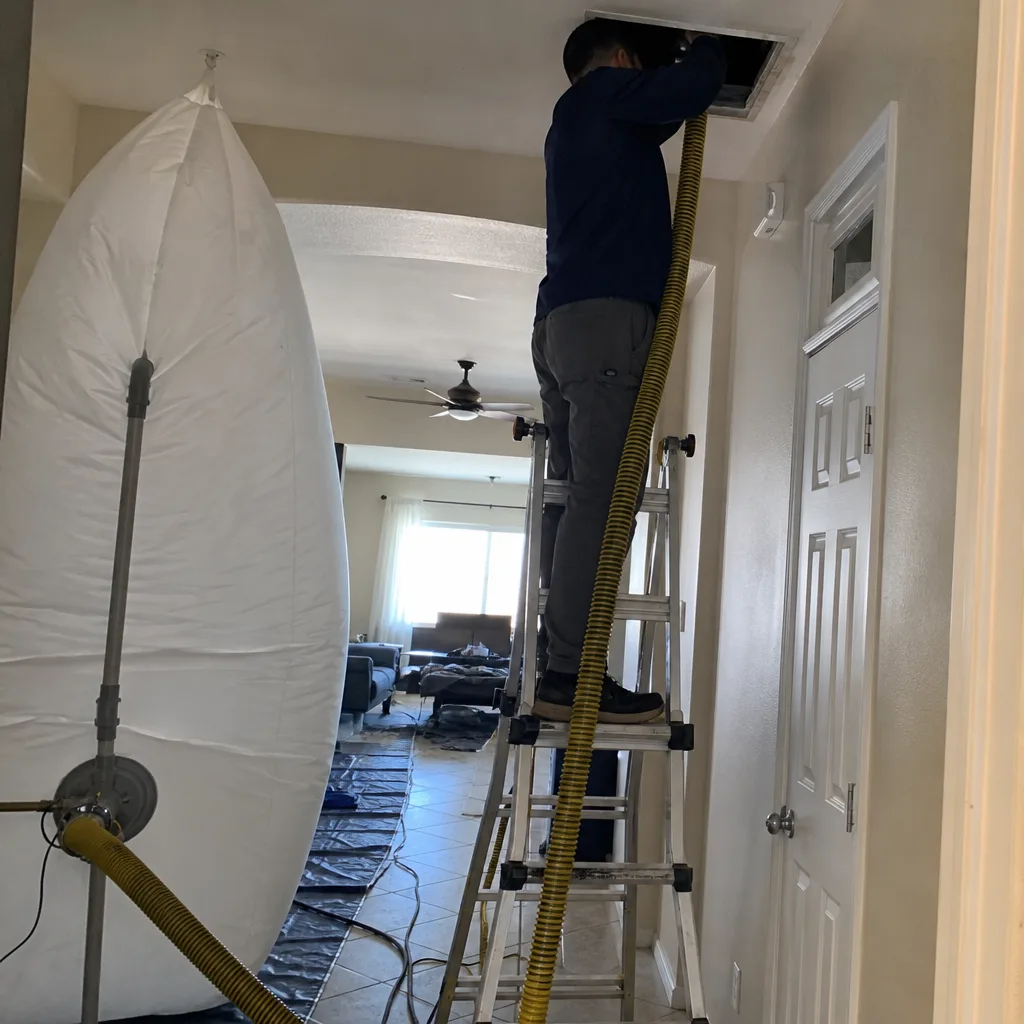
The return air plenum is the large chamber where all return ducts converge before entering the air handler. It’s the single most informative place to look, and most homeowners never open it.
How to access and inspect:
- Locate the return air grille, usually the largest grille in the home, often in a hallway or central living area.
- Remove the filter. Behind it, you’ll see a sheet metal box or a ductboard chamber. This is the plenum.
- With a flashlight and your phone camera, photograph the interior surfaces. Focus on:
- The filter track or frame, where debris bypassing the filter collects first
- The bottom surface, where gravity deposits the heaviest material
- Any visible duct connections, where leakage can pull in unfiltered air
- Compare your photos to the baseline you established at move-in or after your last professional cleaning.
What normal looks like in Gilbert:
A thin, even layer of pale dust, perhaps 1/16 inch, with no clumping, no dark streaks, and no visible debris larger than a grain of sand. This is manageable with scheduled professional cleaning.
What requires attention:
- Debris deeper than 1/4 inch at any point
- Dark, greasy, or fibrous material, which suggests filter bypass or upstream contamination
- Visible moisture or rust, indicating condensation issues that precede microbial growth
- Construction debris: white powder (drywall), wood splinters, or insulation fragments
We inspected a home in Seville last year where the homeowner’s phone camera showed a 3-inch debris build-up at the first elbow of the return plenum. The filter had been changed regularly, but a gap in the filter frame was bypassing 30% of return air unfiltered. The photo made the problem obvious before we opened any tools.
Safety note: Do not reach into the plenum beyond arm’s length, and do not disturb material that may contain asbestos in homes built before 1985. If you see vermiculite insulation or rigid ductboard with a white, fibrous surface, stop and call a professional. The visual inspection is information-gathering, not remediation.
Post-Construction & New Development Protocol
Gilbert’s building boom means many homeowners live within active construction zones. The dust from these sites is chemically and physically different from ordinary household dust, and it behaves differently in ductwork.
Identifying construction debris by sight:
| Debris Type | Appearance | Where It Accumulates | Risk |
|---|---|---|---|
| Drywall dust | White to off-white, extremely fine, powdery; feels chalky when rubbed | Return plenum bottom, filter frame, coil fins | Clogs coil fins faster than outdoor dust; reduces heat transfer efficiency |
| Wood framing dust | Tan to light brown, splintery, larger particles | Supply registers near exterior walls, attic pull-down ducts | Abrades blower wheel; can ignite in gas furnace heat exchanger |
| Insulation fragments | Pink, yellow, or white fibrous tufts; recognizable from attic type | Anywhere duct sealing has failed | Irritant; indicator of significant leakage |
| Concrete/ stucco dust | Gray, gritty, does not wipe clean easily | Return path near garage or exterior construction | Highly abrasive; accelerates blower and motor wear |
Post-construction checklist:
- Within 30 days of substantial completion of nearby framing or drywall, inspect all registers and the return plenum using the procedures above.
- If any construction debris type is identified, schedule professional cleaning before the debris migrates to the coil or blower. Migration typically takes 60-90 days of system operation.
- Request that the technician photograph the coil and blower wheel, not just the ducts. Construction dust impacts these components first.
- After cleaning, establish a new baseline photo record. Construction debris events reset your maintenance timeline.
We’ve cleaned ducts in homes near the 2020-2023 build-out in Morrison Ranch where drywall dust had formed a visible cake on the evaporator coil, reducing airflow to the point that rooms at the end of duct runs were 8-10 degrees warmer than the thermostat setpoint. The homeowner had changed filters faithfully. The filters were fine. The coil was not.
Detecting Duct Sealing Failures Between Cleanings
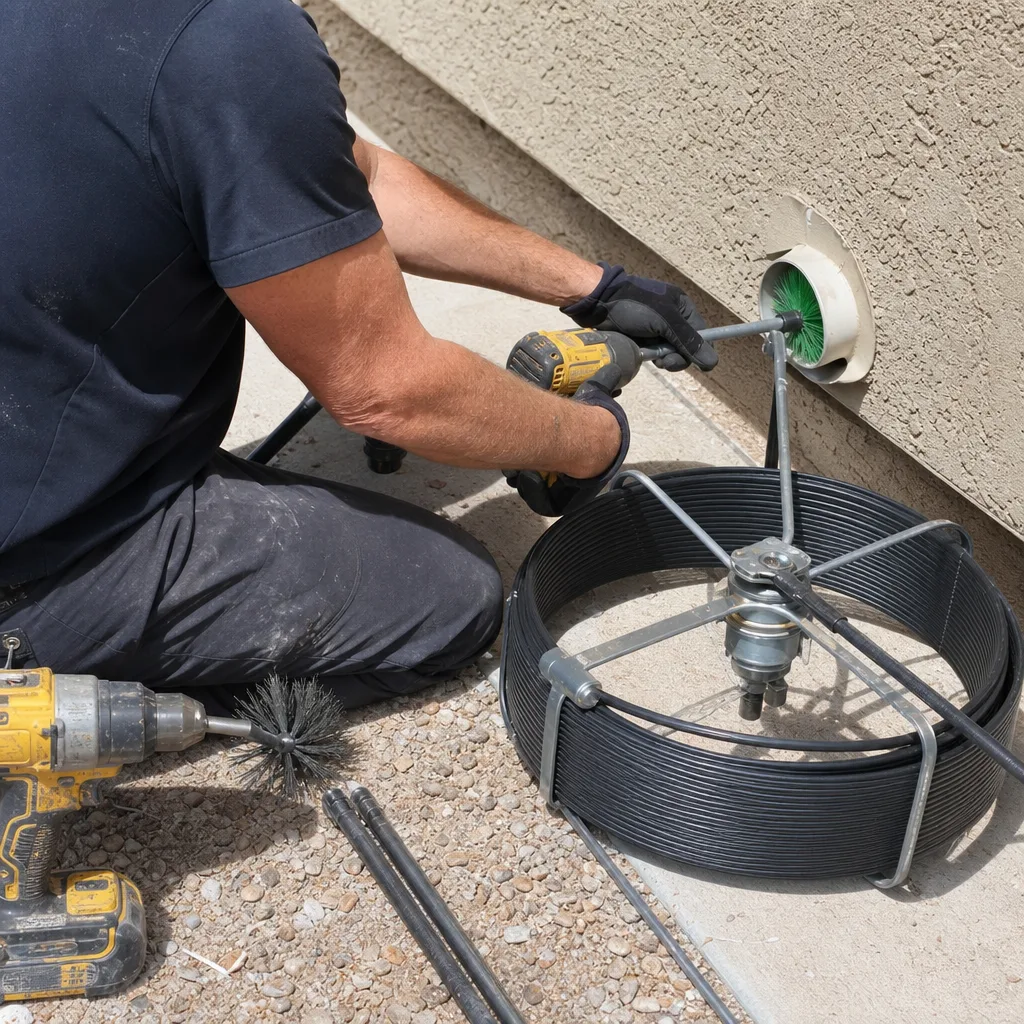
Duct sealing failures are often mistaken for dirty ducts. The symptoms overlap, but the solution is different. Cleaning sealed, leaking ducts is temporary; the leakage pulls new contamination continuously.
Observable signs of sealing failure:
- Visible condensation staining near joints: In Gilbert’s monsoon season (July-September), attic humidity can spike. Leaky supply ducts in the attic cool the surrounding air below dew point, causing condensation on the duct exterior. This shows as rust streaks, water marks, or, in fiberglass ductboard, darkening and sagging. Check any attic access during or after a monsoon storm.
- Asymmetric airflow by room: If one bedroom is consistently warmer or cooler than others with the same sun exposure and register position, measure airflow with a tissue or smoke pencil. Unequal deflection indicates restriction or leakage in that branch duct, not necessarily a system capacity problem.
- Unexplained filter loading rates: A filter that loads in 2 weeks where it previously lasted 6 weeks suggests the system is pulling unfiltered air from a leak downstream of the filter, typically in the return plenum or a return duct in the attic or crawl space.
- Dust patterns on ceiling around registers: Dark streaking on the ceiling paint near a supply register indicates air leakage between the duct boot and the ceiling drywall, pulling attic dust into the conditioned space.
Simple verification test:
With the system running, hold a smoke pencil or thin strip of toilet paper near each duct joint you can access. Movement toward the joint indicates suction (return leak); movement away indicates pressure loss (supply leak). Either warrants professional sealing assessment.
In Gilbert’s 2015-2020 construction, we see sealing failures most often at flex duct connections to metal trunk lines, where the zip-tie and tape method has degraded in attic heat. Attic temperatures in Gilbert exceed 140°F in summer, accelerating adhesive failure. This is not a cleaning issue; it’s a mechanical integrity issue that cleaning will not resolve.
Logging a Documented Baseline
Every maintenance decision is easier with a comparison point. We recommend establishing a photo baseline after any professional cleaning, and updating it annually.
Baseline documentation protocol:
- Register set: Photograph each supply and return register from the room side, then removed, showing the duct opening. Label by room name.
- Return plenum set: Flash photograph of the full plenum interior, the filter frame area, and any visible duct connections.
- Air handler area: If accessible without disassembly, photograph the coil visible through the access panel and the blower wheel. Do not remove panels that require tools; this is visual only.
- Filter log: Note the filter brand, MERV rating, installation date, and the date it was visibly loaded enough to replace. Over 2-3 cycles, this establishes your actual replacement interval for your specific home and habits.
- Store with dates: A dedicated album on your phone, or cloud storage with date stamps. The value is in the sequence, not any single image.
This baseline serves three purposes. First, it gives you objective evidence when deciding whether a register needs cleaning or a duct needs sealing. Second, it provides a reference when evaluating professional service: if a technician shows you “dirty” ducts, you can compare to your baseline and ask when the current condition developed. Third, it supports any warranty or guarantee claim, including CleanRun’s 365-Day Done Right Promise, with dated evidence of pre-existing condition.
We deliver a Documented Photo Record on every visit as part of the standard job record, before and after every duct run. Many Gilbert homeowners add these to their personal baseline album, creating a continuous record from move-in forward.
When to Schedule Professional Cleaning
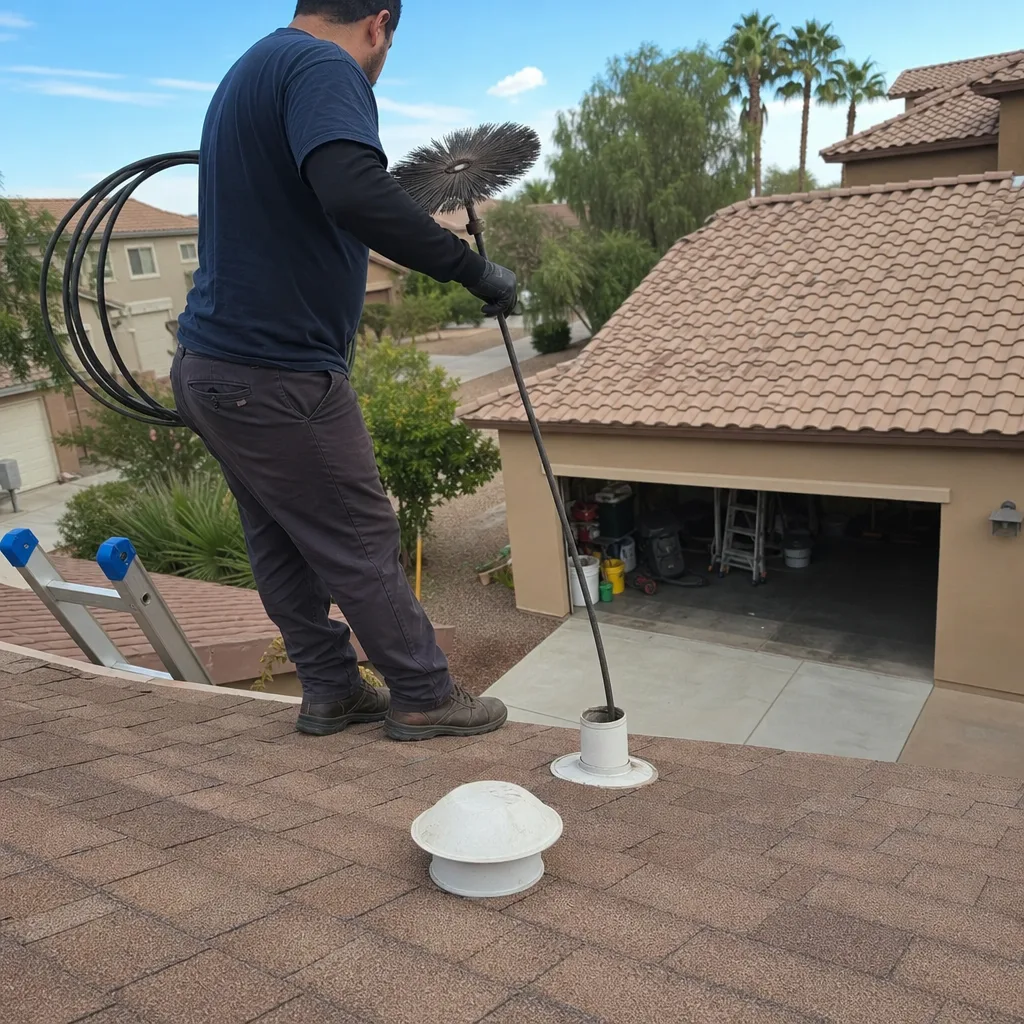
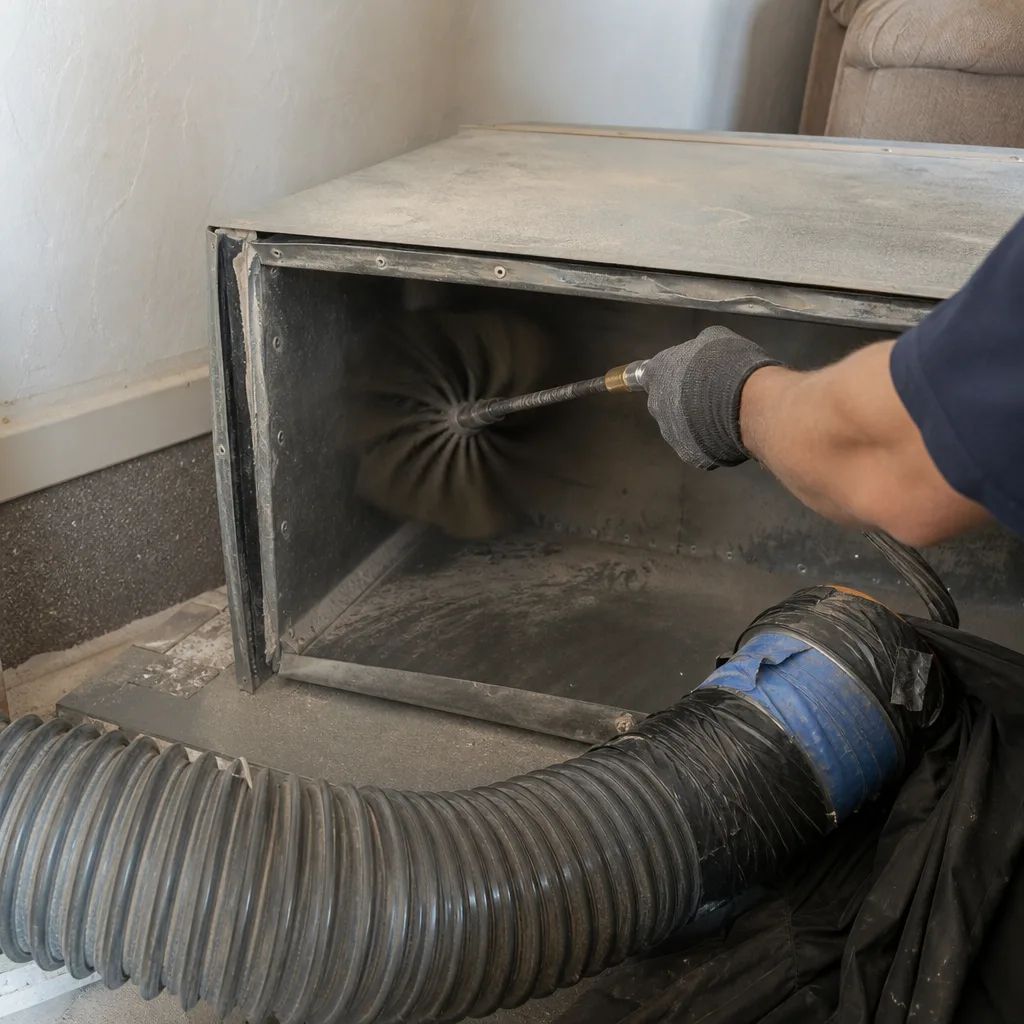
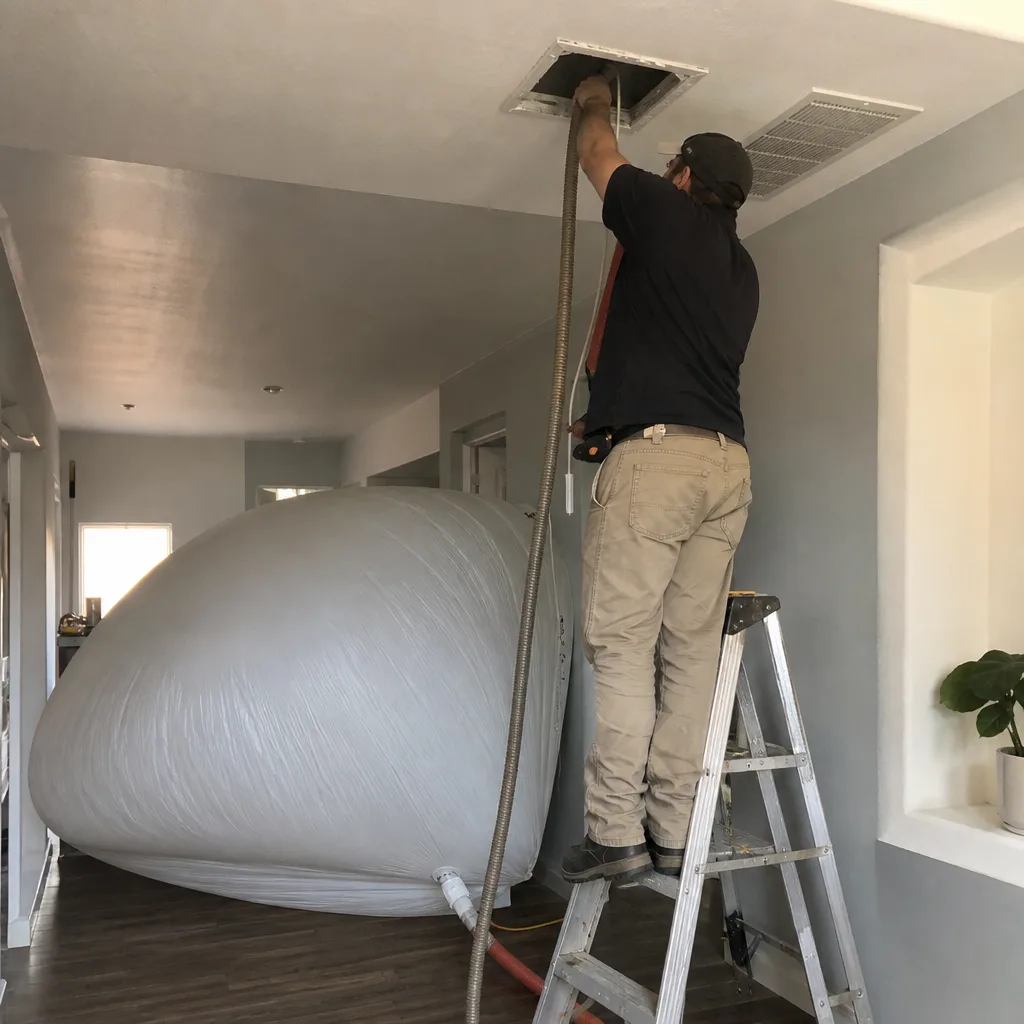
Self-inspection and filter maintenance manage the accessible parts of the system. The full duct network, including trunk lines, branch ducts, and the components inside the air handler, require professional negative-pressure extraction equipment.
Standard interval for Gilbert: Every 18-24 months for homes without specific risk factors. This is shorter than the 3-5 year interval often cited for moderate climates, and it’s based on the particulate load and run-time hours typical here.
Accelerate to immediate or 12-month interval if:
- Any construction debris type is identified in self-inspection
- A haboob event deposits visible dust throughout the home interior
- You observe any of the duct sealing failure signs above, even if sealing repair is also needed
- A family member has developed respiratory symptoms that correlate with HVAC run cycles
- The home has had water intrusion or monsoon leakage into the duct system
- You’ve purchased the home and have no maintenance history from the prior owner
What professional service should include in Gilbert:
Negative-pressure extraction using equipment such as Rotobrush or Nikro systems, with agitation tools that dislodge debris from duct walls. Visual inspection with a borescope or camera system. Photography of conditions found, delivered as part of the job record. Written scope and price before work begins, with no per-vent pricing structure that obscures total cost. Verification that the technician is operating under a published standard with background-checked, uniformed crew identified by name before arrival.
CleanRun Air Duct Cleaning Gilbert performs every job under the H.A.V.E.N. Standard, with a written price delivered before any work starts, every time, under Haven Standard Clause 1. The full equipment roster includes Rotobrush, Nikro, Abatement Technologies, and Guardsman systems, named so customers can verify specifications independently.
Common Mistakes to Avoid
- Following manufacturer filter intervals blindly. The “90 days” on the package was tested in a lab, not in Gilbert during June. Inspect monthly and replace on condition, not calendar.
- Using the cheapest filter available. Fiberglass panel filters capture less than 20% of fine desert particulate. The savings on filters is lost in coil cleaning costs and efficiency loss.
- Cleaning only what you can see. Registers are the endpoint, not the system. A clean register with a loaded plenum is cosmetic maintenance, not functional maintenance.
- Ignoring construction proximity. Homes in Gilbert’s active build areas, including recent phases of Cooley Station and Layton Lakes, experience particulate events that reset any existing maintenance schedule.
- Photographing without dating or labeling. A photo of “dusty duct” from 2021 and another from 2024 are not comparable without context. Date every image and note the location.
- Attempting coil or blower cleaning without training. These components are delicate and improperly cleaned fins can be permanently damaged. Visual inspection is appropriate; mechanical cleaning is not a homeowner task.
- Accepting “call for a quote” pricing. A written price before work starts is the only way to compare value across providers. Verbal estimates given over the phone before inspection are not binding and often diverge significantly from final invoices.
When to Call a Professional
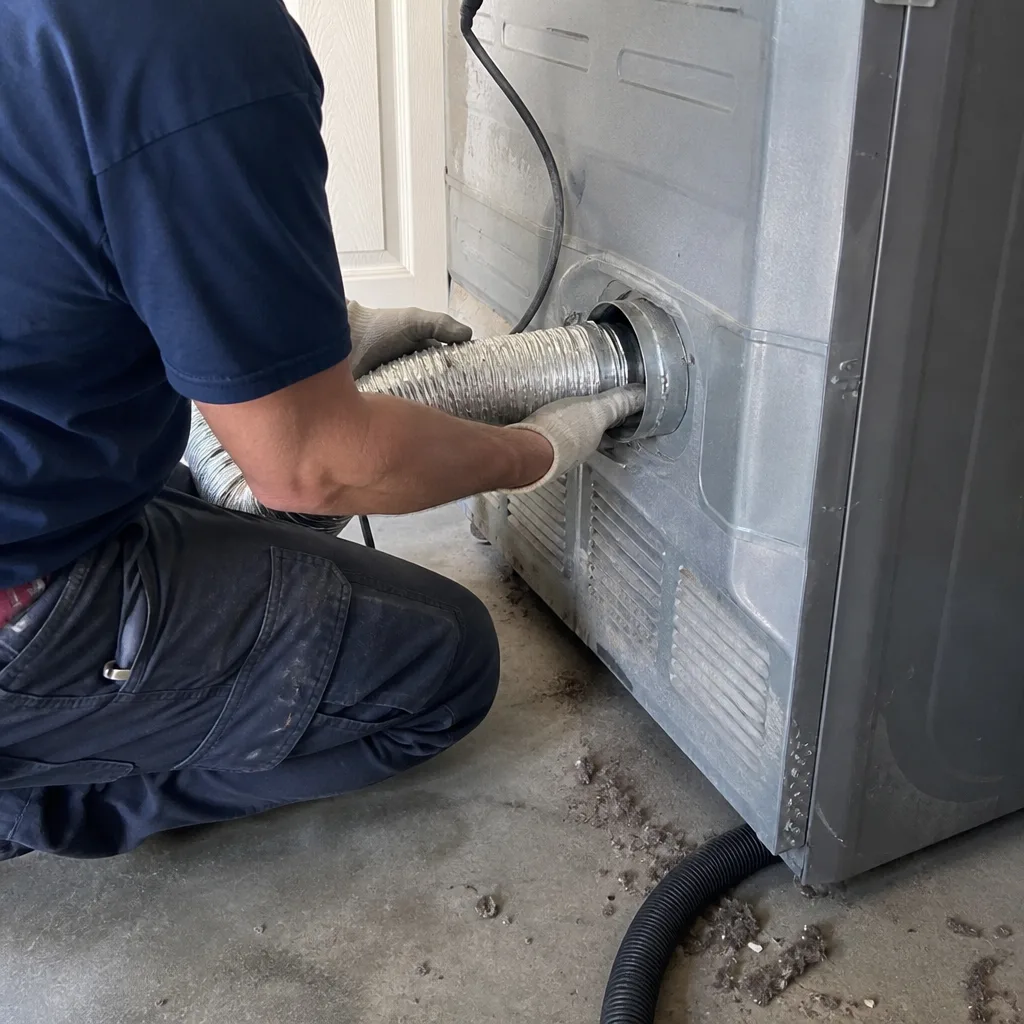
Call a professional when self-inspection reveals construction debris, moisture or rust, debris deeper than 1/4 inch, or any sealing failure signs. Call when airflow is asymmetric across rooms, when filters load faster than your established baseline, or when you’ve reached the 18-24 month standard interval with no prior professional service. Call if you’ve purchased a home with unknown maintenance history, especially in Gilbert’s 2015-2025 construction wave where original duct conditions vary widely by builder.
CleanRun Air Duct Cleaning Gilbert offers free estimates in Gilbert. Every estimate includes a written price before work starts, under Haven Standard Clause 1, and every completed job includes a Documented Photo Record of every duct run. Call (520) 666-7643 to schedule.
Frequently Asked Questions
Every 18-24 months under normal conditions, or immediately after construction debris events, haboobs with visible indoor dust deposition, or any moisture intrusion into the duct system. The interval is shorter than national averages because of Gilbert’s higher particulate load and near-continuous summer air handler operation.
Whole-system cleaning for a typical Gilbert home ranges from $400-$800 depending on system size, accessibility, and condition found at inspection. CleanRun delivers one flat price per system, agreed in writing before work starts, with no per-vent pricing. Call (520) 666-7643 for an exact quote - estimates are free.
The $79-$149 coupon offers typically cover a brief vacuuming of accessible registers, not full-system negative-pressure extraction with agitation. The difference is equipment (shop vac vs. Rotobrush or Nikro systems), scope (visible only vs. every duct run), and documentation (none vs. before-and-after photography). Ask any provider to specify in writing what equipment will be used, which ducts will be cleaned, and what proof of completion you’ll receive.
Demand a documented photo record of every duct run, before and after, delivered as part of the standard job record. Visual inspection of the return plenum and a sample of registers before and after service is also valid, but photography provides dated, reviewable evidence. CleanRun includes this on every visit; providers who do not should explain why.
A shop vacuum can clean accessible register surfaces and the first few feet of duct behind them. It cannot reach trunk lines, branch ducts, or the plenum, and it cannot provide the negative pressure that prevents debris from dispersing into the home during cleaning. For anything beyond surface register maintenance, professional equipment is required. Do not attempt to access or clean the evaporator coil or blower wheel; these are easily damaged and carry electrical and refrigerant safety risks.
Hard water does not directly affect ducts, but monsoon humidity (July-September) can. When attic humidity spikes and supply ducts leak, condensation forms on cool duct exteriors, creating conditions for microbial growth and rust. This is why the biannual plenum inspection includes moisture checks, and why sealing failures are prioritized over cleaning when both are present. Gilbert’s low annual humidity is misleading; the monsoon spike is brief but intense enough to cause damage in leaky systems.
The Bottom Line
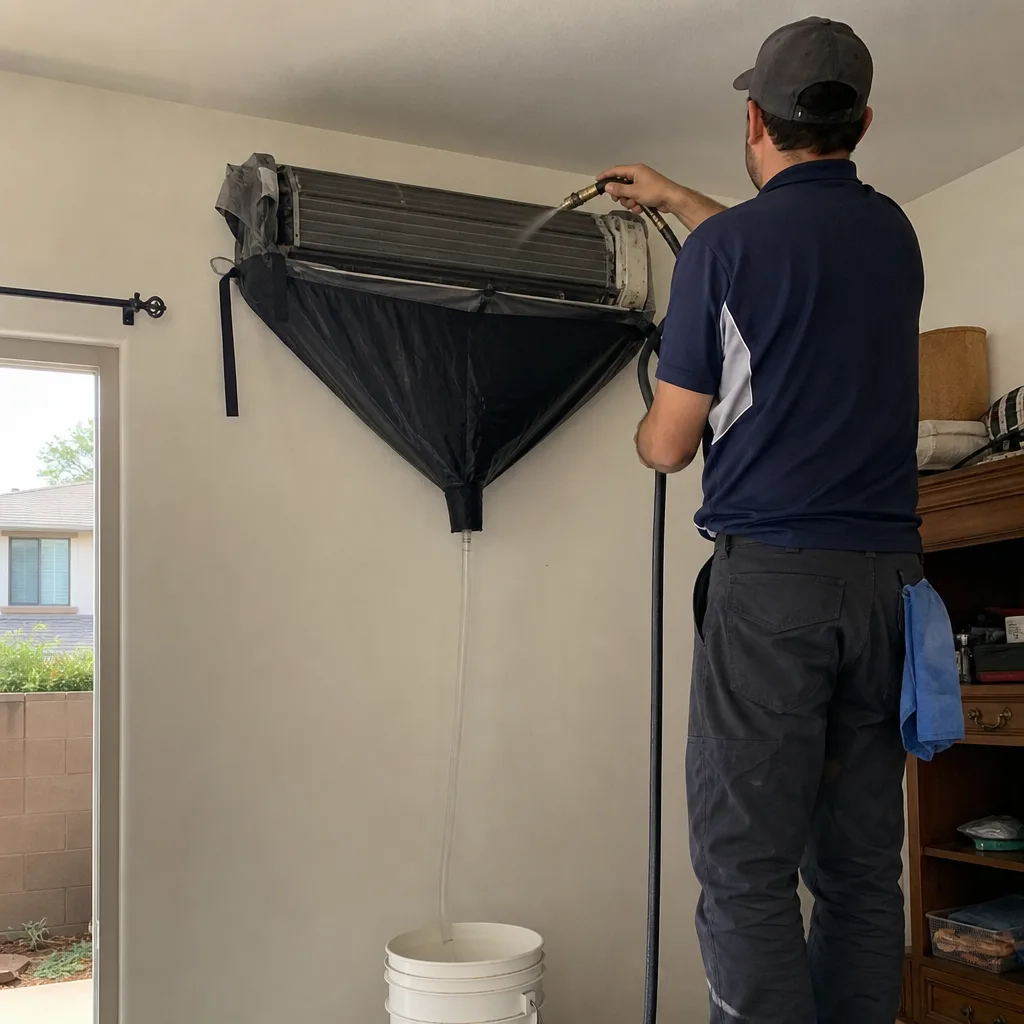
Gilbert homeowners need a duct maintenance checklist built for desert dust, continuous summer operation, and construction-heavy neighborhoods. Inspect filters monthly and replace on condition, not calendar. Photograph registers quarterly and the return plenum biannually. Learn to identify construction debris by color and texture. Log a dated baseline so every future decision has a comparison point. Watch for sealing failures that mimic dirty ducts. Schedule professional negative-pressure extraction every 18-24 months, or immediately after debris events. The checklist is not complicated, but it is specific to this place and this dust load. Generic advice from moderate climates will leave you behind. Explore more guides & resources for maintaining your home’s air quality.
Written by Tomas Reyes, Owner at CleanRun Air Duct Cleaning Gilbert, serving Gilbert since 2013.